

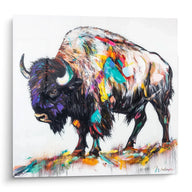

Evolve your decor with a living, interactive wall exhibition
11 October 2025 · 18 min read · by Walensky
You look at your walls with that frustrating feeling that something is wrong. Your guests enter your living room and their eyes quickly scan the space without ever stopping anywhere. No "Wow!", no spontaneous conversation about your decor, just that superficial politeness that poorly hides their indifference.
You feel that flat energy floating in the room, as if your walls were passive spectators of your social life. Even you, when you come home, no longer feel that excitement of finding an interior that truly resembles you.
You may have already tried the impulsive purchase of a "heartfelt" painting or rearranged your existing frames. Result? That persistent impression that your decor remains frozen, disconnected from your social life and your moments of sharing.
This is perfectly normal and it's not a lack of taste on your part. The problem is that traditional wall decor follows a static model that no longer corresponds to our current lifestyles centered on interaction and sharing.
By the end of this article, you will know how to create a living wall exhibition that transforms your guests into active participants in your decor, naturally generating exciting conversations and memorable moments.
Why do your walls need a participatory revolution right now?
Traditional wall art is experiencing an obsolescence crisis. Imagine a library where all the books are under glass: beautiful to look at, but impossible to live with. Today's guests arrive with their smartphones, their stories to share, their need for interaction. If your decor doesn't offer them this possibility of engagement, you miss the opportunity to create authentic connections and unique moments.
🎨 Revealing testimonial: Marie, interior architect, says: "I hosted a dinner with my collection of classic paintings. My guests politely admired, then took out their phones. I realized that my walls had become invisible barriers instead of creating connection."
Conversation with a decor expert
The golden rule of the living exhibition: The more your guests can feel ownership of your space, the more they feel unique and valued. Observable result: conversations that start naturally around your walls, within the first 10 minutes of their arrival.

What’s Really Behind Your Decorating Frustration
Do you recognize these three situations? Your guests avoid the living room to congregate in the kitchen. They compliment your decor but never return to the topic in conversation. You yourself avoid settling into that “too perfect” room to truly live in.
What’s really happening: your decor is in museum mode instead of “living room” mode. The human brain needs interaction and movement to create emotional attachment. Your walls may be talking about art, but they aren’t telling shared stories.
Imagine your decor as a musical instrument : even the most beautiful violin remains silent until it’s made to vibrate. Your artworks need that human vibration to reveal their true potential.
First Hidden Cause: The Private Gallery Syndrome
Contrary to popular belief, reproducing an art gallery at home doesn’t create elegance, it creates intimidation. What’s the difference? In a gallery, artworks dialogue with each other. At home, they need to dialogue with your life.
It’s like serving a gourmet meal on restaurant tableware: technically perfect, but emotionally cold. Home art needs to breathe, evolve, and adapt to your moods and your guests.
Impact on your daily life: you become a spectator of your own interior instead of the main actor. Your guests feel this distance and subconsciously adopt the same reserved attitude.
🔍 Revealing test: Observe where your guests’ eyes naturally land when they enter. If they look everywhere but at your walls, it’s because your decor doesn’t invite interaction.
Second Cause: The Illusion of a “Definitive” Decor
Many think that beautiful decor must be immutable to appear serious and thoughtful. In reality, this rigidity kills the vital energy of your interior and creates an atmosphere of a “personal museum”.
Think of your garden: the most beautiful evolve with the seasons, welcome new plantings, transform according to your whims. Your wall art should follow the same principle of organic growth.
Consequence: you gradually lose the excitement of your decor, and your guests find no pretext for a spontaneous and authentic conversation.
Third Cause: Underestimating the Power of Participation
Here’s the factor that most people ignore: emotional appropriation. When someone can touch, move, contribute to your decor, they develop a deep emotional connection with your space.
Signs to look for: do your guests take photos of your decor? Do they ask you about the origin of each element? Do they suggest improvements? If not, it’s because your decor doesn’t invite participation.
Daily impact: your gatherings remain superficial, your guests leave without creating a memorable memory linked to your interior, and you gradually lose your attachment to your decor.
5 Signals of a Decor That Calls for Participation:
- The lingering gaze: Your guests naturally stop in front of your walls and take the time to observe the details
- Spontaneous questions: They ask you about the story behind each piece, as if your wall were telling a personal story
- The desire to contribute: They suggest additions, rearrangements, or bring elements that could complement your exhibition
- Custom photos: They take pictures with your decor, creating a lasting emotional connection
- Customer feedback: They mention your decor in their subsequent conversations, proof of a strong memory imprint
The trigger: transforming into a collaborative curator
The real magic happens when you stop being the sole decision-maker for your decor and become the facilitator of a collective creation. This is the butterfly effect of participatory decoration: a small change in your approach triggers a complete transformation of the atmosphere of your interior. Concrete clues: your guests arrive with ideas, suggest elements, and leave with the desire to recreate this collaborative dynamic in their own homes.
Universal practical rule: A successful decoration today must be able to tell a different story with each visit. Immediate test: if you can describe your decor in a fixed sentence, it needs a dose of participatory life.
| ❌ Traditional decor | ✅ Participatory exhibition | 💡 Mechanism | 🎯 Immediate benefit |
|---|---|---|---|
| My guests politely admire then move on | They stop, question, suggest ideas | Interaction creates emotional attachment | Natural conversations of 15-20 minutes |
| I'm afraid to touch my "perfect" decor | I enjoy evolving my decor | Flexibility nourishes creativity | Daily rediscovery of your interior |
| My walls tell the story of my purchases | They tell the story of my relationships | Each element carries a shared memory | Authentic and warm home |
| My living room looks like an elegant waiting room | It becomes a collaborative creative laboratory | Participation generates appropriation | Unique and memorable atmosphere |
— Also to discover


How to create your participatory wall exhibition in 3 simple steps
Rest assured, this transformation doesn't require a total revolution or massive investment. Think of this method as the cultivation of a collaborative garden : You prepare the ground (suitable supports), you plant the first seeds (basic artworks), then you let your guests contribute to the growth. Final result: a living decorative ecosystem that tells the story of all your encounters.
🎯 Overview: Step 1 - Create the participatory infrastructure (modular supports). Step 2 - Install the evolution system (rotation and additions). Step 3 - Animate the collaborative dynamic. Logical progression: each step prepares the next and amplifies the impact of the previous.
Step 1: Install your participatory infrastructure
Starting with this step is crucial as it lays the technical foundations of your evolving exhibition. Just as when building a house, you can't improvise the structure. This phase will immediately give you the satisfaction of seeing your walls transform into welcoming spaces for future collaborations.
Essential materials for your evolving exhibition
- Modular hanging system: Wall rails or metal grids (chic industrial style) that allow for easy movement. Look for them in decoration stores or specialized platforms. Quality criterion: minimum resistance of 15kg per hanging point. Avoid glued systems that limit evolution.
- Variable geometry supports: Magnetic frames, decorative clips, clip systems that adapt to different formats. Principle: instant adaptation rather than complicated adjustment. Quality tip: possibility of changing in less than 30 seconds. Impact: natural encouragement to participate.
- Directional lighting: Adjustable spotlights or sconces that follow the evolution of your exhibition. Visible benefit: each new element instantly benefits from a professional highlighting.
Transition to practice: Once your tools are gathered, installation becomes a game of logical organization.
Setting up your evolving system
Installation of the support system: Fix your rails or grids at standard height (center 1.50m from the floor). Reason: this height allows natural interaction without effort. Technical detail: use dowels suitable for your wall type (drywall, concrete, brick) to guarantee safety. Reassurance: most systems include an illustrated installation guide.
⏱️ Time: 2-3 hours | ✅ Successful when: You can hang and move an element weighing 2kg without effort or tool | ⚠️ Attention: Check the squareness with a level - a tilted rail creates a neglected impression
Flexibility test: Install 3-4 different elements (formats, weights, styles) and then quickly rearrange them. Objective: validate that your system really encourages creative spontaneity. Technique: time yourself - a change should take less than 5 minutes to remain motivating.
⏱️ Time: 45 minutes | ✅ Successful when: You feel like continuing to experiment | ⚠️ Attention: If it's tedious, your system is too complex - simplify before continuing
Creating welcome zones: Visually delineate areas for different types of contributions (photo zone, creation zone, memory zone). Method: use variations in lighting or subtle backgrounds. Purpose: intuitively guide your guests to participate.
⏱️ Time: 1 hour | ✅ Successful when: A visitor immediately understands where and how to contribute | ⚠️ Attention: Avoid over-segmentation that paralyzes creativity
✅ Validation of step 1: Your infrastructure should feel user-friendly and invite natural experimentation . Tests: can an outsider understand the system in 2 minutes? Can you change the arrangement in less than 10 minutes? If so, you are ready for the creative stage.
Step 2: Launching evolving dynamics
Now that your infrastructure is ready, you move to the creative level : transforming your wall into a living story. This step is more rewarding because you immediately see the visual and emotional impact. The snowball effect begins here: each small change encourages the next, creating a positive addiction to decorative evolution.
Foundational elements of your exhibition
- Basic personal artworks: 3-4 pieces that truly represent you (photos, creations, memories). Role: anchor the identity of your home. Selection criterion: choose pieces that tell a story that you like to share. Avoid "decorative" works without emotion.
- Evolving spaces: Zones intentionally left incomplete that invite contribution. Principle: creative imperfection attracts more than frozen perfection. Quality sought: balance between aesthetic coherence and collaborative openness.
- Memory supports: Notebooks, polaroids, small objects that your guests can leave or modify. Benefit: creation of tangible memories of each encounter.
Activating your participatory exhibition
Composition of the foundational exhibition: Arrange your basic artworks, leaving intentional spaces for future contributions. Technique: rule of thirds - only occupy 60% of your space to naturally invite additions. Psychology: empty space creates a motivating creative tension .
⏱️ Time: 1h30 | ✅ Successful when: You feel the urge to add something | ⚠️ Attention: Do not immediately satisfy this urge - it will guide your guests
Creating welcome rituals: Prepare elements that your guests can easily personalize (empty frames, writing supports, photo spaces). Objective: ritualize creative participation. Tip: start by inviting a close friend to leave their mark - example encourages imitation.
⏱️ Time: 45 minutes | ✅ Successful when: You are eager to show your system to your guests | ⚠️ Attention: Avoid over-preparation that kills spontaneity
Documenting evolution: Take a photo of your initial exhibition and plan regular captures. Purpose: create a visual history book of your home. Technique: monthly photo taken from the same angle, creation of an evolving album.
⏱️ Time: 20 minutes | ✅ Successful when: You have a simple documentation system | ⚠️ Attention: Documentation should not become more important than the experience
📸 Step 2 Validation: Your display should inspire you to be completed and enriched. Tests: Do you feel like changing something? Does a visitor understand that they can contribute? If so, you are ready for collaborative animation.
Step 3: Animating Your Creative Community
You are now reaching the expert level : transforming your guests into co-creators of your decoration. This step reveals the difference between a decoration that pleases and a decoration that unites. Visualizable result: your guests arrive with ideas, contribute naturally, and leave with the desire to develop their own collaborative space.
Collaborative Animation Tools
- Contribution Kit: Simple materials available (markers, polaroids, creative post-its). Function: facilitate spontaneous expression. Location: accessible but discreet, to avoid the impression of a "directed activity".
- Rotation System: Mechanism to regularly evolve the exhibition (seasonal changes, themes). Principle: permanent renewal of interest. Quality: fluidity that preserves aesthetic coherence.
- Collective Memory: Archive of past contributions, visual guestbook, history of evolutions. Benefit: valuing individual contributions within a common story.
Animating Your Living Exhibition
Ritualization of Creative Welcome: Develop a natural protocol to invite your guests to contribute (guided tour, story of the elements, invitation to leave a trace). Technique: personal storytelling that leads by example and releases creativity. Timing: within the first 20 minutes of their visit.
⏱️ Time: 30 minutes preparation | ✅ Successful when: Your guests spontaneously offer their ideas | ⚠️ Warning: Avoid a "forced animation" - participation should seem natural
Evolution Management: Establish a rhythm of changes (weekly, monthly) that maintains interest without creating instability. Method: balance between continuity and novelty. Practical rule: change 20% of the exhibition each month, keep 80% for coherence.
⏱️ Time: 1 hour per month | ✅ Successful when: You feel the excitement of change without stress | ⚠️ Attention: Too much change kills attachment - dose the evolution
Creation of Collective Memory: Document and value each contribution to create a sense of belonging. Technique: photo of each addition with its author, creation of an evolving album visible. Finality: transform contributions into a shared emotional heritage.
⏱️ Time: 15 minutes per contribution | ✅ Successful when: Your guests ask to see the evolution | ⚠️ Attention: Documentation should not slow down spontaneity
🎨 Step 3 Validation: Your display should live autonomously with your guests as creative drivers. Tests: Do you receive spontaneous proposals? Do your guests talk about your decoration to others? If so, your collaborative ecosystem is operational.
Collaborative Progression Rule: Move to the next step when the previous one naturally generates ideas for the next. Objective criteria: spontaneous participation, creative conversations, improvement suggestions. Balance: patience for appropriation, ambition for continuous evolution.
Congratulations! You now master the subtleties of collaborative decorative animation. These expert techniques give you a distinct advantage: where others suffer their decoration, you orchestrate a creative ecosystem that thrives on every encounter.
🎯 Master technique: Create "enigmatic spaces " - elements intentionally mysterious that call for curiosity and interaction. Example: a frame with a photo partially slid out, a text started to be completed, a collage in progress. Effectiveness: the enigma naturally generates the desire to participate and collectively resolve.
Frequently asked question from a reader
"How to proceed if my guests are shy or uncreative?"
I perfectly understand this apprehension - we all have more reserved friends! The trick is to gradually invite : start with ultra-simple contributions (choosing between two locations, signing a visual guest book) before offering free creations. Concrete example: "Do you prefer this photo here or there?" engages without intimidating. The success of this micro-participation naturally releases creativity for the rest. Encouragement: even the shyest become creative when they feel guided without being judged.
💡 Actionable tip: Create an ultra-simple "first gesture " : a signature on a prepared element, the choice of a location, the addition of a colored post-it. Guaranteed result: this first contribution unlocks the following ones.
— In the same spirit


The 5 mistakes that sabotage your participatory exhibition
Attention, these mistakes are sneaky because they seem logical at the time. I want to avoid these classic traps that discourage participation and turn your good intention into a constraint for your guests.
- ⚠️ Over-controlling contributions: It is tempting to want to direct each addition to preserve your aesthetic vision. Consequence: your guests feel restrained and lose the desire to participate. Solution: define only general guidelines (size, theme) and let creativity express itself. Reassurance: creative "accidents" are often the most memorable.
- ⚠️ Complicating the hanging system: The desire for perfectionism leads to creating sophisticated systems that require explanations. Result: no one dares to touch for fear of "doing it wrong". Alternative: always prioritize ease of use - a system that you can explain in 30 seconds. Common but understandable mistake.
- 🎨 Saturating the space from the start: Impatience to see the final result leads to quickly filling all available spaces. Consequence: no room for your guests' contributions . Correction: respect the 2/3 rule - always leave 30% free space for evolution. This "imperfection" is your strength.
- 📸 Documenting instead of living: The temptation to photograph everything and archive can turn the experience into a directed photoshoot. Impact: your guests become performers instead of free creators. Balance: document discreetly, celebrate openly. Frequent mistake among perfectionists.
- 🔄 Changing too often: The excitement of initial successes leads to constant modifications of the display. Problem: your guests don't have time to get attached and develop ideas. Optimal rhythm: maximum monthly evolutions, to allow emotional appropriation to mature. Creative patience is necessary.
🛡️ Quick verification system: Each week, ask yourself these questions: can your guests contribute without asking for help ? Is the display evolving naturally? Do your guests spontaneously talk about your decor? Warning signs: silence from guests, system never used, you alone modify the display.

Other selected pieces
Painting Architecture Infinity Steps - trompe-l'oeil edition
233,90€
Discover this painting →Frequently asked questions about the participatory wall display
Realistic budget: 150-300€ for basic infrastructure (rails, lighting, modular supports) depending on the size of your wall. Installation time: one weekend day for a 3-meter wall. Optimization: start with a 1m² test section to validate the concept before extending. Concrete example: Marie started with a budget of 180€ and achieved spectacular results from the first evening.
Secret: define a color palette and a general style (modern, vintage, eclectic) that serve as a guiding thread. Proven technique: create "expression zones" with different but complementary visual codes. Reassurance: controlled diversity creates more richness than uniformity. Example: a wall with a neutral base welcomes all styles without visual clashes.
Great news: small spaces are often more effective! A well-organized 2m² wall generates more interaction than a scattered large wall. Tip: use the height and create levels of interaction (view, hand, seating). Concrete example: a 25m² studio with a participatory wall instantly becomes more convivial than a 40m² living room with a fixed decor.
The key: self-generation ! A well-designed display evolves thanks to your guests, not thanks to you. Technique: create natural cycles (seasons, events, themes) that renew interest. Real time: 15 minutes per month for animation, the rest happens spontaneously. Indicator of success: you have more ideas than time to realize them.
Gentle approach: never force, but lead by example naturally. Technique: start with the most open guests, their enthusiasm positively contaminates the others. Reassurance: respect everyone's pace - some observe several times before participating. Experience: 90% of reluctant people become enthusiastic contributors after seeing the positive impact on the atmosphere.
Your transformation into a creator of memorable experiences
In a few weeks, imagine yourself welcoming your guests into a living room where each wall tells a collective story. Your friends step through the door and their eyes light up as they discover the evolutions since their last visit. They naturally head towards your display, suggest ideas, add their personal touch. You feel this authentic sense of pride in seeing your home become a catalyst for creativity and human connections.
This transformation goes far beyond simple decoration: you develop your ability to unite and inspire, to create memorable experiences, to transform your daily life into a collaborative adventure. These skills radiate in all aspects of your social and professional life, strengthening your confidence in your creative ability.
Understanding the mechanisms was the main obstacle - now that you have mastered the method, all that remains is to choose your first wall and install your first modular support. Your participatory exhibition begins with this first concrete step : visit your walls with this new perspective and identify the one that most calls for transformation.
🚀 Your creative adventure begins now: You have all the tools to revolutionize your decoration and create lasting memories with your loved ones. Participatory wall exhibition awaits your first initiative to transform your interior into a laboratory of shared happiness.
Also read: 📖 Read more articles on highlighting art
Explore our collections


