


Violin Painting
A suspended bow, a dress dissolving into colored smoke, a black silhouette standing before the storm or the waterfall: the Violin Painting collection gathers these moments where the musical gesture becomes pictorial matter. Each canvas captures the tension between the stillness of the body and the invisible movement of sound, in palettes ranging from fuchsia pink to midnight blue, from twilight orange to gold. Hanging a violin painting invites into your home that silent vibration where light seems to play the score.
 Golden Violin Music Wall Art with White Magnolias - Spring Awakening - Music Edition$249.90
 Violin Music Wall Art Amber Foliage Emerald Green - Forgotten Melody in the Garden - Music Edition$249.90
 Music Wall Art Violin Amber Green Forest Glade Bright - Flowered Undergrowth - Music Edition$249.90
 Music Wall Art Amber and Black Antique Violin - Silence Between Two Movements - Music Edition$249.90
 Violin Music Wall Art Burgundy and Ochre Marbled - Echo of Melody - Music Edition$249.90
 Music Wall Art Blue Indigo and Amber Violin Vertical Flows - Pictorial Rain Curtain - Music Edition$249.90
 Blue Navy and Amber Violin Music Wall Art Abstract - Silence After the Chord - Music Edition$249.90
 Music Wall Art Violin Amber Blue Slate Splashed - Suspended Note - Music Edition$199.90
 Violin Music Wall Art Amber Violin Placed in Flowered Grass - Pause in the Garden - Music Edition$199.90
 Music Wall Art Yellow and Black Silhouette Hat Violinist - Violinist's Hat - Music Edition$199.90
 Music Wall Art Red and White Violin - Curly Handle - Shirt with Jabot - Music Edition$199.90
 Pink and Turquoise Music Wall Art Violinist Bow - Violinist's Gaze - Music Edition$199.90
 Music Wall Art Violinist Pink and Yellow Vertical Stripes - Striped Black and White Jacket - Music Edition$199.90
 Violin Music Pink and Turquoise Blue Roses Orange Roses - Marine Sunrise - Music Edition$199.90
 Music Wall Art black and white violinist isolated - Silhouette in chiaroscuro - Music Edition$199.90
 Golden and Grey Music Jacket Textured Wall Art - Sunset - Music Edition$199.90
 Blue and Gold Music Wall Art Violinist Splashed - Flight of Melody - Music Edition$199.90
 Music Wall Art Gold and Black Violinist Melted - Face with Painted Flowers - Music Edition$199.90
 Music Wall Art Blue Turquoise and White Wrinkled Shirt - White Wrinkled Sleeves - Music Edition$199.90
 Music Wall Art Violinist Red and Yellow Violin Black Hair - Stretched Handwritten Score - Music Edition$199.90
 Music red and grey round glasses Wall Art - checkered jacket - Music Edition$199.90
 Music Wall Art blue grey and brown hair in the wind - Face with closed eyes - Music Edition$199.90
 Violin Music Wall Art Amber and Gray Splashes - Pegs and Scroll - Music Edition$199.90
 Violin Music Wall Art Orange and Slate Blue Splatter - Crotch Volutes - Music Edition$199.90
In the same family
Also explore the theme Music
-
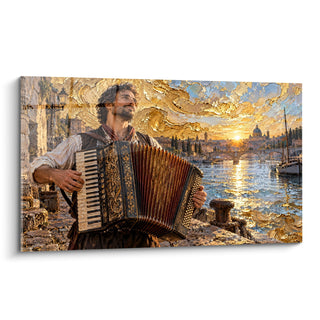 Accordion26
artworks
-
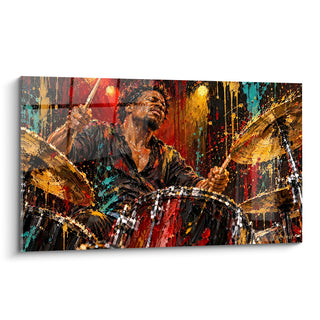 Battery40
artworks
-
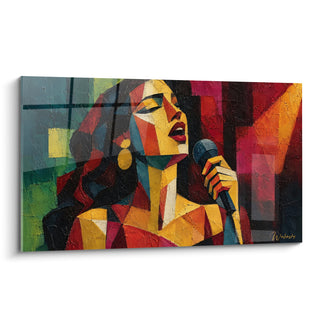 Song33
artworks
-
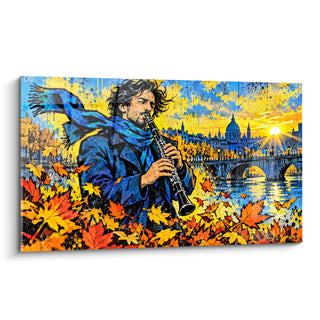 Clarinet3
artworks
-
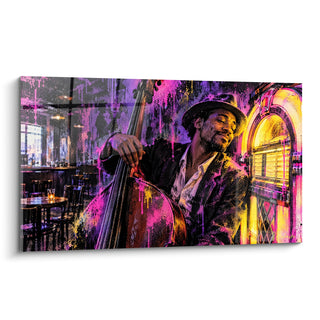 Double bass28
artworks
-
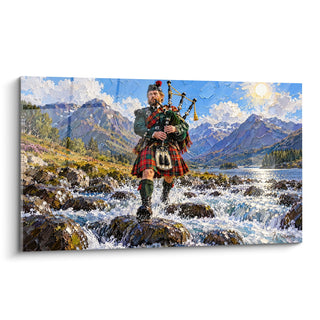 Bagpipes13
artworks
-
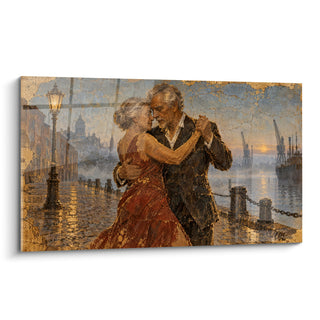 Ballroom dance34
artworks
-
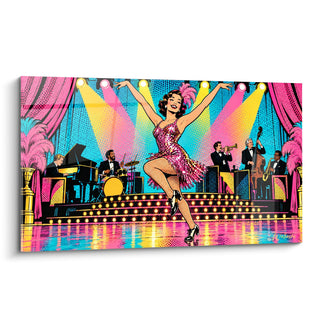 Disco51
artworks
-
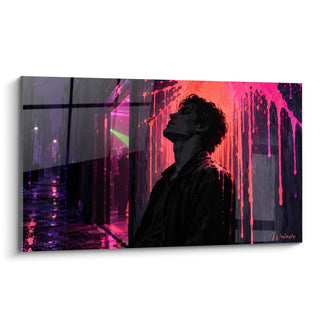 Nightclub26
artworks
-
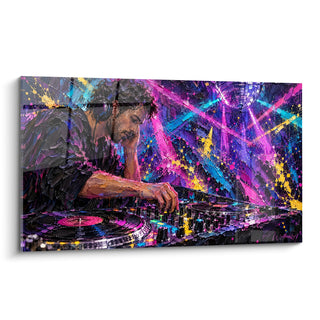 DJ66
artworks
-
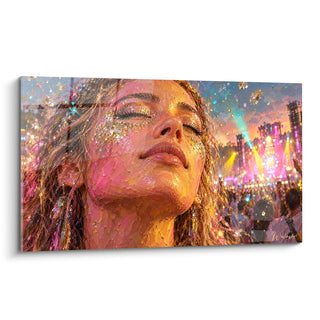 Electro27
artworks
-
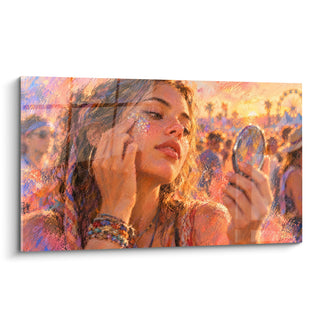 Music Festival11
artworks
-
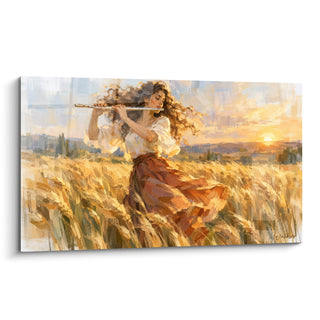 Flute14
artworks
-
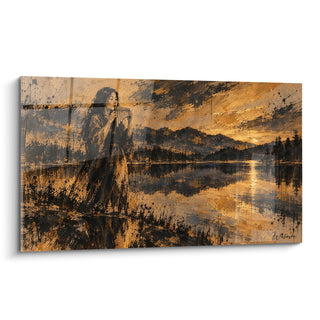 Panpipes20
artworks
-
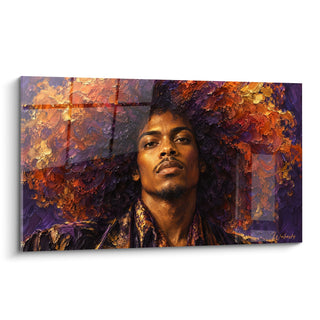 Funk13
artworks
-
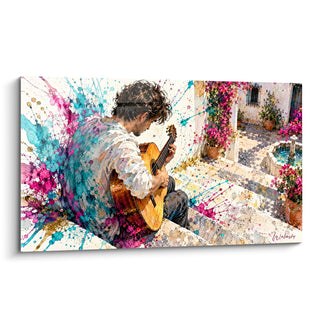 Guitar108
artworks
-
 Handpan20
artworks
-
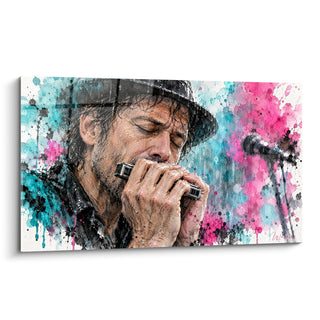 Harmonica3
artworks
-
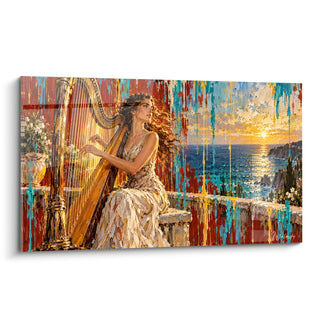 Harp18
artworks
-
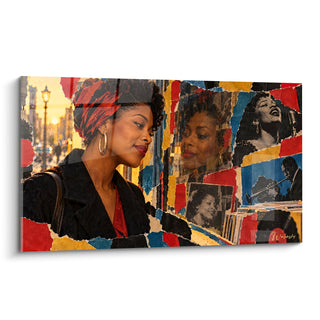 Old School Hip Hop40
artworks
-
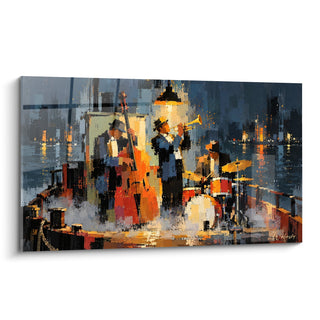 Jazz8
artworks
-
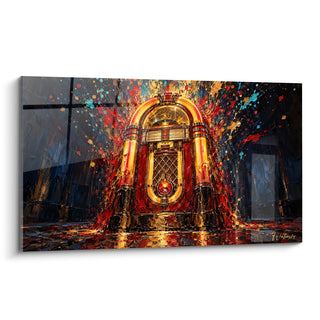 Jukebox12
artworks
-
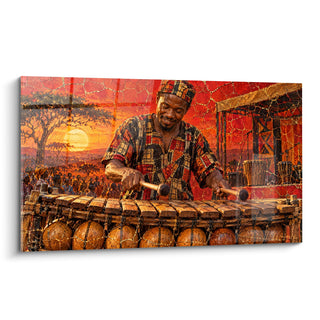 Various Musicians61
artworks
-
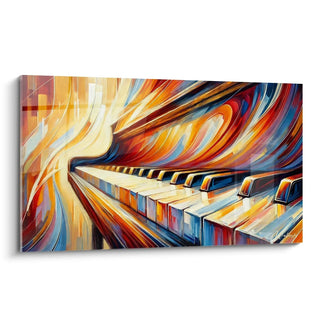 Musical note21
artworks
-
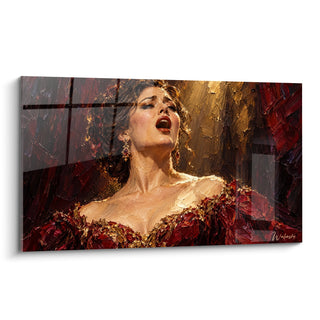 Opera23
artworks
-
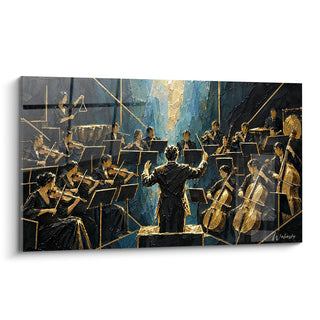 Orchestra6
artworks
-
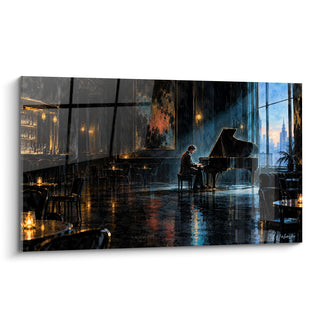 Piano295
artworks
-
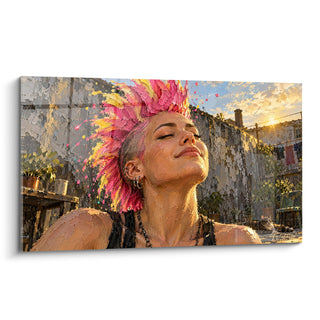 Punk35
artworks
-
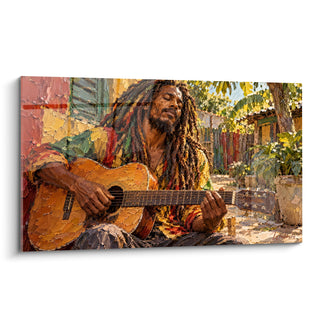 Reggae13
artworks
-
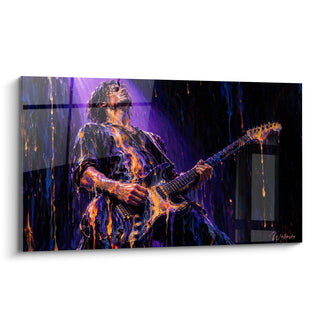 Rock48
artworks
-
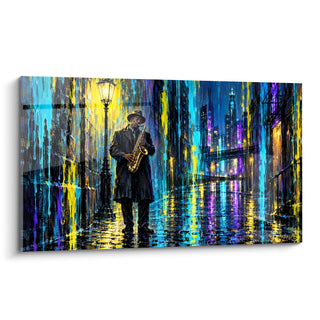 Saxophone64
artworks
-
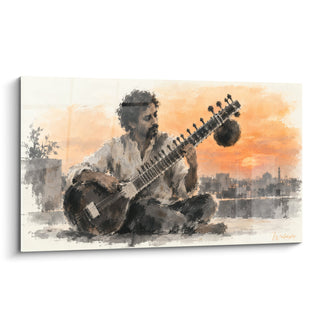 Sitar15
artworks
-
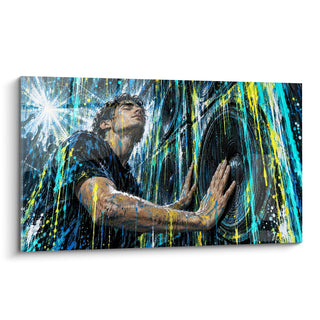 Sound System3
artworks
-
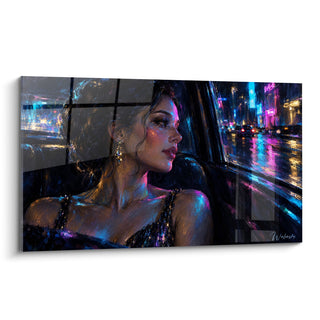 Music Star66
artworks
-
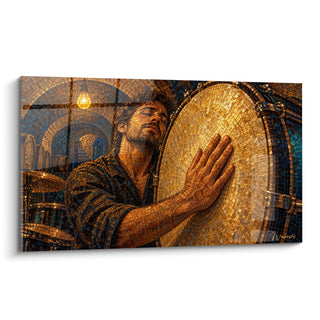 Drum9
artworks
-
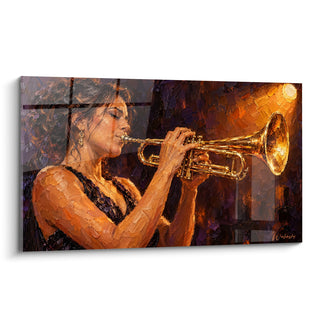 Trumpet14
artworks
-
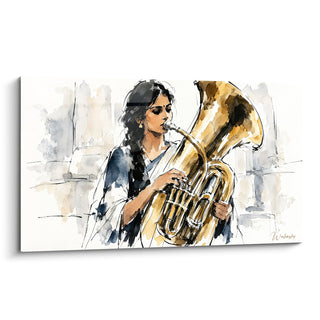 Tuba4
artworks
-
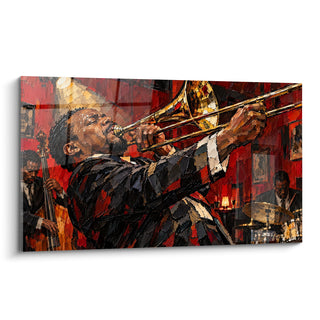 Trombone2
artworks
-
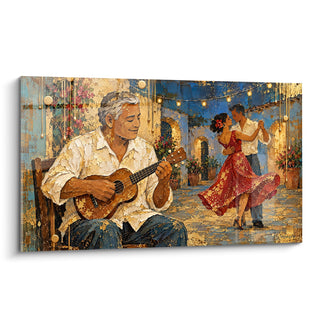 Ukulele41
artworks
-
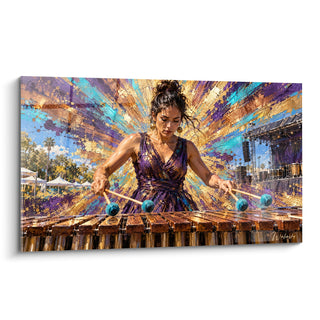 Vibraphone1
artwork
-
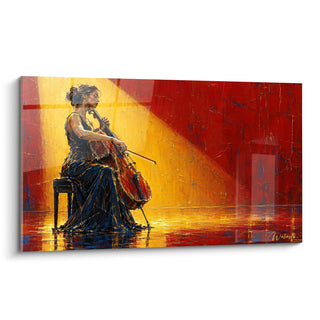 Cello56
artworks
-
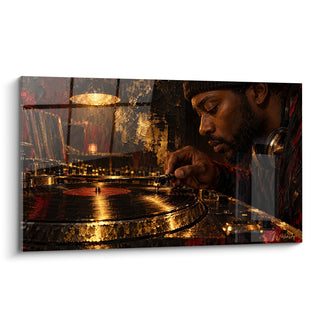 Vinyl43
artworks

All about Violin Painting
- Violin Painting Presentation
- Color as score
- The body that disappears
- Settings and natural elements
The Violin Painting collection gathers works in which the instrument is never a mere object placed in the setting: it is the gravitational center around which light, smoke, storm or twilight organize themselves. Each canvas freezes a musician mid-gesture, bow extended, body leaning, as if the sound had just escaped the resonance box to spill across the canvas in color.
What unites these violin paintings is not a single style but a shared obsession: making visible what is not. Splashed watercolor, thick impasto or pronounced graphic line are so many different ways of translating a sonic vibration into pictorial matter, whether it unfolds beneath an autumn tree, before a golden waterfall or in the smoke of a stage spotlight.
This collection is for those seeking more than an image of a musician: for those who want to hang a tension, a moment suspended between two notes, an emotion that keeps resonating silently on the wall. The contrasting palettes, from fuchsia pink to navy blue, from terracotta to orange, can dress a cozy living room as well as an office seeking a more theatrical touch.
Whether you are an amateur musician, a music lover, or simply sensitive to the grace of an artistic gesture, the violin paintings in this collection offer a gateway into a romantic imaginary, somewhere between concert stage, twilight legend and inner storm.
Why do violin paintings play as much with color as with form?
Where does this fuchsia pink that floods some canvases come from?
The fuchsia pink that radiates through several violin paintings in this collection is not a mere aesthetic choice: it echoes the language of stage lighting, those colored spotlights that have bathed concert performers in artificial, dramatic light since the rise of modern live performance. Paired with midnight blue in sharp contrast, this pink creates a chromatic tension that literally evokes the electricity of a concert hall. Hung at home, such a canvas carries this stage intensity into everyday space, without ever becoming garish thanks to the balance sought between the two dominant hues.
Does midnight blue still dominate these compositions?
Midnight blue runs through much of the violin paintings in the collection, whether it envelops a silhouette before an old bridge or contrasts with the gold of a waterfall. This deep hue owes much to the nocturne tradition in painting, the moment when artificial or natural light stands out against a dark ground to better capture the eye. The musician almost fully merges into it, letting only the golden reflections of the instrument or the flashes of lightning emerge. For an interior, this deep blue brings a settled gravity, a visual anchor that never tires the eye.
Why do orange and violet answer each other in certain scenes?
The incandescent orange and twilight violet that intersect in several violin paintings of the collection reproduce the exact palette of the sky at the moment day tips into night, an optical phenomenon tied to the scattering of low-angle light through the atmosphere. This combination, familiar to anyone who has watched an autumn sunset, gives these scenes a both melancholic and warm tonality. It is especially suited to west-facing rooms, where evening natural light can dialogue with the painted light of the canvas.
What violin paintings tell through erased silhouettes or figures blended into the setting
Why so many entirely black or nearly invisible silhouettes?
Several violin paintings in this collection depict the musician as a uniformly dark silhouette, sometimes reduced to a simple outline standing out against a dazzling background. This choice owes much to the shadow play and Chinese shadow theatre, ancient techniques where the gesture takes precedence over facial or costume detail. By erasing the musician's precise identity, these works make the moment universal: it is no longer a portrait but a posture, a gesture recognizable above all others, that of the raised bow. For those who love minimal interiors where form outweighs anecdote, this abstraction of the body offers a strong presence without overloading the gaze.
Do dresses and coats dissolving into smoke have a precise meaning?
In some violin paintings, the fabric of the dress or coat seems to disintegrate into wisps that merge with the surrounding smoke or clouds. This pictorial dissolution recalls the drapery of Romantic painting, where clothing amplified the character's emotion rather than simply dressing them. Here, the movement of the fabric literally translates the energy of the musical performance, as if the dress itself vibrated under the effect of the notes played. This device gives the canvas a particular dynamism, useful for animating an otherwise silent and static wall.
Why does the face often remain closed or absent?
The closed eyes or barely sketched features that characterize several musicians in this collection are not an oversight but a choice of absolute concentration, that almost meditative state sought by instrumentalists at the moment of performance. This closing of the face redirects attention toward the hands, the bow and the instrument, the true centers of action in the composition. Hanging a violin painting in which the face fades away thus favors suggested emotion over explicit representation, a stance that suits lovers of images that leave room for personal interpretation.
How violin paintings pair the instrument with spectacular and sometimes hostile settings
Why pair a violin with a waterfall or a storm?
Several violin paintings in the collection place the musician before unleashed natural elements, a roaring waterfall or a sky crossed by lightning, creating a visual parallel between the power of nature and that of the music played. This juxtaposition is not new: nineteenth-century Romantic painting already loved confronting the human figure with sublime landscapes to emphasize its fragility before forces that surpass it. The musician then becomes a sort of conductor facing the elements, his bow almost answering the rhythm of the water or the lightning. Such a painting suits those seeking an image infused with dramatic tension rather than flat calm.
What is an immense tree doing in a music scene?
The gnarled-trunked tree that dominates certain violin paintings in the collection anchors the musical scene in a time longer than that of the performance, the time of seasons and natural cycles. The leaves swirling around the silhouettes evoke autumn, a season traditionally associated with melancholy and nostalgia in the Western imagination. The violin, often linked to laments and folk ballads played outdoors before the era of concert halls, here regains its original place, outdoors, under a changing sky rather than under the chandeliers of a theatre.
Do bridges and ancient architecture serve a particular function?
The old bridge bathed in golden reflections that appears in one of the violin paintings in the collection introduces an urban and historical dimension rarely associated with this instrument, more often perceived as intimate or rural. This architecture, with its arches and lights reflected in the water, evokes European bridges woven with legends and nocturnal scenes, where the musician becomes an almost mythological figure playing for the sleeping city. This setting gives the canvas a particular theatricality, ideal for a room where one seeks a strong narrative presence rather than a simple decorative motif.
FAQ about violin paintings
Why do some violin paintings show two musicians rather than one?
The presence of two instrumentalists face to face, whether in a cabaret atmosphere or beneath a twilight tree, conveys the idea of musical dialogue, that call-and-response play characteristic of chamber music. This dual composition brings a dynamic different from a solitary portrait: it suggests complicity, a living scene rather than a frozen instant, and suits those seeking a more narrative image to animate a wall.
Is the collection suitable for someone who has never played the violin?
Yes, these paintings are not addressed only to informed musicians. The intensity of the colors, the tension of the gesture and the theatricality of the settings speak first to emotion, regardless of any technical knowledge of the instrument. One can simply be moved by the grace of a body in motion or the power of a stormy sky to appreciate these works, the violin then becoming a pretext for an inhabited image.
Why choose a violin painting rather than a piano or full orchestra scene?
The violin, held close to the body and played standing, allows a more intimate and more physical visual relationship than the piano or the orchestra, where the instrument often takes up all the space. In these paintings, the arm's gesture and the face bent toward the instrument create an almost bodily proximity with the viewer, a dimension harder to achieve with larger musical ensembles.
Further reading
Our articles on this topic
- Vintage violin painting in a contemporary living room: how to make the contrast work?
- Violin printing on acrylic glass: musical décor that elevates your walls
- Classical music wall decor: acrylic print serving elegance
- Which musician painting should you choose to enhance a modern living room according to its colours?
- Black and white musician painting for living room: which musical style for which mood?
- Which painting should you choose for a home music room?
L'art qui suscite l'envie
Maison belge d'art mural grand format
14 jourspour changer d'avis*
Protection Walenskyincluse
Fabriquéen Italie
FormatXXL
Kit de fixationtoujours fourni
* Hors tableaux personnalisés et tailles personnalisées


