


Hot Air Balloon Wall Art
Discover the magic of hot air balloons in flight through creations that capture aerial elegance and landscapes viewed from the sky. Each artwork celebrates the serenity of ascension, the shimmering colors of balloons, and the beauty of horizons soaring overhead. Perfect for dreaming of travel and escape, these wall pieces bring poetry and lightness to your décor. Transform your spaces into odes to peaceful freedom and contemplation of Earth's wonders from great heights.
 Vintage Hot Air Balloon Wall Art - Sunset Journey - Hot Air Balloon Edition$249.90
 Hot Air Balloons at Sunset - Colorful Festival by the Water - Balloon Edition$249.90
 Colorful Hot Air Balloons Above a Provençal Landscape - Mediterranean Flight - Balloon Edition$249.90
 Art Nouveau Hot Air Balloon Wall Art - Majestic Flight - Balloon Edition$249.90
 Golden Ornamental Hot Air Balloon Wall Art - Celestial Journey - Balloon Edition$249.90
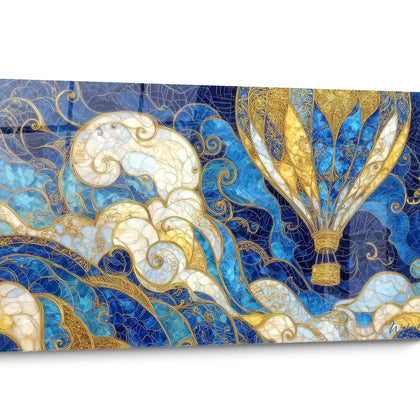
In the same family
Also explore the theme Landscapes
-
 View all1542
artworks
-
 Rainbow74
artworks
-
 Architecture30
artworks
-
 Northern Lights32
artworks
-
 Other Landscapes117
artworks
-
 Campaign51
artworks
-
 Cascade104
artworks
-
 Waterfalls12
artworks
-
 Lavender Fields13
artworks
-
 Sky14
artworks
-
 Starry Sky8
artworks
-
 Sunset37
artworks
-
 Desert82
artworks
-
 Underwater Depths38
artworks
-
 Forest148
artworks
-
 Gorges and Canyons41
artworks
-
 Natural Caves565
artworks
-
 Islands and Archipelagos55
artworks
-
 Jungle9
artworks
-
 Lakes77
artworks
-
 The World of the Sea189
artworks
-
 Marine71
artworks
-
 Sea77
artworks
-
 Mountain304
artworks
-
 Ocean16
artworks
-
 Abstract Landscape25
artworks
-
 Lighthouses34
artworks
-
 Beach113
artworks
-
 Ports19
artworks
-
 Savanna5
artworks
-
 Tropics9
artworks
-
 Night City5
artworks
-
 Volcanoes57
artworks
-
 Aerial View17
artworks
All about Hot Air Balloon Wall Art
- Description Painting hot air balloon
- Symbolism and emotional impact
- Visual compositions of aerostats
- Integration into spaces
A painting hot air balloon instantly transforms your interior by inviting escape and travel. This mural representation of colorful hot air balloons captures the very essence of aerial adventure and the dream of elevation. Discover how these large-format artworks create unique atmospheres and disrupt the spatial perception of your living rooms.
The evocative power of hot air balloons in wall decoration
Acquiring a painting hot air balloon goes far beyond the simple decorative gesture to become part of a profound psychological approach. These representations of balloons floating in the skies trigger specific emotional reactions linked to our ancestral fascination with flight and the conquest of the skies. Unlike other wall decorations, the imagery of a hot air balloon instantly activates our imagination linked to freedom, overcoming earthly limits, and exploring new horizons.
Why do hot air balloons create such a particular atmosphere?
The answer lies in the universal symbolism of balloon flight, perceived as the most poetic and contemplative form of aerial movement. A painting depicting large-format hot air balloons generates an upward dynamic in space, visually creating the illusion of a room with volumes widened upwards. This accentuated impression of ceiling height is exclusive to representations of flying objects, particularly hot air balloons, which, unlike airplanes, suggest a gentle and meditative ascent. The warm tones traditionally associated with balloon envelopes - sunny yellows, vibrant reds, luminous oranges - diffuse a positive energy comparable to that of a permanent sunrise in your interior.
The psychological impact of takeoff scenes on daily life
Neuroscience confirms that the regular observation of representations of hot air balloons positively influences our state of mind by stimulating the brain areas associated with dreaming and mental projection. In a child's bedroom, a large-format hot air balloon painting becomes a catalyst for imagination, encouraging adventure stories and nurturing curiosity for exploration. For adults, contemplating these suspended balloons daily acts as a visual reminder of the importance of gaining perspective on the challenges of everyday life. This metaphor of physical elevation translates unconsciously into mental elevation.
Collectors of themed travel wall decoration systematically prefer representations of hot air balloons rather than those of other means of air transport. This preference is explained by the nostalgic and romantic dimension inherent in hot air balloons, evoking the first aerial adventures of the Montgolfier brothers in the 18th century. A painting depicting several hot air balloons flying over rolling landscapes or old cities creates a temporal bridge between our modern era and the golden age of ballooning, a period when every ascent was a spectacular event attracting amazed crowds.
Distinct effects according to the flight configurations represented
A painting hot air balloon depicting a solitary balloon in an immense sky generates a feeling of tranquility and solitary meditation, perfect for resting areas such as adult bedrooms or reading corners. Conversely, a composition showing several colorful balloons in formation creates a festive and social dynamic, ideal for collective living spaces. Representations of hot air balloons at different altitudes - some rising, others hovering, a few initiating their descent - visually tell a temporal story that keeps the eye constantly moving across the wall surface.
The presence of miniature figures in the gondolas, although subtle on a large-scale wall art piece, adds a crucial narrative dimension. These human silhouettes allow the viewer to mentally project themselves into the hot air balloon experience, transforming passive observation into an active imaginative journey. This psychological identification remains specific to hot air balloons, as their slow speed and moderate altitude make them mentally more accessible than representations of airplanes or other fast aircraft.
The unintentional color therapy of aerostatic palettes
Manufacturers of hot air balloons traditionally use saturated primary colors and contrasting geometric patterns for visibility in the air. Transposed onto a large-format wall painting, these bold color combinations act as energizing visual stimulants. A hot air balloon painting with dominant reds and yellows activates morning spaces by reinforcing the natural energy of sunrise, while compositions favoring deep blues and purples create soothing twilight atmospheres for nighttime spaces.
Purchasing a wall representation of hot air balloons is therefore an investment in a specific atmosphere that is impossible to reproduce with other decorative themes. The unique combination of ascending symbolism, historical nostalgia, energizing palettes, and narrative potential makes a hot air balloon painting a powerful transformative element for any living space seeking to escape the ordinary terrestrial.
Visual compositions and unique perspectives of aerostatic scenes
Wall representations of hot air balloons adhere to specific visual codes that radically distinguish them from any other form of decoration. A hot air balloon painting of large dimensions systematically exploits the verticality of the wall space to create layered atmospheric compositions, mimicking the different altitude layers that hot air balloons actually traverse. This visual stratification - ground at the bottom, intermediate flight zone, celestial vault at the top - generates exceptional depth of field that draws the eye upwards and creates the illusion of a window open onto infinity.
How do viewing angles transform spatial perception?
The majority of hot air balloon paintings adopt a low-angle perspective, positioning the viewer on the ground looking up at the balloons. This compositional choice is never arbitrary: it psychologically places the observer in a position of wonder, reproducing the authentic experience of spectators witnessing a hot air balloon launch. This upward viewing angle visually enlarges the perceived height of your room, a valuable architectural effect in spaces with standard ceilings. Balloon envelopes occupying the upper part of the frame seem to literally emerge from the physical limits of the wall, creating an illusory extension of your living space.
Some bolder compositions adopt an aerial view, showing hot air balloons flying over patchwork landscapes - fields, forests, miniature villages. This inverted perspective produces a radically different effect: it invites the viewer to mentally adopt the point of view of the aeronauts, transforming the wall space into a panoramic window on the world seen from above. These representations are particularly suitable for reflection or work spaces, as they subtly evoke the detachment and overall vision necessary for strategic decision-making.
The atmospheric elements specific to hot air balloon paintings
A hot air balloon painting masterfully exploits atmospheric phenomena to create depth and movement. Clouds become essential altitude markers: fluffy cumulus clouds at mid-height suggest that some balloons are flying below while others are above them, creating three distinct planes in a two-dimensional composition. This atmospheric layering technique remains exclusive to aerostatic representations, as only hot air balloons evolve in this intermediate zone between earth and the upper atmosphere, where cloud formations remain accessible and detailed.
Variations in celestial brightness are another major distinguishing feature. Paintings depicting hot air balloons at sunrise or sunset capture spectacular color gradients - from powdery pink to deep violet, from copper orange to navy blue - which are reflected and amplified by the curved surfaces of the balloon envelopes. These reflected light games create multiple bright focal points on your wall, unlike compositions with a single light source. The eye naturally moves from one illuminated balloon to the next, maintaining prolonged visual engagement.
What decorative motifs on the envelopes enrich the composition?
Historical and contemporary hot air balloons display a variety of motifs - vertical stripes, checkerboards, spirals, blocks of color, national flags - which transform each aerostat into a unique graphic element within the overall composition. A hot air balloon painting featuring five to seven different balloons thus offers a visual richness comparable to a collection of individual artworks, while maintaining a thematic consistency. This multiplicity of geometric patterns on spherical surfaces creates texture and depth effects impossible to achieve with static subjects on the ground.
The cast shadows of the hot air balloons on the landscapes below add a fascinating sense of time. Depending on the angle of the sun depicted, these shadows stretch or condense, implicitly indicating the time of day and creating a visual link between the aerial balloons and the terrestrial world. This shadow-light dialogue between sky and earth anchors the composition in a tangible physical reality despite the dreamlike nature of the subject.
Management of proportions in monumental formats
On a large-scale painting, the relative proportions between hot air balloons, clouds, horizon, and sky become critical to maintaining perspective realism. The balloons in the foreground must display visible details - ropes, basket, burners - while those in the background are reduced to suggested colored forms, creating an impression of natural atmospheric distance. This dimensional gradation guides the viewer's gaze through different depths of field, transforming a flat wall into a three-dimensional aerial landscape.
The most successful compositions integrate identifiable terrestrial elements - steeples, hills, streams - which serve as reference scales and accentuate the impressive altitude of the aerostats. A hot air balloon painting showing balloons evolving above recognizable monuments simultaneously creates a geographical anchor and a sense of travel, two complementary psychological dimensions that enrich the daily contemplative experience of the wall art.
Strategies for integrating aerostatic representations according to living spaces
Installing a hot air balloon painting in a large format requires a precise understanding of the spatial dynamics specific to each environment. Unlike generic wall decorations, representations of hot air balloons specifically interact with the architectural verticality and natural lighting of your rooms. The strategic positioning of these aerial artworks determines the extent of their transformative impact on the overall atmosphere of your interior.
What location optimizes the upward effect in a communal living space?
In a living room or family room, a hot air balloon painting finds its full expression on the main wall visible from the entrance of the room. This immediate welcoming position creates an emotional surprise effect: the visitor instantly discovers a visual window open to the skies, transforming their perception of confined space into a sensation of unlimited openness. For rooms with standard ceilings between two and three meters, prioritize a pronounced vertical format that visually amplifies the ceiling height, the balloon envelopes almost brushing the upper edge of the frame to suggest their continuation beyond architectural limits.
Living spaces bathed in natural light particularly benefit from hot air balloon paintings with luminous palettes - golden yellows, solar oranges, vermilion reds. These warm tones capture and reflect daylight, creating mobile points of brilliance that evolve according to the course of the sun. Conversely, north-facing rooms or naturally dark rooms are illuminated with representations of hot air balloons against a backdrop of a dazzling azure sky, artificially introducing the missing celestial brightness. This chromatic compensation transforms an architectural disadvantage into a distinctive decorative opportunity.
Decorating children's rooms with the hot air balloon theme
A hot air balloon painting in a child's room uniquely activates spatial and narrative imagination. Position the artwork facing the bed, creating the first and last visual stimulus of the day - an invitation to a dream of adventure at bedtime, a promise of exploration upon waking. Compositions showing animals or characters in the balloon baskets enrich the narrative potential, transforming the wall into a support for invented stories. This interactive dimension remains exclusive to hot air balloons, as their slow speed and accessible appearance make them mentally "rideable" by a child's imagination, unlike airplanes or rockets which are too technological.
For shared children's rooms, a painting showing several distinct hot air balloons allows each child to identify with "their" personal balloon, creating individual landmarks in a common space. This psychological appropriation facilitates harmonious coexistence by offering a form of respected symbolic territory. The bright traditional colors of hot air balloons also stimulate awakening and morning energy, particularly beneficial for children who are difficult to wake up.
Transition spaces and the invitation to mental travel
Corridors, stairwells, and entrance halls become travel galleries when adorned with hot air balloon paintings. These passageway areas gain narrative meaning by symbolically transforming into aerial corridors, mentally preparing for a change of space. A horizontal panoramic format in a narrow corridor creates the illusion of a lateral extension, visually reducing the feeling of confinement of close walls. Hot air balloons evolving in a line at different altitudes guide the eye forward, dynamizing circulation in these transitional spaces.
How do offices and professional spaces benefit from hot air balloon views?
In an office or workspace, a hot air balloon painting acts as a permanent visual reminder of the need to rise above everyday challenges. This metaphor of mental elevation subtly influences the approach to complex problems, encouraging a holistic view rather than getting bogged down in immediate details. Compositions showing hot air balloons flying over vast landscapes - patchwork agricultural fields, mountain ranges, desert expanses - evoke strategic planning and long-term perspective, essential qualities for productive professional reflection.
Coworking spaces or creative meeting rooms exploit hot air balloon imagery to stimulate divergent thinking. The visual presence of hot air balloons implicitly suggests that "anything is possible", that earthly limits can be transcended, encouraging teams to propose innovative solutions without self-censorship. This psychology of mental elevation makes the hot air balloon painting an indirect but effective brainstorming tool.
Visual balance considerations with existing furniture
Large-format hot air balloons require specific decorative balance with your furniture. Their airy and light nature contrasts advantageously with massive dark wood furniture or deep sofas, creating a visual dialectic between earthly gravity and celestial lightness. Avoid cluttering the adjacent wall with shelves that would fragment the feeling of spatial openness. Maintain a visual breathing zone around the painting, allowing the hot air balloons to "float" freely without decorative competition.
The textiles in your space - curtains, cushions, rugs - can subtly pick up the dominant colors of the hot air balloon painting without reproducing the explicit pattern. A mustard yellow cushion echoing a golden balloon, a sky blue curtain recalling the sky depicted: these discreet color correspondences create a sophisticated decorative coherence that unifies the space without heavy thematic redundancy.
Frequently Asked Questions about hot air balloon paintings
Is a hot air balloon painting suitable for contemporary minimalist interiors?
Absolutely. Choose a refined representation showing a single balloon against a uniform sky with soft colors - pearl gray, pale blue, rose beige. This minimalist approach to the hot air balloon subject retains the symbolism of elevation while respecting contemporary aesthetic sobriety. The absence of earthly elements in the composition reinforces the sought-after pure contemplative dimension in minimalist interiors.
Do hot air balloon paintings work in spaces with very high ceilings?
Generous volumes are the ideal environment for large-format balloon representations. With ceiling heights exceeding three meters fifty, opt for monumental vertical formats where hot air balloons occupy different atmospheric levels, fully exploiting the available verticality. This configuration spectacularly amplifies the aerial depth effect, transforming your wall into a true immersive celestial panorama.
Can a hot air balloon painting be combined with other travel themes?
Hot air balloons integrate harmoniously into a wider decorative collection of travel themes, provided that a consistency of era or atmosphere is maintained. Combine the balloon representations with antique maps, vintage globes, or photographs of natural landscapes flown over. Avoid juxtapositions with modern means of transport that would break the nostalgic and contemplative atmosphere typical of hot air balloons. To further explore, we invite you to paintings of landscapes which offers a complementary perspective on this artistic universe.
What viewing distance is recommended to fully appreciate a large hot air balloon painting?
For a format exceeding one hundred and fifty centimeters in width, position yourself at a minimum distance equivalent to one and a half times the width of the painting. This distance allows your peripheral vision to encompass the entire composition while perceiving the details of the baskets and ropes. The aerial immersion effect is maximized when the painting occupies approximately forty percent of your frontal field of vision, creating a window large enough to trigger the voluntary suspension of disbelief and an invitation to mental travel.
Further reading
Our articles on this topic
- Vintage Hot Air Balloon Drawing: Decor Guide & Inspiration for Your Interior
- Vintage hot air balloon on acrylic glass: how to showcase it in your living room
- Gifting a paragliding painting: which moment to choose for which gift?
- Paraglider painting for the office: aerial escape at the heart of work
- Paragliding sunset painting: creating a getaway corner at home
- Do Cloud Paintings Create a Sense of Lightness?
L'art qui suscite l'envie
Maison belge d'art mural grand format
14 jourspour changer d'avis*
Protection Walenskyincluse
Fabriquéen Italie
FormatXXL
Kit de fixationtoujours fourni
* Hors tableaux personnalisés et tailles personnalisées


