


Flute Painting
The Flute Painting collection gathers silhouettes caught in their own breath: musicians at dusk, bohemian flautists or solitary sailors, all captured in that suspended moment where music seems to color the air itself. Between golden light, blazing skies and watercolor splashes, these Flute paintings create a contemplative, almost meditative world. An invitation to hang this silent breath that runs through the canvas in your home.
 Flutist Wall Art Red and White with Golden Hair - Intense Breath - Flute Edition$199.90
 Flautist on Cliff at Sunset Wall Art - Melody Facing the Ocean - Flute Edition$249.90
 Bohemian Flautist Wall Art in Purple and Gold under Tapestry - Melodic Communion - Flute Edition$249.90
 Flute Player Wall Art in Pink and Green near the Herons - Melodic Flight - Flute Edition$249.90
 Gold Flutist Wall Art on Foggy Train Platform - Suspended Note - Flute Edition$249.90
 Sailor Playing the Flute at Sunset - Song of the Open Sea - Flute Edition$249.90
 Musician Wall Art with Pink and Gold Petals - Spring Melody - Flute Edition$249.90
 Golden Flutists on Emerald Ridge - Dawn Duo - Flute Edition$249.90
 Seated Flutist Overlooking an Eastern City Wall Art - Twilight Melody - Flute Edition$249.90
 Blonde Flutist Wall Art in Red and Black - Musical Breath - Flute Edition$249.90
 Flutist Facing the Turquoise-Orange Ocean Wall Art - Shoreline Melody - Flute Edition$249.90
 Musical Trio in Navy Blue and Sunset Orange Wall Art - Nomadic Harmony - Flute Edition$249.90
 Flutist Wall Art in a Golden Field at Sunset - Evening Melody - Flute Edition$249.90
 Golden Flute Players in Emerald Veils Wall Art - Shared Breath - Flute Edition$249.90
In the same family
Also explore the theme Music
-
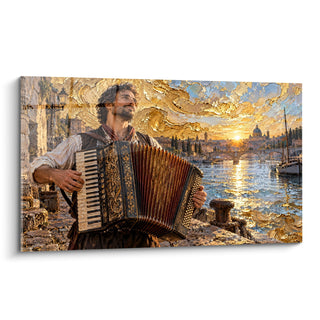 Accordion26
artworks
-
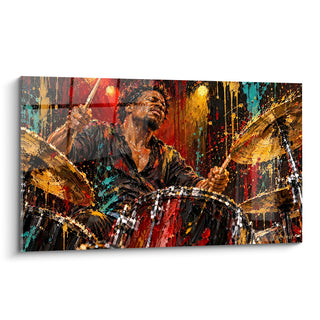 Battery40
artworks
-
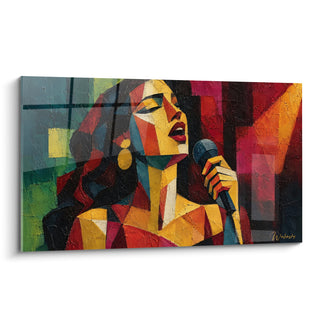 Song33
artworks
-
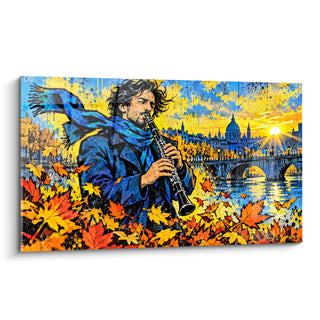 Clarinet3
artworks
-
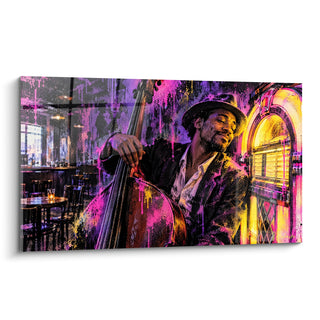 Double bass28
artworks
-
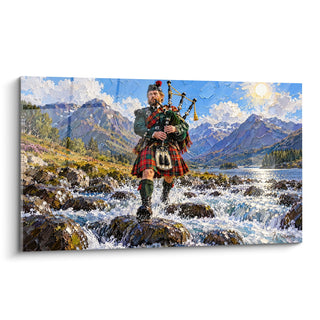 Bagpipes13
artworks
-
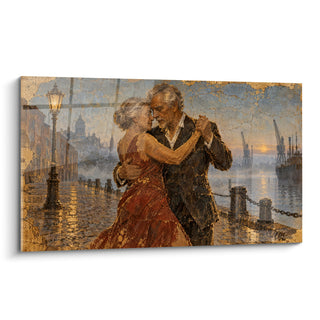 Ballroom dance34
artworks
-
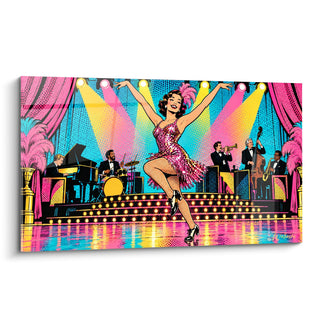 Disco51
artworks
-
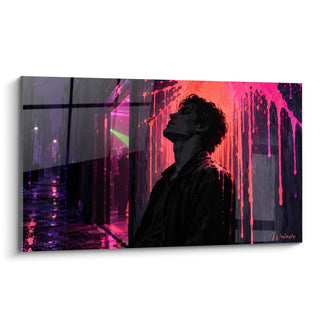 Nightclub26
artworks
-
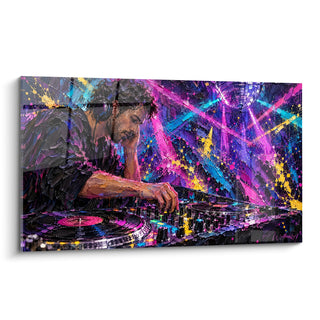 DJ66
artworks
-
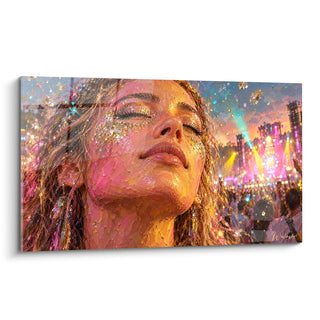 Electro27
artworks
-
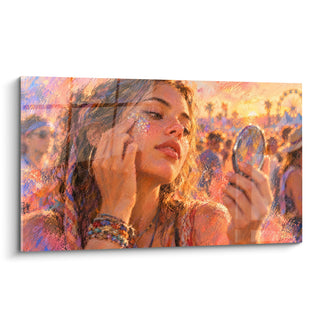 Music Festival11
artworks
-
 Panpipes20
artworks
-
 Funk13
artworks
-
 Guitar108
artworks
-
 Handpan20
artworks
-
 Harmonica3
artworks
-
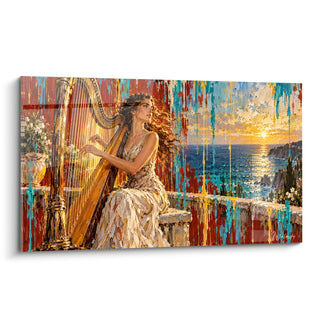 Harp18
artworks
-
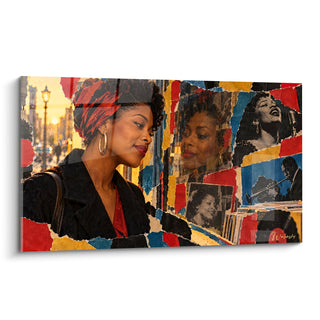 Old School Hip Hop40
artworks
-
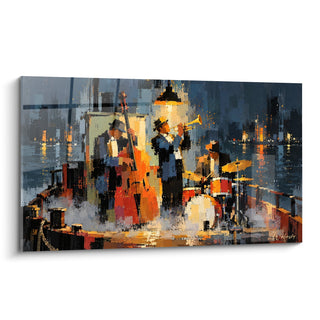 Jazz8
artworks
-
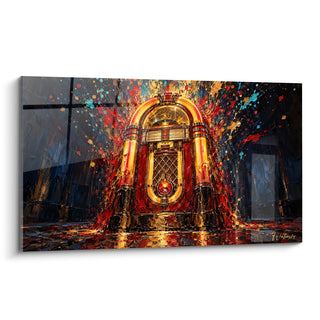 Jukebox12
artworks
-
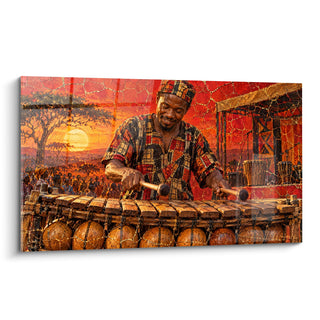 Various Musicians61
artworks
-
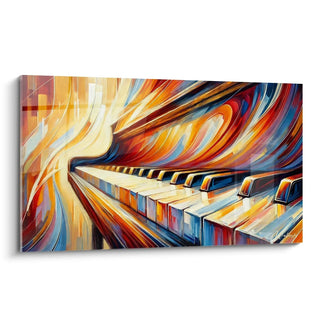 Musical note21
artworks
-
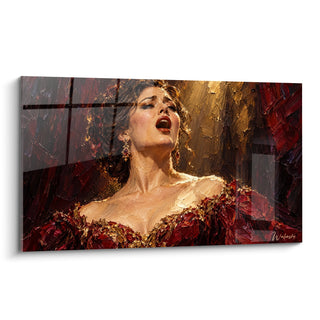 Opera23
artworks
-
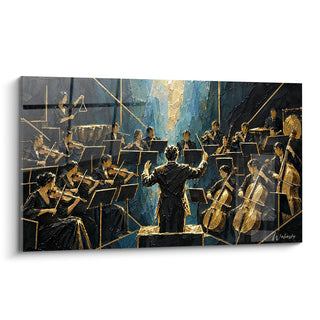 Orchestra6
artworks
-
 Piano295
artworks
-
 Punk35
artworks
-
 Reggae13
artworks
-
 Rock48
artworks
-
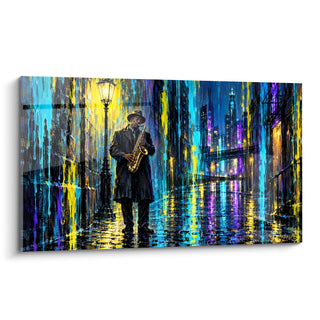 Saxophone64
artworks
-
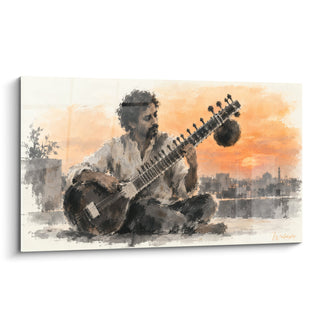 Sitar15
artworks
-
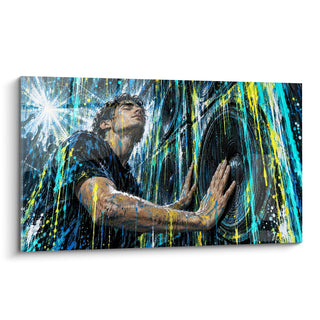 Sound System3
artworks
-
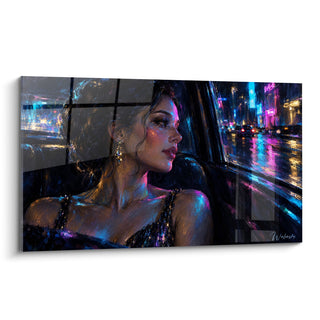 Music Star66
artworks
-
 Drum9
artworks
-
 Trumpet14
artworks
-
 Tuba4
artworks
-
 Trombone2
artworks
-
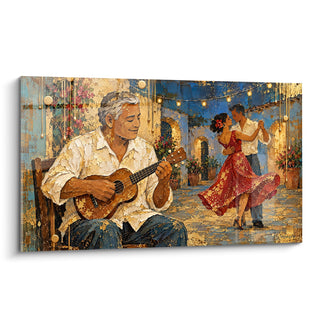 Ukulele41
artworks
-
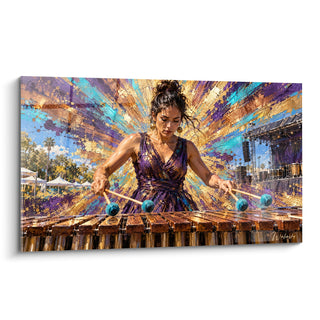 Vibraphone1
artwork
-
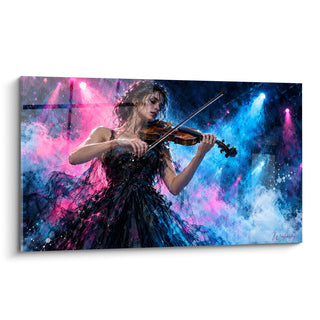 Violin237
artworks
-
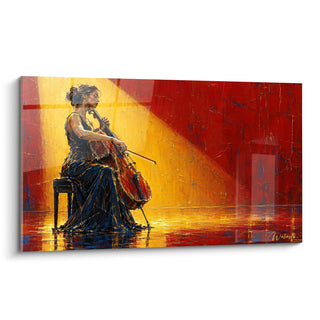 Cello56
artworks
-
 Vinyl43
artworks

All about Flute Painting
- Flute Painting Presentation
- Breath made visible
- Light at the end of the day
- Portraits of a solitary gesture
The Flute Painting collection brings together scenes where music becomes visible silence: a sailor far out at sea, a flautist beneath a golden drape, a musician seated at the edge of a sleeping city. Each canvas captures the precise moment when breath becomes gesture, when eyes close and the world around seems to slow down to listen.
What unites these Flute paintings, beyond the scenes and settings, is a shared palette of twilight light and watercolor bursts, a way of painting sound without ever really showing it. The drips, splashes and moving drapery convey a contained energy, that of a moment that will never return.
This collection is for those seeking, more than a decorative scene, a calming presence: a suspended breath hung on the wall, an invitation to slow down. It suits interiors looking for a warm, meditative tone, where music becomes a pretext for contemplation rather than a simple motif.
Whether for a living room, an entrance or a study, these Flute paintings bring a particular breath of air: the universal human gesture of breath turned into melody, captured here in all its pictorial fragility.
How do these Flute paintings depict a sound you cannot see?
Why do these silhouettes always keep their eyes closed?
In most Flute paintings in this collection, the musicians play with eyes closed, cut off from the outside world. This recurring choice is not incidental: closing one's eyes to hear better is a universal gesture, signaling total absorption in the present moment. Painting this detail means showing the invisible, suggesting that music is played as much inside the body as outside it. Hung in your home, this contemplative attitude reminds us that a space needs no noise to be inhabited: it can be filled with a silent tension, a presence that is sufficient in itself.
Where does this splashed material covering the silhouettes come from?
The technique of watercolor drips, visible across much of these Flute paintings, has its roots in a painterly tradition where the chance spread of pigment mirrors the unpredictability of sound. Once played, a musical note can never be fully controlled; it spreads and transforms, and the paint drip reproduces that same principle of uncontrolled expansion. This technical choice gives each silhouette a living texture, almost dissolving into the air around it, and gives the room where it hangs a continuous vibration rather than a frozen image.
Why does wind almost always pass through these compositions?
Loose hair, lifted drapes, rippling veils: wind is a recurring motif in these Flute paintings, and it is far from decorative. The flute is the wind instrument par excellence, born of circulating breath, and the painters of this collection sought to bring that movement of air into the image itself. The fluttering fabric and escaping strand of hair are simply the visible extension of the musician's breath. This gives these canvases a perpetual motion that animates a wall without ever becoming agitated, a breath rather than agitation.
Why does twilight dominate the palette of these Flute paintings?
What does this sun that returns in almost every scene signify?
A low, orange sun, sometimes reduced to a simple white disc on the horizon: this constant presence in the Flute paintings of the collection is no compositional accident. Twilight is traditionally associated with rest, the end of work, the moment when music can finally rise without urgency. Playing the flute at sunset means pausing time, closing a day with a free and beautiful gesture. This golden light, repeated from canvas to canvas, sets a warm, soothing tone in a room, conducive to slowing down rather than agitation.
Why do these golden and orange tones recur so often?
The chromatic dominance of these Flute paintings, between gold, ochre and burnt orange, directly evokes the warmth of the last sun before night. These hues have a documented physiological effect: they slow the perceived rhythm and invite contemplation rather than action. Combined with the figure of the musician absorbed in playing, they reinforce the sensation of suspended time. An interior that welcomes these colors gains a particular warmth, less bright than harsh lighting, more enveloping, as if bathed in the end of a summer day.
What does this sky torn into purple clouds tell us?
Several Flute paintings in this collection show a turbulent sky, crossed by violet or burgundy clouds, far from a peaceful, uniform dusk. This dramatization of the sky often accompanies the loneliest figures, such as the sailor far out at sea or the isolated musician facing a city. The agitated sky then becomes the reflection of a dense inner life, an emotion that goes beyond the apparent calm of the musical gesture. Hanging such a scene means choosing a work that not only soothes but also tells of inner tension, a depth beyond simple serenity.
Who are the figures that the Flute paintings choose to depict?
Why are these musicians almost always alone or set back?
Whether a sailor at the prow of a boat or a man seated on a wall overlooking a city, the Flute paintings of this collection favor isolated figures, set apart from a larger scene. This solitude is not an absence but a staging choice: it places the viewer before an intimate, almost stolen moment, where music is meant for no one but the person playing it. This kind of representation particularly suits retreat spaces in the home, places where one seeks calm more than company, a reading corner or a personal study.
What changes when a group appears instead of a single figure?
Unlike the solitary scenes, some Flute paintings gather several musicians, sometimes an entire circle beneath a drape, sometimes a trio burst apart in a style close to exploding watercolor. This collective staging evokes another use of the instrument: not individual meditation but sharing, celebration, gathering around a common sound. The choice between a single figure and a group profoundly changes the tone of a room, between reflective intimacy and convivial energy, and allows the collection to be oriented toward very different uses depending on the space to be decorated.
Why do clothes matter as much as faces in these scenes?
Linen dress, open white shirt, earth-patterned shawl: drapery takes up a considerable place in the Flute paintings, sometimes almost more than the faces themselves. This pictorial choice accentuates the movement of the body absorbed in musical play, the fabrics becoming the visible extension of breath and gesture. This attention to textile matter, rendered in broad strokes or drips, gives each silhouette an almost sculptural presence despite the absence of sharp outlines, and gives these works a texture that remains perceptible even at a distance, in a hallway or a living room passed through quickly.
FAQ about flute paintings
Why does the flute come up so often as a painting subject rather than another instrument?
The flute is one of the oldest wind instruments known, associated since antiquity with pastoral and meditative uses rather than festive ones. It evokes a pure sound, close to the human breath, which makes it a privileged subject for painting interiority and contemplation rather than the exuberance of an orchestra or a brass band.
Are these Flute paintings suitable for a room where calm is wanted rather than animation?
Yes, most scenes favor solitary figures, eyes closed, in late-day light. This reflective tone particularly suits bedrooms, studies and reading corners, places where one seeks a soothing presence rather than a visually animated or noisy focal point.
What is the difference between a solitary musician scene and a group scene in this collection?
The solitary musician creates an introspective atmosphere, conducive to withdrawal and reverie. The group scene, with several instruments or a circle of figures, instead brings shared, convivial energy. The choice depends on the desired use: silent intimacy or collective liveliness in the room.
Further reading
Our articles on this topic
- How to pair a flute painting with a neutral color palette?
- Pan flute wall decor in bohemian style: how to create a captivating atmosphere?
- Pan flute painting in natural wood and earth tones: decor that tells a story
- Acrylic glass print of handpan: creating a zen atmosphere that invites meditation
- Panpipes painting: the original gift for a passionate musician
- Champagne flute acrylic glass print: the kitchen decor that sparkles
L'art qui suscite l'envie
Maison belge d'art mural grand format
14 jourspour changer d'avis*
Protection Walenskyincluse
Fabriquéen Italie
FormatXXL
Kit de fixationtoujours fourni
* Hors tableaux personnalisés et tailles personnalisées


