


Funk Painting
Here, the paint vibrates like a bassline rising through a packed room. The Funk Painting collection gathers faces and silhouettes caught in brilliance, where deep violet, burnt orange and fuchsia pink answer one another in thick impasto. Each canvas captures an attitude, a confidence, a burst of laughter or an unwavering gaze. These are not mere portraits: they are chromatic explosions designed to electrify a wall and wake up an entire room.
 Afro Woman with Golden Highlights and Burgundy Bag Wall Art - Attitude on the Rooftops - Funk Edition$249.90
 Gold Turquoise and Pink Dress Wall Art Splatter - Black Microphone Held - Funk Edition$249.90
 Funk Laughing Woman with Orange and Pink Hair Wall Art - Burst of Laughter - Funk Edition$249.90
 Woman afro on turquoise and gold subway platform - Urban suspended moment - Funk Edition$249.90
 Singer in Gold Dress on Staircase Wall Art - Climbing Towards Glory - Funk Edition$249.90
 Singer at Vintage Microphone Pink and Blue Wall Art - Night Trance - Funk Edition$249.90
 Funk Woman Mosaic Red-Haired and Turquoise with Gold Hoop Earrings Wall Art - Shattered Brilliance - Funk Edition$249.90
 Man with Pink and Blue Geometric Glasses Wall Art - Electric Attitude - Funk Edition$249.90
 Man Wiping Brow Purple Shirt Wall Art - Pause in the Furnace - Funk Edition$249.90
 Man Portrait with Purple and Amber Hair Wall Art - Magnetic Aura - Funk Edition$249.90
 Man Gold Chain Pink and Blue Glasses Wall Art - Bold Gaze - Funk Edition$249.90
 Afro Woman Wall Art in Pink and Gold Powders - Splash of Joy - Funk Edition$249.90
 Male Portrait with Purple and Copper Hair Wall Art - Incandescent Icon - Funk Edition$249.90
In the same family
Also explore the theme Music
-
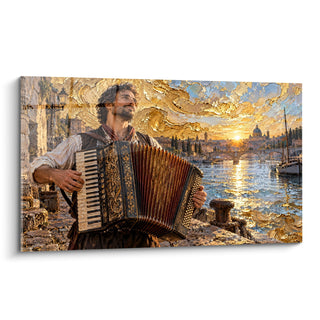 Accordion26
artworks
-
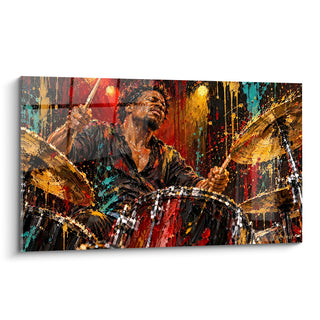 Battery40
artworks
-
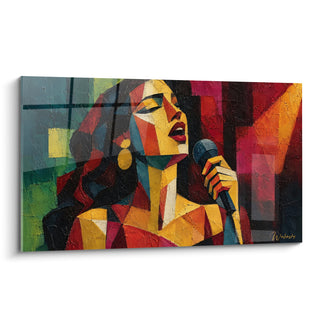 Song33
artworks
-
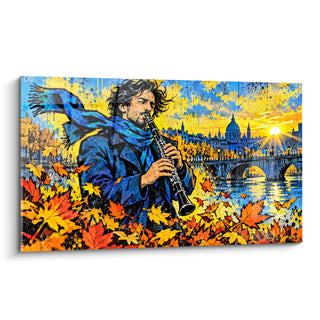 Clarinet3
artworks
-
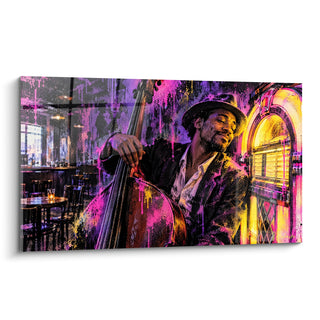 Double bass28
artworks
-
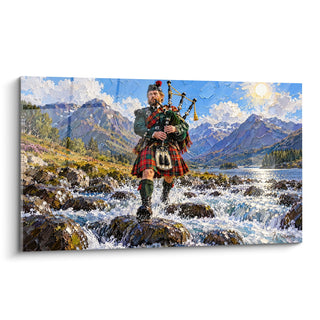 Bagpipes13
artworks
-
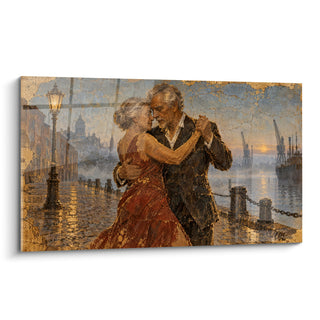 Ballroom dance34
artworks
-
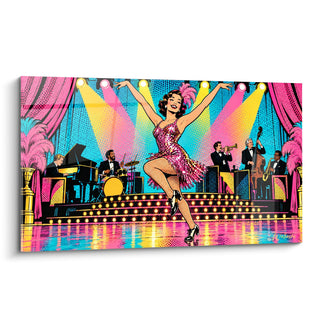 Disco51
artworks
-
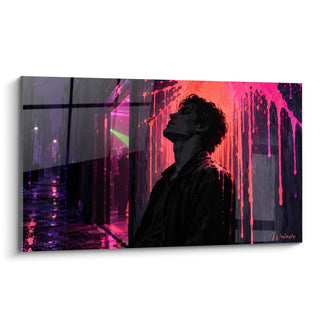 Nightclub26
artworks
-
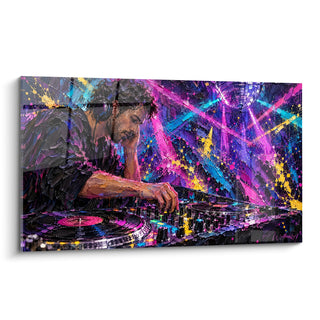 DJ66
artworks
-
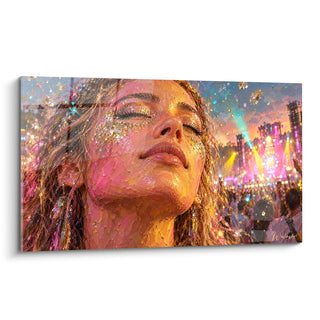 Electro27
artworks
-
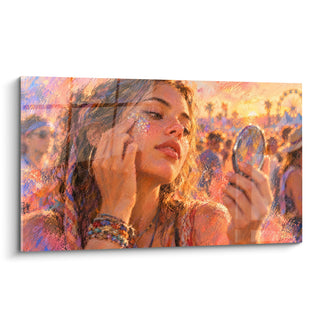 Music Festival11
artworks
-
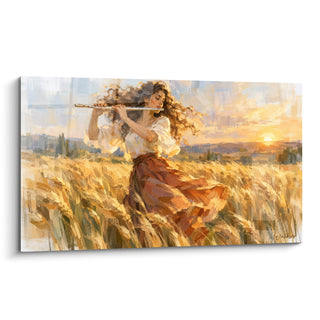 Flute14
artworks
-
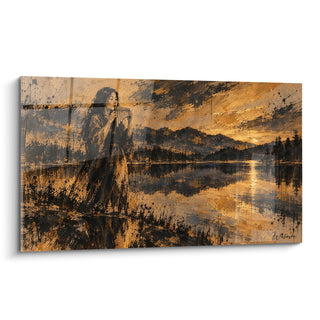 Panpipes20
artworks
-
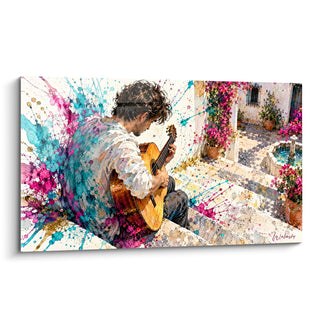 Guitar108
artworks
-
 Handpan20
artworks
-
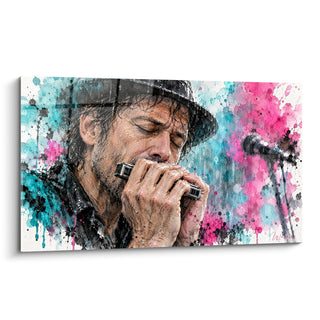 Harmonica3
artworks
-
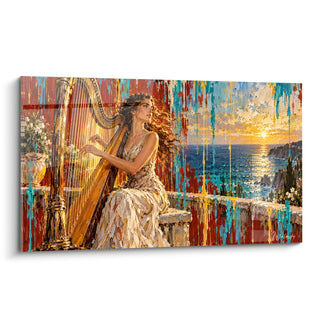 Harp18
artworks
-
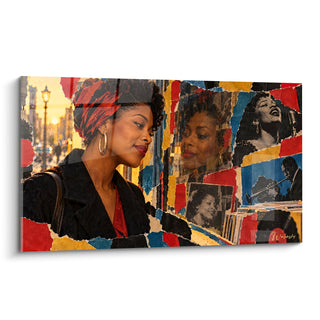 Old School Hip Hop40
artworks
-
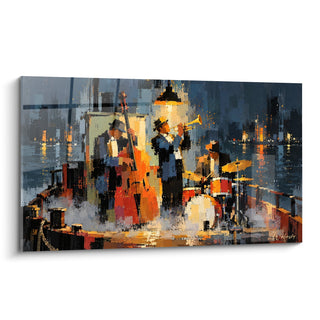 Jazz8
artworks
-
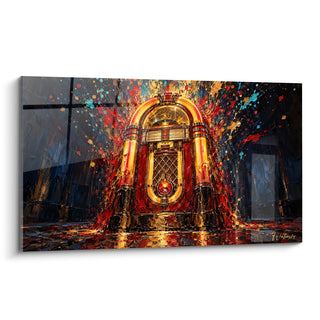 Jukebox12
artworks
-
 Various Musicians61
artworks
-
 Musical note21
artworks
-
 Opera23
artworks
-
 Orchestra6
artworks
-
 Piano295
artworks
-
 Punk35
artworks
-
 Reggae13
artworks
-
 Rock48
artworks
-
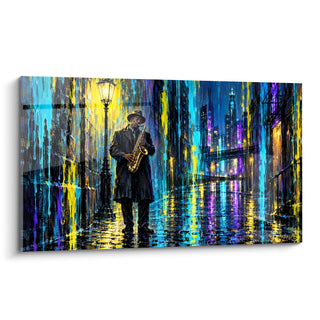 Saxophone64
artworks
-
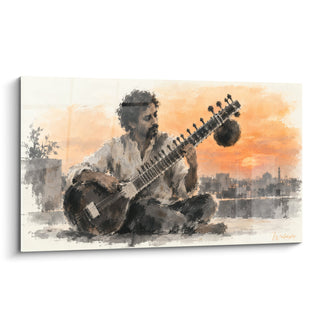 Sitar15
artworks
-
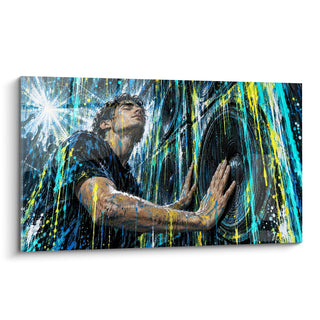 Sound System3
artworks
-
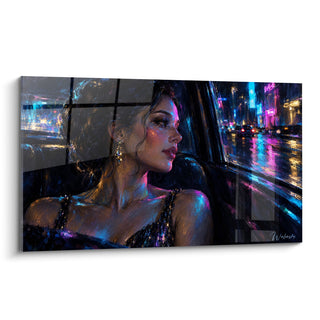 Music Star66
artworks
-
 Drum9
artworks
-
 Trumpet14
artworks
-
 Tuba4
artworks
-
 Trombone2
artworks
-
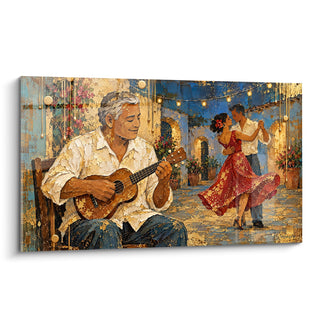 Ukulele41
artworks
-
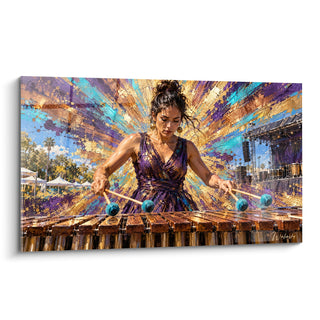 Vibraphone1
artwork
-
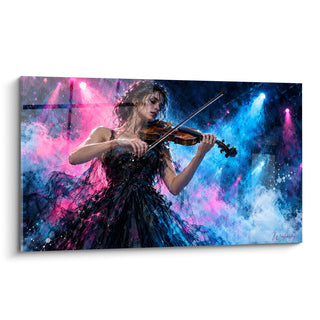 Violin237
artworks
-
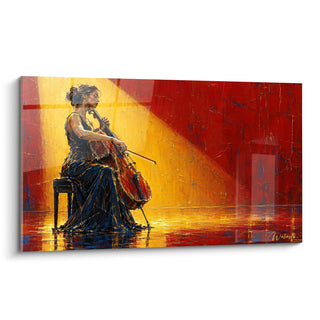 Cello56
artworks
-
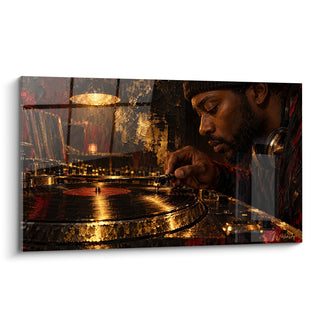 Vinyl43
artworks

All about Funk Painting
- Funk Painting Overview
- The Incandescence of Materials
- Nocturnal Scenes and Silhouettes
- Portraits and Candid Emotions
The Funk Painting collection brings together portraits and scenes where colour becomes almost audible. Textured hair in impasto, faces fragmented into fluorescent facets, direct gazes or radiant laughter: each canvas carries a stage-like energy, as if the music had frozen into pigment just before catching its breath.
What unites these paintings is not a repeated motif but a shared temperature: incandescent palettes where violet, burnt orange, fuchsia pink and electric blue collide without ever going out. This chromatic warmth runs through every composition and gives the whole collection an immediately recognisable coherence, whichever canvas you choose.
These works speak to anyone who wants to inject movement into an overly sober interior, to those seeking a piece that catches the eye the moment you walk into a room. They find their place in a living room that loves to entertain, a corridor you walk through to music, or a creative workspace that needs a daily visual spark.
Hanging a Funk Painting means choosing a presence that never blends into the décor: it wakes it up. The collection offers a range of faces and suspended moments, each carrying the same promise, that of a colour eager to vibrate on a wall.
Where the colours that set these Funk Paintings ablaze come from
Why do violet and copper dominate these canvases so much?
On many Funk Paintings, the hair or background unfolds in broad impasto of purple and burnt orange, an almost sculptural material that catches light from every angle. This choice is far from arbitrary: these deep, warm tones recall the stage lighting of funk and soul concert halls of past decades, where coloured spotlights turned bodies into incandescent silhouettes. Rendered in thick paint, this artificial light becomes a tactile, almost living texture, giving each canvas a presence that goes beyond a simple portrait to become a sensation of warmth radiating through the room.
What does the geometric fragmentation of faces say?
Some Funk Paintings break a face into facets of fuchsia pink, electric blue and fluorescent yellow, like a human stained-glass window shattered under strobe light. This pictorial fragmentation draws on pop art and the aesthetic of 1970s record sleeves, a period when colour became a visual language in its own right, as expressive as sound. By multiplying coloured planes across a single skin, these works convey a fragmented energy specific to the stage moment, when movement blurs the contours and everything seems to vibrate to the same tempo.
Does thick impasto change how a portrait is perceived?
Material plays as important a role as colour in these Funk Paintings: the visible brushstrokes, the pronounced relief, the almost raw areas contrast with more smoothly and precisely rendered faces. This interplay between roughness and finesse creates a visual tension that holds the gaze longer than a uniform surface would. Hung in a room, a canvas built this way changes with the daylight, revealing different reliefs in the morning and evening, an effect only a thick painted surface can produce on a wall.
What the Funk Paintings tell of a concert night
Why do we so often find a mirror ball or a stage scene in the background?
Several Funk Paintings place a singer or a silhouette in the foreground, while a mirror ball, dancers or a brass musician can be glimpsed behind. This layered construction recreates the atmosphere of a 1970s funk concert hall, where stage and audience answered one another in a single collective movement. For whoever hangs such a canvas, a whole nocturnal ambience settles into the room, a sense of suspended celebration that needs no music to be felt.
Are the vintage microphone and open shirt merely incidental details?
No: these recurring elements in some Funk Paintings anchor the scene in a specific era, when soul and funk filled stages and airwaves. The microphone held firmly, the shirt open over a gold chain, the generous afro form an immediately identifiable visual vocabulary, inherited from record sleeves and filmed concerts of that period. These details turn a simple portrait into an moment of performance, captured as if the canvas had just interrupted a movement mid-stride.
Why do these scenes always seem in motion?
The composition of many Funk Paintings favours oblique lines, tilted silhouettes and sketched gestures rather than frozen poses. This dynamic framing reflects a desire to capture the moment rather than the pose, a principle inherited from concert photography, where the goal was to seize the gesture in flight. Placed on a wall, such a canvas brings a constant visual rhythm to the room, as if the eye kept following a movement that never quite stops.
What the faces in the Funk Paintings say about their era
Why do these portraits always look straight ahead?
In most Funk Paintings, the subject holds the viewer's gaze without hesitation, whether it is a calm, assured look or a contagious burst of laughter. This frontality is no compositional accident: it echoes the codes of self-assertion of a musical culture that made confidence and stage presence central values. Hanging such a portrait means installing a assertive presence in a room, a face that asserts its personality without ever trying to dissolve into the surrounding décor.
Where does the warmth radiating from the laughter or smile depicted come from?
Some Funk Paintings capture a face in a frank burst of laughter, surrounded by hair that seems to explode into drops of colour. This pure joy, treated with an almost liquid material, evokes the spontaneity of lived rather than posed scenes, where emotion outweighs rigid composition. This choice gives the canvas a contagious joy that transforms the atmosphere of an entire room, far from the usual coldness of classical portraits hung in an interior.
Who are portraits treated with such intensity meant for?
These Funk Paintings speak to those who want a lived-in décor, far from neutral and silent compositions. The treatment of the face, between raw material and the precision of the gaze, draws the curious eye of contemporary painting as much as that of the musical culture that inspired it. For an interior that loves to entertain, talk and vibrate to the sound of a vinyl turntable, such an intense portrait naturally becomes an anchor point, a centrepiece that sets the tone for the whole atmosphere.
FAQ about Funk Paintings
Why are the colours of the Funk Paintings so saturated compared with other portraits?
Because the palette draws directly on stage lighting and 1970s record sleeves, an era when colour became a language in its own right. Violet, burnt orange and fuchsia pink reproduce the luminous intensity specific to concert halls, giving each canvas a vibration that softer tones could never reach.
Can a Funk Painting live alongside a more understated interior?
Yes, and it is often in this contrast that the canvas gains strength. Against clean lines or neutral tones, the chromatic intensity of the portrait becomes the room's natural focal point, without needing other decorative elements to exist. The contrast showcases the painted material without ever feeling out of place.
Why do some portraits in this collection seem captured in motion rather than posed?
Because they draw on the stage moment rather than the classic studio portrait: a gesture, a laugh, a gaze caught mid-performance. This visual spontaneity, inherited from concert photography, gives these canvases an energy that static poses would never convey as directly.
Further reading
Our articles on this topic
- Fauvist clown painting with expressive oil style: how to integrate it without a wrong note
- Fauvist painting and warm colors: the technique for brightening a dimly lit living room
- Jazz singer painting on brick background: elevating your loft apartment entrance
- Colorful abstract painting in boho style: how to integrate it into a living room
- Flapper-era fashion painting on aluminium Dibond: create a glamorous Art Deco mood at home
- Vintage pop art fashion painting in a contemporary living room: the guide to a successful pairing
L'art qui suscite l'envie
Maison belge d'art mural grand format
14 jourspour changer d'avis*
Protection Walenskyincluse
Fabriquéen Italie
FormatXXL
Kit de fixationtoujours fourni
* Hors tableaux personnalisés et tailles personnalisées


