



Night City Painting
Stepping into this collection means pushing open the door to an urban night that never goes out. The City at Night paintings gather these suspended moments where artificial light becomes painterly matter: neon signs, lit windows and blazing skylines blend with splashes of colour that echo the electric pulse of the metropolis. Each canvas captures a nocturnal atmosphere between solitude and urban vertigo, where the human figure dissolves into the dizzying play of city lights. A collection for anyone who loves the city when it sparkles.
 Young Woman Seated in a Pink and Blue Alley Wall Art - Electric Pause - Night City Edition$249.90
 Two Friends on a Blue-Purple Rooftop Wall Art - Lofty Companionship - Night City Edition$249.90
 Woman in Black Dress on Purple Balcony Wall Art - Pause on the Heights - City at Night Edition$249.90
 Man on Balcony Facing Orange Rooftops Wall Art - Dusk Break - Night City Edition$249.90
 Man in Hat in Front of Golden Skyscrapers Wall Art - Nocturnal Reverie - Night City Edition$249.90
In the same family
Also explore the theme Landscapes
-
 View all1542
artworks
-
 Rainbow74
artworks
-
 Architecture30
artworks
-
 Northern Lights32
artworks
-
 Other Landscapes117
artworks
-
 Campaign51
artworks
-
 Cascade104
artworks
-
 Waterfalls12
artworks
-
 Lavender Fields13
artworks
-
 Sky14
artworks
-
 Starry Sky8
artworks
-
 Sunset37
artworks
-
 Desert82
artworks
-
 Underwater Depths38
artworks
-
 Forest148
artworks
-
 Gorges and Canyons41
artworks
-
 Natural Caves565
artworks
-
 Islands and Archipelagos55
artworks
-
 Jungle9
artworks
-
 Lakes77
artworks
-
 The World of the Sea189
artworks
-
 Marine71
artworks
-
 Sea77
artworks
-
 Mountain304
artworks
-
 Hot Air Balloon5
artworks
-
 Ocean16
artworks
-
 Abstract Landscape25
artworks
-
 Lighthouses34
artworks
-
 Beach113
artworks
-
 Ports19
artworks
-
 Savanna5
artworks
-
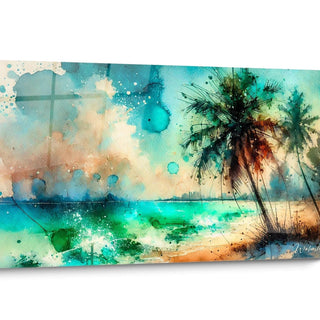 Tropics9
artworks
-
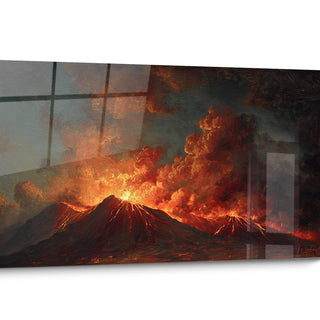 Volcanoes57
artworks
-
 Aerial View17
artworks
All about Night City Painting
- Presentation of the City Night painting
- The vermilion of the metropolis
- The vertigo of heights
- Matter and splatter
The City Night Painting collection brings together canvases where the urban night becomes a spectacle of lights, colours and silhouettes suspended between intimacy and immensity. Here there are no daytime landscapes or calm nature: each composition captures that precise moment when the city lights up, when skyscrapers turn into golden constellations and a human figure stands, often alone, before this incandescent backdrop.
What unites these paintings is a shared palette of deep blues, electric pinks and golden touches, crossed by splashes that evoke the perpetual motion of the metropolis. Whether it is a skyline seen through a window, a rooftop overlooking the lights or a neon-lit alley, the City Night collection always plays on the contrast between the silence of a human figure and the luminous effervescence surrounding it.
This collection is for those who love the city for its nocturnal energy as much as for its mystery: lovers of urban atmospheres, city dwellers nostalgic for their own balconies, or simply admirers of lights that never go out. Hung in a living room, an office or an entrance, these City at Night paintings bring a vibrant, almost audible presence that warms a wall without ever weighing it down.
In short, this selection offers not a simple view of the city but an immersion in its nocturnal breath: the skyline as a character, light as a language, and the human as a silent witness to this permanent spectacle.
Where does the orange glow that sets the City at Night paintings alight come from?
Why does this golden halo dominate so many lit windows?
In these canvases the skyscrapers are never black: they vibrate with an incandescent orange inherited from the sodium lighting that has equipped major boulevards and office towers for decades. This warm hue, typical of Western night cities, contrasts with the deep blue of the sky and creates the halo so recognisable in the City at Night paintings. Hung in your home, this light acts as a painted night-light: it warms a room without really lighting it, and recalls the artificial warmth of urban evenings.
Does the fuchsia pink have a particular meaning in these compositions?
The electric pink running through some canvases is not a mere decorative effect: it directly evokes the neon aesthetic popularised by shop signs and urban neon lights since the 1980s. This colour, associated with festive nights and nightlife, gives the City at Night paintings an almost audible dimension, like a visual echo of music and the movement of the streets. In an interior it introduces a lively, almost electric touch that stands out against more sober palettes.
Why does navy blue remain the backdrop of every scene?
The deep blue that structures most of these compositions corresponds to that particular hour, between dusk and nightfall, when the sky is no longer quite clear yet not yet black. The painters of the City Night collection use this hue as a stable base around which artificial lights can explode without ever fully dominating the whole. This deep blue acts as a soothing visual anchor, ideal for structuring a wall without really darkening it.
Why do these City at Night paintings so often place their figures up high?
What does this elevated viewpoint, which keeps recurring, signify?
Rooftops, balconies, upper-floor windows: these City at Night paintings almost always choose a dominant viewpoint over the city. This high framing is no accident: it expresses a desire to step back from urban agitation and observe the metropolis as a spectacle rather than drown in it. This overlooking perspective gives each scene a contemplative, almost meditative dimension that invites the viewer in turn to feel this calming distance from the citadin tumult.
Why does the human figure always seem so small compared with the city?
The human silhouette, whether seated, leaning on an elbow or simply turned toward the window, rarely fills the whole canvas: it stands out against an urban background far vaster than itself. This scale relationship, inherited from modern urban painting, emphasises the smallness of the individual before the immensity of the metropolis, without crushing them. In the City at Night paintings, this tension between intimate and monumental gives each room where they hang a particular breath, between human presence and urban grandeur.
Does the river or bay in the background serve a specific function?
Many of these compositions include a waterway winding between the buildings, reflecting the city's lights like a liquid mirror. This motif, common in metropolises built around a river or bay, visually doubles the luminous intensity by making it shimmer twice: once in the sky, once in the water. This play of reflections amplifies the sense of depth in the City at Night paintings and gives the scene an almost hypnotic quality, conducive to reverie once hung on the wall.
What the painterly technique of the City at Night paintings says about urban energy
Why do these paint splashes seem to escape the frame?
The colour projections crossing these canvases, diagonally or as suspended drops, draw directly on the dripping gesture, a technique in which paint is flung rather than laid on with a brush. Applied to the nocturnal city, this method visually conveys the speed, instability and unpredictability of urban life after dusk. In the City at Night paintings, this controlled chaos creates a striking contrast with faces or silhouettes painted realistically, reinforcing the impression that the city literally overflows the frame.
Does thick impasto change the perception of the night sky?
Some canvases in the collection treat the sky not as smooth flat areas but as relief of matter, in mosaic-like thick touches that catch light differently depending on the viewing angle. This technique, inherited from expressionist painting, gives the night sky an almost tactile texture, as if the clouds and urban glows were sculpted rather than painted. Hung facing a window or under changing light, this relief literally brings the painting to life throughout the day.
Why do some faces remain so realistic amid the colourful chaos?
The contrast between a face treated with great attention to detail and an environment shattered into colour is no technical accident: it sets a visual hierarchy, anchoring attention first on the human before letting it lose itself in the urban tumult. This double reading, typical of the City at Night paintings, lets the eye return constantly from the calm of the portrait to the agitation of the city, creating a visual back-and-forth that prevents any weariness, even after many looks at the canvas.
FAQ on city night paintings
Why do these City at Night paintings almost always show a human figure rather than a skyline alone?
Because the collection seeks to convey a feeling rather than a simple setting: the nocturnal city becomes a reflection of an inner state, whether solitude, freedom or complicity. The human figure serves as an emotional anchor, inviting the viewer to identify with this suspended moment rather than simply contemplating distant, impersonal lights.
Are these canvases suitable for a room where one seeks calm rather than agitation?
Yes, paradoxically: despite their vivid colours, these compositions capture moments of pause, contemplation or withdrawal from the world. The dominant deep blue and the motionless silhouettes bring a kind of nocturnal serenity, far from daytime bustle, which makes them a fitting choice for a reading corner or a softly lit living room.
What is the difference between these paintings and a simple photograph of an illuminated skyline?
A photograph freezes a real instant, whereas these canvases reinvent it through matter, splashes and impasto, turning the city into a sensory experience rather than a simple document. The painterly gesture adds emotional tension and a movement that photography, colder and more descriptive, does not convey in the same way.
Further reading
Our articles on this topic
- How do European city paintings create cultural openness?
- Night city painting for teen bedroom: creating a soothing nocturnal atmosphere
- Panoramic night city lights painting: create an urban atmosphere for your evenings
- Night city painting in industrial style: the perfect touch for an office
- Night city painting in the rain: the buying guide for a modern living room
- New York night cityscape painting for a modern living room: which lighting mood to choose
L'art qui suscite l'envie
Maison belge d'art mural grand format
14 jourspour changer d'avis*
Protection Walenskyincluse
Fabriquéen Italie
FormatXXL
Kit de fixationtoujours fourni
* Hors tableaux personnalisés et tailles personnalisées


