


Paintings Inspired by Wassily Kandinsky
Paintings inspired by Wassily Kandinsky celebrate abstraction and energy. With bold compositions and vibrant colors, they are ideal for lovers of modern and expressive art.
 Inspired by Several Circles by Wassily Kandinsky No. 1 Wall Art – Tribute to a Celebrated Artist$249.90
 Inspired by Several Circles by Wassily Kandinsky No. Wall Art – Tribute to a Celebrated Artist$249.90
 Inspired by Yellow-Red-Blue by Wassily Kandinsky No.2 Wall Art – Tribute to a Celebrated Artist$249.90
 Inspired by Yellow-Red-Blue by Wassily Kandinsky No.1 Wall Art – Tribute to Famous Artist$249.90
 Inspired by Improvisation 28 by Wassily Kandinsky No.2 Wall Art – Tribute to Famous Artist$249.90
 Inspired by Improvisation 28 by Wassily Kandinsky No. 1 Wall Art – Tribute to a Celebrated Artist$249.90
 Inspired by Composition VIII by Wassily Kandinsky No.2 Wall Art – Tribute to Celebrated Artist$249.90
 Inspired by Composition VIII by Wassily Kandinsky N°1 Wall Art – Tribute to Celebrated Artist$249.90
 Inspired by Composition VII by Wassily Kandinsky N°2 Wall Art – Tribute to Celebrated Artist$249.90
 Inspired by Wassily Kandinsky's Composition VII No. 1 Wall Art – Tribute to a Celebrated Artist$249.90
In the same family
Also explore the theme Famous Artists ( inspirations )
-
 View all265
artworks
-
 Alfred Sisley10
artworks
-
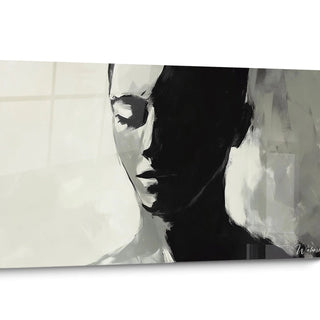 Amedeo Modigliani12
artworks
-
 Camille Pissarro7
artworks
-
 Caspar David Friedrich11
artworks
-
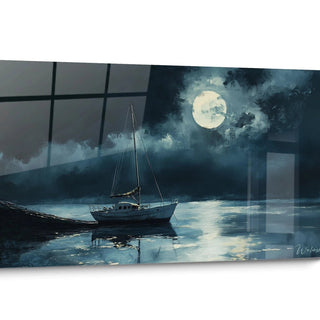 Claude Joseph Vernet3
artworks
-
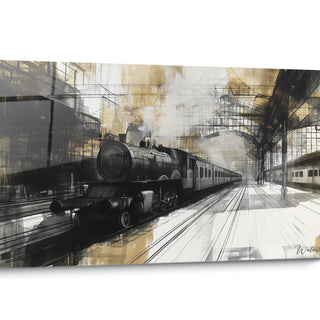 Claude Monet10
artworks
-
 Edgar Degas8
artworks
-
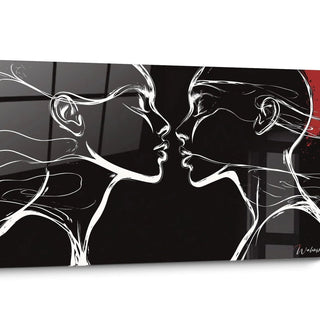 Edvard Munch11
artworks
-
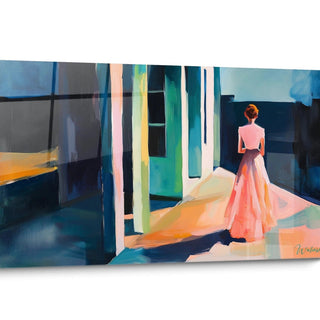 Edward Hopper8
artworks
-
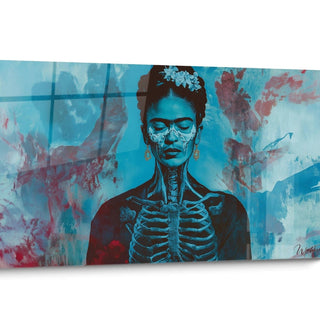 Frida Kahlo6
artworks
-
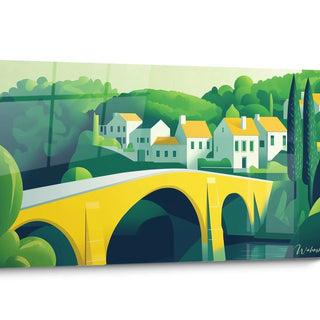 George Braque5
artworks
-
 Giuseppe Arcimboldo9
artworks
-
 Goya8
artworks
-
 Gustav Klimt8
artworks
-
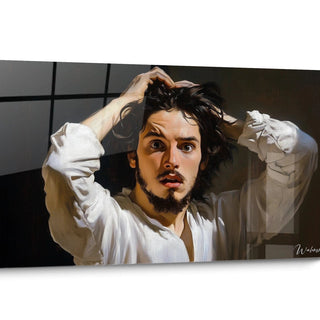 Gustave Courbet8
artworks
-
 Henri Matisse4
artworks
-
 Hieronymus Bosch2
artworks
-
 Jean Baptiste Camille Corot9
artworks
-
 Jean François Millet7
artworks
-
 Jean-Auguste-Dominique Ingres10
artworks
-
 JMW Turner6
artworks
-
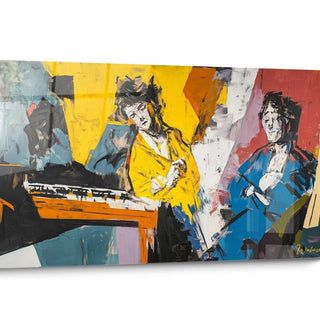 Johannes Vermeer10
artworks
-
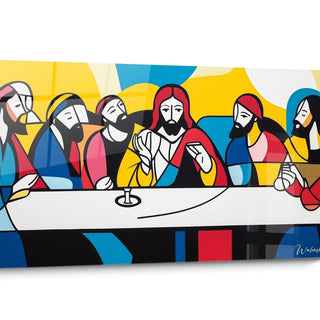 Leonardo da Vinci5
artworks
-
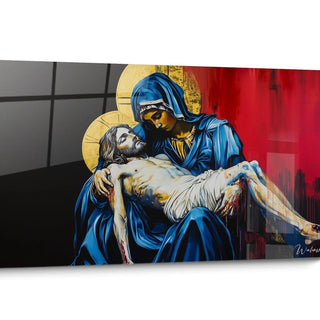 Michelangelo6
artworks
-
 Paul Gauguin6
artworks
-
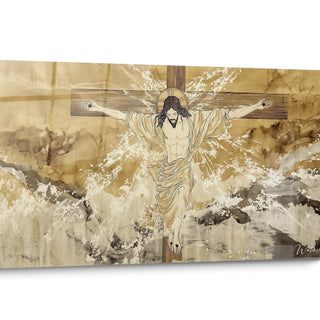 Peter Paul Rubens6
artworks
-
 Pierre-Auguste Renoir6
artworks
-
 Piet Mondrian11
artworks
-
 Pieter Bruegel the Elder6
artworks
-
 Rembrandt van Rijn4
artworks
-
 Sandro Botticelli9
artworks
-
 Sonia Delaunay6
artworks
-
 Théodore Géricault7
artworks
-
 Vincent Van Gogh11
artworks

All about Paintings Inspired by Wassily Kandinsky
- Description Painting Wassily Kandinsky
- Painting Wassily Kandinsky and the psychology of colors
- Painting Wassily Kandinsky influence in modern art
- Painting Wassily Kandinsky method of observation
The painting by Wassily Kandinsky represents one of the greatest artistic revolutions of the 20th century. A pioneer of abstract art, Wassily Kandinsky (1866-1944) transformed our perception of pictorial art by creating works that transcend simple visual representation to reach a spiritual and emotional dimension. His bold compositions, characterized by vibrant geometric shapes and expressive colors, continue to influence contemporary art and fascinate collectors.
Kandinsky's unique approach is based on his synesthesia, a neurological condition that allowed him to hear colors and see sounds. This extraordinary sensory perception shaped his revolutionary approach to artistic creation, where each visual element corresponds to a musical note or a specific emotion. His famous paintings are thus visual symphonies that invite the viewer to a multisensory experience.
Whether it is his early expressionist works, his Bauhaus period, or his later abstract compositions, a painting by Wassily Kandinsky is distinguished by its ability to transcend the traditional boundaries of art. These works are not mere wall decorations, but portals to a new artistic dimension that continues to resonate with contemporary audiences.
The Chromatic Synesthesia in the Paintings of Wassily Kandinsky
The unique relationship between Wassily Kandinsky and colors transcends conventional aesthetics to reach an extraordinary sensory dimension. To fully understand a painting by Wassily Kandinsky, it is essential to explore his revolutionary conception of the psychology of colors, based on his personal synesthesia - this rare ability to perceive colors as sounds and vice versa.
How did Kandinsky translate emotions into vibrant colors?
Unlike traditional artists, Kandinsky attributed to each hue a specific vibrational frequency affecting the human soul directly. In his abstract compositions, yellow represents earthly excitement, while blue evokes celestial and spiritual depth. This correspondence between colors and inner resonances creates in each painting by Wassily Kandinsky a complex emotional spectrum that simultaneously stimulates several sensory areas of the brain.
Contemporary neurological research now confirms what Kandinsky intuitively understood: colors trigger measurable neurological responses. Prolonged exposure to the specific chromatic harmonies of his paintings can temporarily alter brain waves, inducing meditative states similar to those observed in certain mindfulness practices.
What psychological effects do Kandinsky's colors produce in an architectural space?
A painting by Wassily Kandinsky radically transforms the spatial perception of a room. His compositions create "chromatic energy fields" that influence the atmosphere far beyond their physical location. In contemporary architectural spaces with clean lines and neutral surfaces, his works act as generators of visual energy, projecting their chromatic frequencies onto the surrounding surfaces.
This unique interaction with the architectural space explains why a painting by Wassily Kandinsky placed strategically can radically transform the energy balance of a minimalist room. Some collectors report that the presence of a Kandinsky composition alters their perception of time spent in the room, creating a subjective temporal distortion linked to immersion in his chromatic harmonies.
Spatial chromotherapy specialists frequently recommend reproductions of Kandinsky's works for their unique properties of visual restructuring. Unlike figurative works that create a static "focal point," his abstract compositions generate a dynamic "visual activation network" that constantly engages the gaze in new discoveries.
The theory of simultaneous contrasts in Kandinsky's compositions
The masterful use of simultaneous contrast by Kandinsky represents a major innovation in pictorial art. By strategically juxtaposing complementary colors, he creates a visual tension that simultaneously activates different areas of the retina, producing continuous neurological stimulation.
This persistent retinal stimulation explains the hypnotic effect that a Wassily Kandinsky painting exerts even after years of daily observation. Unlike classic works whose perception fades with time, his compositions continue to generate new visual interactions with each change in lighting or angle of observation.
Professionals in high-emotional-value decoration exploit this unique property to create spaces that retain their initial emotional impact over time. A Wassily Kandinsky painting is thus a lasting emotional investment, continually renewed by its ability to stimulate different neurological responses over time.
The influence of chromatic musicality on the perceived sound ambiance
Musicologists specializing in audiovisual correspondences have identified a fascinating phenomenon: the presence of a Wassily Kandinsky painting can subtly alter the acoustic perception of a space. The specific chromatic harmonies in his compositions create a "virtual acoustic signature" that unconsciously influences our interpretation of ambient sounds.
This synesthetic dimension explains why some contemporary musical performance spaces strategically incorporate reproductions of Kandinsky. Acousticians have observed that the visual presence of his works can subjectively amplify certain sound frequencies, enriching the auditory experience through visual resonance.
For lovers of classical or experimental music, positioning a Wassily Kandinsky painting in the listening space can subtly transform the sensory experience, creating a personal synesthetic dimension that enriches musical perception far beyond simple wall decoration.
The Revolutionary Legacy of the Wassily Kandinsky Painting in Contemporary Art
The influence of the Wassily Kandinsky painting on the evolution of modern art transcends historical heritage to constitute a veritable conceptual matrix that continues to inform the most avant-garde artistic practices. Far beyond a simple aesthetic appreciation, understanding the depth of its revolutionary approach allows us to grasp how its transformative vision continues to resonate in contemporary artistic expressions.
How do contemporary creative algorithms draw inspiration from Kandinsky's visual grammar?
A fascinating phenomenon in contemporary digital art is the algorithmic adaptation of Kandinsky's compositional principles. Artificial intelligence creative developers have identified in Wassily Kandinsky paintings a "visual syntax" particularly suited to generating new artistic forms. His principles of non-hierarchical spatial organization and dynamic tension between abstract elements are now fundamental parameters in programming autonomous artistic creation systems.
This technological appropriation is a testament to the profoundly mathematical and systemic nature of his approach, although Kandinsky himself worked intuitively. Neuroaesthetics engineers have discovered that his compositions activate neurological patterns similar to those stimulated by certain complex mathematical formulas, suggesting a precocious intuition of the principles of fractal geometry and self-organization.
In contemporary generative design studios, a Wassily Kandinsky painting is not simply a historical reference but a veritable "seed value" - an initialization value for evolving creative systems that continue to develop his compositional intuitions through new technological mediums.
The neo-Kandinsky resurgence in immersive architecture
The influence of the Wassily Kandinsky painting is experiencing a spectacular renaissance in the field of immersive architecture and experiential environments. Architects specializing in the design of multisensory spaces are appropriating his principles of "inner necessity" and emotional resonance to create environments that transcend simple functionality.
In these avant-garde architectural spaces, Kandinsky's compositional principles are translated into three-dimensional spatial relationships that intuitively guide movement and emotional engagement of visitors. Unlike traditional architecture that imposes linear paths, these "Kandinskyian" environments encourage intuitive navigation guided by visual and emotional attractions.
This spatial application of his pictorial principles allows us to understand how a Wassily Kandinsky painting functions as a conceptual prototype for contemporary immersive experiences, far beyond the two-dimensional frame in which he initially developed his vision.
Influence on the neuroscience of visual perception
The impact of a Wassily Kandinsky painting extends to the laboratories of cognitive neuroscience, where his compositions serve as preferred experimental stimuli to study the brain mechanisms of visual abstraction and aesthetic emotion. Researchers have identified that observing his works simultaneously activates the brain centers linked to primary visual processing and those associated with complex emotions and musicality.
This unique neurological signature explains why a Wassily Kandinsky painting continues to fascinate even observers initially reluctant to abstract art. His compositions create "synaptic bridges" between different brain regions usually compartmentalized, generating a paradoxical experience of coherence in the face of visually disparate elements.
Neuroaesthetic therapists are now exploiting this unique property to develop cognitive stimulation protocols for some patients suffering from perceptual or emotional disorders. Regular exposure to his compositions can strengthen certain neuronal connections associated with multi-sensory integration and cognitive flexibility.
The reinterpretation of the sacred in Kandinsky's abstraction
A often-neglected aspect of the legacy of a Wassily Kandinsky painting concerns his reinvention of the sacred through the language of abstraction. Unlike purely formalist interpretations, his abstract compositions represent a deliberate attempt to transcend the limits of artistic materialism to access a universal spiritual dimension.
This theosophical dimension explains why some contemporary meditative spaces specifically integrate his works as supports for contemplation. Freed from traditional religious references but charged with a profound spiritual intentionality, his compositions create "meditative fields" accessible regardless of denominational affiliations.
For collectors sensitive to this dimension, a Wassily Kandinsky painting constitutes a true "object of power" - a condenser of spiritual energy whose presence subtly transforms the energetic quality of a space, far beyond its immediate visual impact or conventional decorative value.
Methodology for In-Depth Observation of a Wassily Kandinsky Painting
The authentic experience of a Wassily Kandinsky painting requires an observational approach radically different from traditional artistic appreciation methods. Beyond simple aesthetic contemplation, discover how to engage in a complex sensory dialogue with these revolutionary compositions that continue to transform our relationship to abstract art.
What observation protocols reveal the hidden dimensions of a painting Kandinsky?
Unlike figurative works that favor a linear or narrative reading, a Wassily Kandinsky painting requires a multi-focal and dynamic observation method. Specialists in artistic perception recommend a progressive immersion protocol that begins with a global peripheral perception before exploring compositional microstructures.
This "layer-by-layer perceptual" observation technique gradually reveals the hidden hierarchical structures in the apparent spontaneity of his compositions. Experienced collectors report that this methodology allows them to continuously discover new formal relationships, even after years of familiarity with the work.
To maximize this revealing experience, position your Wassily Kandinsky painting in a space allowing observation at different distances - from an overall view several meters away to a close examination revealing the micro-tensions between adjacent elements. This observational mobility reproduces the creative process itself of the artist, who worked simultaneously at different perceptual scales.
Perceptual chromatic evolution under different lighting conditions
A defining characteristic of a Wassily Kandinsky painting lies in its spectacular reactivity to natural light variations. Unlike works that maintain a relatively stable appearance, his compositions undergo significant chromatic transformations depending on the time of day, season, and atmospheric conditions.
This unique property transforms the artwork into a living visual organism that constantly dialogues with its luminous environment. Connoisseurs recommend systematically observing these seasonal and daily variations to access the complete experience of the artwork - certain subtle color relationships appearing only under specific lighting conditions.
For contemporary architectural spaces benefiting from dynamic natural light, a Wassily Kandinsky painting constitutes a temporal design element that rhythmically punctuates the spatial experience over the hours and seasons, creating a personalized visual calendar for its regular observers.
The Comparative Method of Relational Distances
Art analytical theorists have developed a specific observation technique for Kandinsky's compositions, based on the analysis of "relational distances" between formal elements. This method reveals how his compositions create dynamic tensions through precise mathematical proportions hidden beneath an apparent spontaneity.To apply this technique, mentally trace invisible lines between similar elements (circles, triangles, lines) and observe how these connections create secondary geometric structures that subtly organize the pictorial space. This relational mapping progressively unveils the underlying "visual partition" that orchestrates the perceptual experience.
In the context of a contemporary space with defined architectural lines, a Wassily Kandinsky painting establishes a complex geometric counterpoint that enriches the overall spatial experience through a structural dialogue between the artwork and its architectural environment.
The Integration of Body Movement in Active Observation
A recent methodological innovation in the appreciation of a Wassily Kandinsky painting involves the conscious integration of body movement as a constitutive element of the observational experience. Unlike traditional static observation, this "kineshetic" approach encourages slight bodily movements that reproduce the internal dynamics of the composition.This embodied method transforms observation into a participatory performance, where the compositional tensions of the artwork translate into micro-physical movements that amplify sensory resonance. Practitioners of this approach report a significant intensification of emotional experience and an increased intuitive understanding of compositional intentions.
For contemporary residential spaces designed for movement and fluidity, a Wassily Kandinsky painting becomes a choreographic partner that inspires and guides daily movements, transforming the habitat into a performative space where residents and artwork participate in a continuous perceptual dance.
FAQ about Wassily Kandinsky Paintings
What is the meaning of geometric shapes in a Wassily Kandinsky painting?
The geometric shapes in Kandinsky's works are not arbitrary but constitute a codified visual language. Each shape possesses a specific emotional and spiritual meaning: the circle represents cosmic perfection, the triangle ascending energy, and the square earthly materiality. These elements are organized into "visual phrases" that communicate complex spiritual concepts transcending verbal language.How to identify the authenticity of a Wassily Kandinsky painting?
The authenticity of a Wassily Kandinsky painting is assessed through a multifactorial analysis including documented provenance, spectrographic analysis of pigments corresponding to his historical palette, and microscopic examination of his unique application technique. Experts also seek his characteristic "gestural construction" signature - a dynamic tension between spontaneous elements and mathematically precise structures that no imitator has managed to perfectly reproduce.What specific conservation conditions are there for Kandinsky paintings?
Wassily Kandinsky paintings require specific conservation conditions due to his unique experimental technique. His works benefit from stable humidity between 45-50% and a constant temperature of 19-21°C. Contrary to popular belief, his compositions tolerate UV-filtered natural light relatively well, which reveals the subtle chromatic variations intentionally integrated into his pictorial layers. A seasonal 45° rotation is recommended to balance light exposure and preserve the original visual dynamics.
Further reading
Our articles on this topic
- Biography of Wassily Kandinsky: The Prophet of Abstraction and Theorist of the Colored Soul
- The Influence of Music on Kandinsky's Early Abstract Paintings
- Vassily Kandinsky and the Birth of the First Abstract Painting: A 1910 Artistic Revolution
- What is the difference between a composition and an improvisation by Kandinsky?
- Why did Kandinsky associate certain geometric shapes with specific cosmic vibrations?
L'art qui suscite l'envie
Maison belge d'art mural grand format
14 jourspour changer d'avis*
Protection Walenskyincluse
Fabriquéen Italie
FormatXXL
Kit de fixationtoujours fourni
* Hors tableaux personnalisés et tailles personnalisées


