


Handpan Painting
The Handpan Painting collection gathers scenes in which the round instrument, resting on a musician's knees, becomes a pretext for explosions of color and light. Glowing dunes, Parisian rain, sunflower fields or riverbanks: each Handpan painting captures a moment of musical contemplation, between metallic material and pictorial vibration. A collection designed for those seeking a work that is both vibrant and contemplative, capable of bringing a wall a silent, deeply inhabited sonic presence.
 Musician Wall Art under Pink and Mauve Cherry Blossoms - Spring Melody - Handpan Edition$249.90
 Veiled Musician Wall Art in Orange and Red over a Sun-Lit Dune - Blazing Sunrise - Handpan Edition$199.90
 Musician at the Summit of the Blazing Mountains Wall Art - Summit of Silence - Handpan Edition$199.90
 Musician in a Red Dress Among the Sunflowers Wall Art - Golden Melody - Handpan Edition$249.90
 Duo of Musicians in Blue and Pink on a Pier Wall Art - Harmony at Dusk - Handpan Edition$249.90
 Musician Under Pink and Purple Cherry Tree - Spring Reverie - Handpan Edition$249.90
 Musician on Grey and Yellow Pier Wall Art - Melody Facing the Waves - Handpan Edition$249.90
 Musicians Wall Art Under a Ochre and Blue Stone Arch - Duo in the Rain - Handpan Edition$249.90
 Musician with Blue-Violet Hands on Handpan Wall Art - Melodic Trance - Handpan Edition$249.90
 Handpan Musician Wall Art on Golden and Misty Blue Pier - Meditation by the Water - Handpan Edition$249.90
 Duo of Musicians in a Purple Field Wall Art - Dusk Harmony - Handpan Edition$249.90
 Seated Musician on Orange and Red Dune Wall Art - Desert Melody - Handpan Edition$249.90
 Musician's Golden Hands on Handpan - Rhythmic Trance - Handpan Edition$249.90
 Musician Playing on Jetty at Orange Sunset Wall Art - Melody of Twilight - Handpan Edition$249.90
 Red-Dress Musician Misty Summit Wall Art - Mountain Melody - Handpan Edition$249.90
 Musician Wall Art with White Hair and Multicolored Jacket - Wind Trance - Handpan Edition$249.90
 Duo of Musicians Wall Art in Terracotta and Ochre - Shared Harmony - Handpan Edition$249.90
 Musician with Hands on a Bronze Metal Instrument Wall Art - Nocturnal Clearing - Handpan Edition$249.90
 Woman in Red Dress Playing Among Sunflowers Wall Art - Melody of the Fields - Handpan Edition$249.90
 Barefoot Musicians Duo by the Water Wall Art - Shared Harmony - Handpan Edition$249.90
In the same family
Also explore the theme Music
-
 Accordion26
artworks
-
 Battery40
artworks
-
 Song33
artworks
-
 Clarinet3
artworks
-
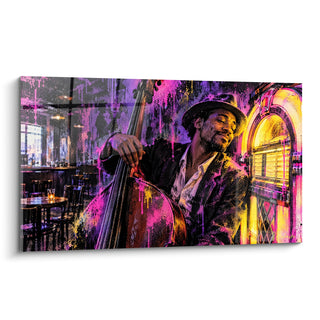 Double bass28
artworks
-
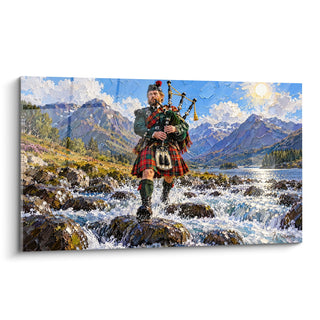 Bagpipes13
artworks
-
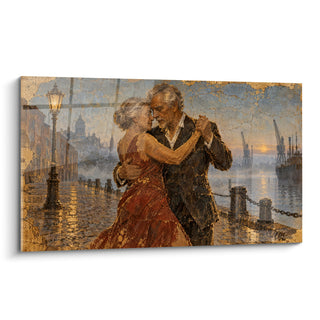 Ballroom dance34
artworks
-
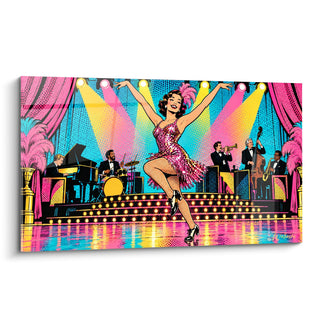 Disco51
artworks
-
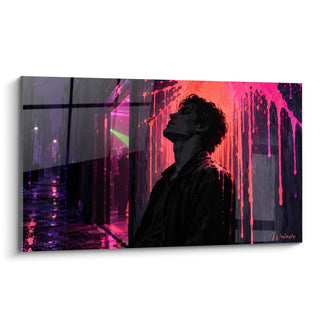 Nightclub26
artworks
-
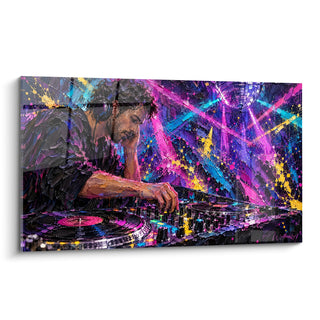 DJ66
artworks
-
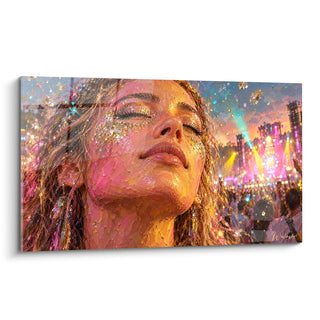 Electro27
artworks
-
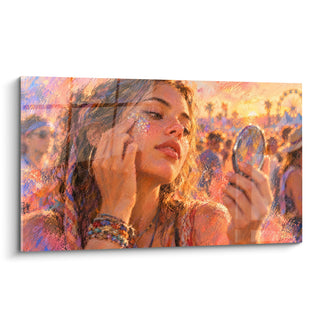 Music Festival11
artworks
-
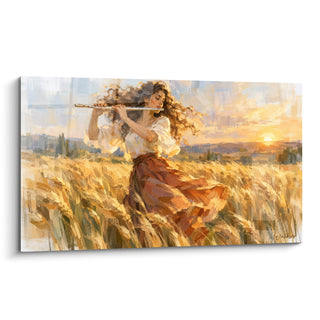 Flute14
artworks
-
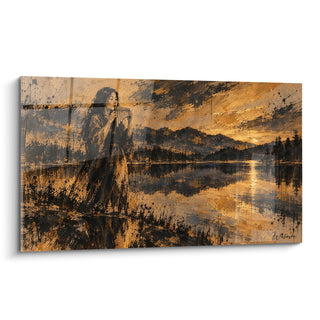 Panpipes20
artworks
-
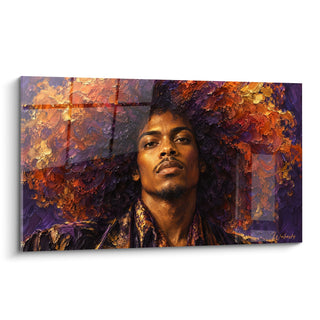 Funk13
artworks
-
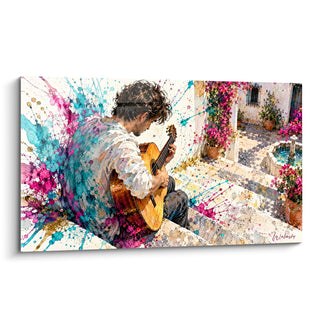 Guitar108
artworks
-
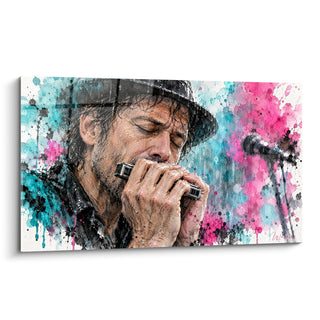 Harmonica3
artworks
-
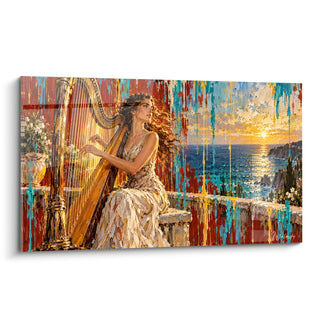 Harp18
artworks
-
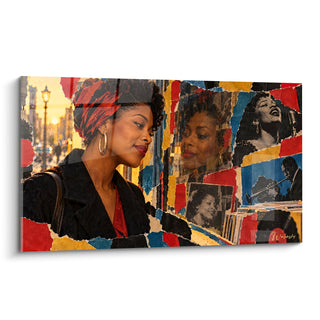 Old School Hip Hop40
artworks
-
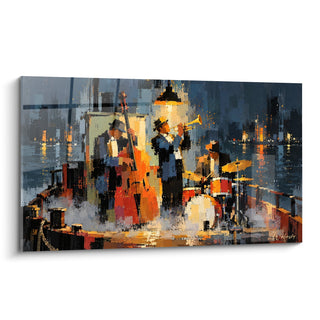 Jazz8
artworks
-
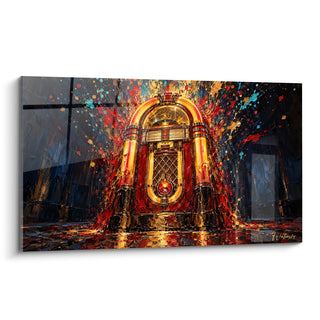 Jukebox12
artworks
-
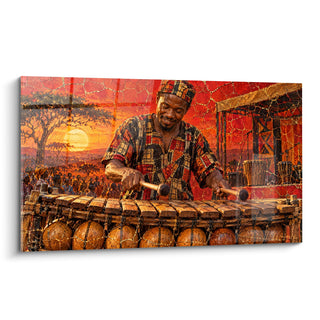 Various Musicians61
artworks
-
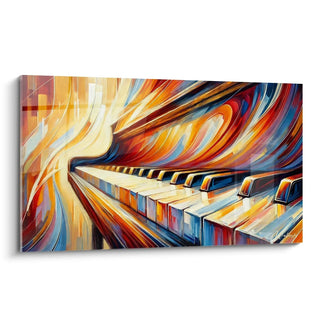 Musical note21
artworks
-
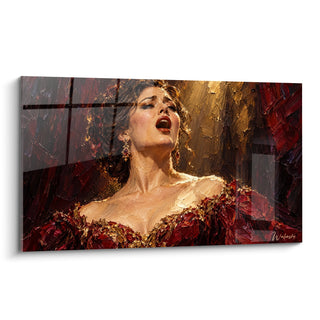 Opera23
artworks
-
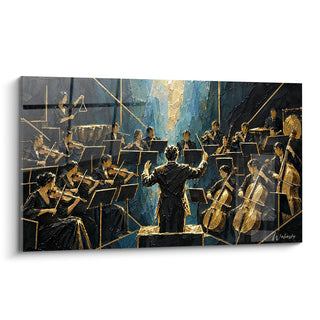 Orchestra6
artworks
-
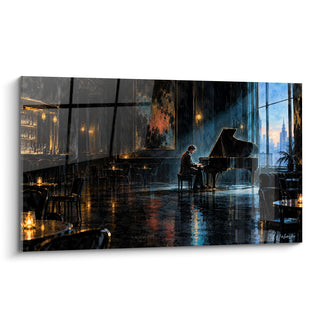 Piano295
artworks
-
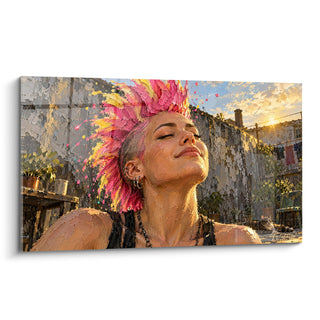 Punk35
artworks
-
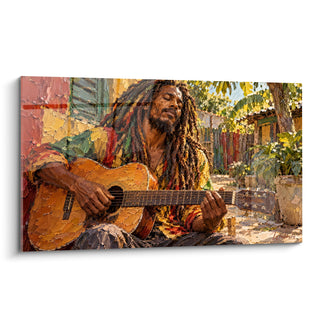 Reggae13
artworks
-
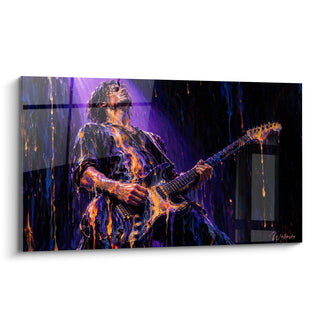 Rock48
artworks
-
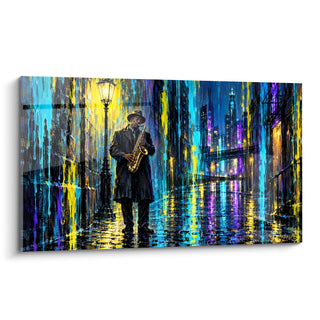 Saxophone64
artworks
-
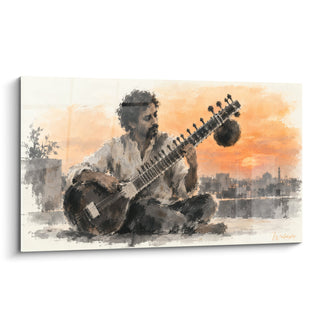 Sitar15
artworks
-
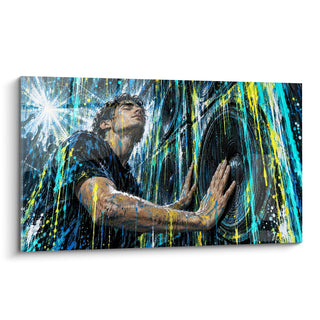 Sound System3
artworks
-
 Music Star66
artworks
-
 Drum9
artworks
-
 Trumpet14
artworks
-
 Tuba4
artworks
-
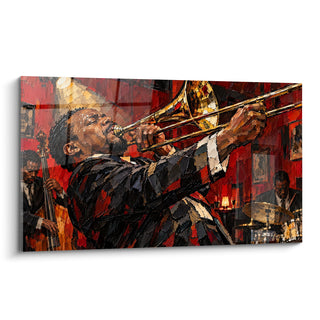 Trombone2
artworks
-
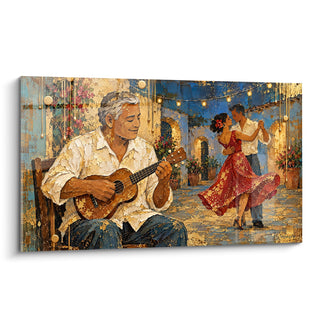 Ukulele41
artworks
-
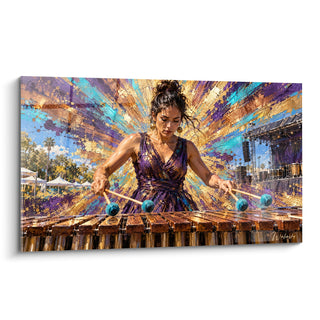 Vibraphone1
artwork
-
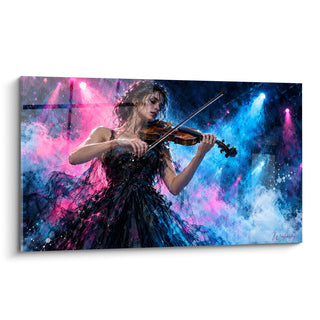 Violin237
artworks
-
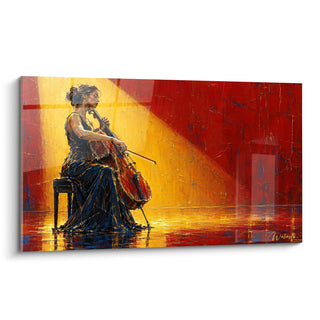 Cello56
artworks
-
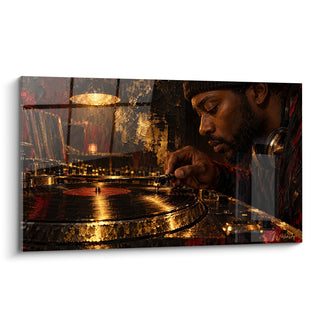 Vinyl43
artworks
All about Handpan Painting
- Handpan Painting Overview
- Metal that sings
- Light and lands
- Gesture and silence
The Handpan Painting collection brings together works in which the same instrument recurs without ever repeating itself: resting on knees, held between two hands, it moves through very different landscapes — desert, river, sunflower field, stone arch — yet everywhere imposes the same posture of contemplation. What unites these paintings is therefore not a backdrop but a gesture: that of a musician absorbed in his instrument, captured at the precise moment when the sound seems about to be born.
In each of these compositions, color plays an almost equal role to the scene itself. The palettes swing between warm blazes and subdued tonal ranges, between spontaneous splashes and silky gradients, creating a constant tension between movement and stillness. This chromatic variation allows the collection to adapt to very different interiors while keeping a coherent tone: that of a music one senses more than hears.
This collection is for those who wish to hang an inhabited scene, carrying a discreet intensity rather than a simple decorative motif. Music lovers, inner travelers and those who appreciate suspended moments will find a rare sensory evocation in which the image itself seems to vibrate. It is a collection for rooms where one seeks to slow the gaze and create a presence rather than mere ornament.
What the material of the Handpan Painting works reveals
Why does this metallic reflection dominate every composition?
On each Handpan painting, the instrument consistently catches light in a way that differs from everything else in the scene: silver reflections against a nocturnal background, bronze tones under a sunflower sun, dark touches flecked with glints in a desert landscape. This pictorial emphasis is no accident: the handpan is shaped from tempered steel, a material that returns light in shifting ways depending on angle and time of day. The artists of the collection play on this physical property to make the instrument a visual anchor, almost a second face within the composition.
Does the instrument's round shape influence the composition?
The handpan imposes a circular geometry that recurs in every Handpan painting as a visual center of gravity: it draws the eye downward, toward the hands and knees, creating a natural diagonal between the musician's face and the instrument. This circularity contrasts with the broken lines of the landscapes, arches or dunes in the background, and structures how the image is read. It also explains why these scenes feel so stable despite the agitation of color: the round form anchors the composition no matter what happens around it.
Why does the instrument seem almost alive under the brush?
In several Handpan paintings, the metallic surface is never treated as a cold object: it absorbs the surrounding hues, whether the red of a sunset or the green of foliage. This pictorial porosity is explained by the acoustic nature of the instrument itself, designed to resonate and amplify the slightest touch. In painting, this vibratory quality is rendered through shifting reflections that give the illusion of a frozen sound, and this is precisely what makes these works so particular to live with on a wall every day.
Where do the landscapes accompanying the Handpan paintings come from?
Why do these scenes take place in such varied locations?
The Handpan paintings in this collection cross opposing geographies: desert dunes, urban rivers, sunflower fields, autumn forests. This diversity reflects the real trajectory of the instrument, born in Switzerland in the early 2000s and then adopted by itinerant musicians around the world, from North African beaches to the streets of major European cities. Each painted setting thus replays a possible stage of this circulation, turning the collection into a sensitive map rather than a simple series of musical portraits.
What does the changing light from one painting to another tell?
The palette of the Handpan paintings varies strongly depending on the climate evoked: orange glows of a sunset over sand, rainy greys beneath a stone arch, summer golds of a flowering field. This luminous diversity is not merely decorative; it reflects the nomadic character of handpan playing, often done outdoors, across seasons and encounters. Hanging one of these paintings means choosing a precise climatic atmosphere as much as a musical scene, and thus setting the tone for an entire room.
Why do some settings appear almost timeless?
Several Handpan paintings deliberately blur temporal markers: loose clothing, ancient architecture, natural landscapes free of any contemporary trace. This chosen blur echoes the vocation of the instrument, often associated with meditative practices and a quest for reconnection, far from period markers. The result is a collection that does not date itself and retains its evocative power whatever era it is viewed in, a rare asset for a work meant to last on a wall.
What the musicians' posture says about the Handpan paintings
Why are the faces always turned toward the instrument?
In almost all Handpan paintings, the musician's gaze dives toward the instrument rather than the viewer, creating a scene closed in on itself, almost intimate. This posture faithfully reproduces the real practice of the handpan, which demands intense tactile concentration: the hands must find each note without the help of peripheral vision. Painted this way, the musician becomes a figure of total absorption, and this silent interiority gives each canvas a rare, almost meditative contemplative quality that stands apart from the usual agitation of musical scenes.
What does the recurring presence of bare feet or seated postures on the ground signify?
Several Handpan paintings show musicians seated directly on stone, feet bare in water or resting on sand. This visual choice refers to the way the instrument is traditionally played: resting on the knees, without stage or technical setup, in direct contact with the body and the ground. This physical closeness to the surrounding material reflects a deliberate stripping down, and explains why these scenes convey an impression of inhabited simplicity rather than spectacular performance.
Why do some compositions feature two musicians rather than one?
When two figures respond to each other on a single Handpan painting, the composition sets up a silent dialogue: hands suspended in mirror image, gazes crossing without a word, instruments arranged symmetrically. This dual staging illustrates a very real handpan practice, often played in circle or duo improvisation, where musicians tune by ear rather than by score. For an interior, this kind of scene introduces a gentle tension, a sense of suspended conversation that animates the room without ever disturbing it.
FAQ about handpan paintings
Why do Handpan paintings so often pair the instrument with natural landscapes rather than urban scenes?
The handpan is traditionally played outdoors, often at informal gatherings far from concert halls. The artists follow this habit by placing the instrument in natural settings — dunes, rivers or fields — to stay true to the instrument's real use and reinforce the impression of calm and freedom it conveys.
Is this type of painting suitable for someone who knows nothing about the handpan?
Yes, because the strength of these works lies less in recognizing the instrument than in the atmosphere they give off: concentration, light, inhabited silence. Even without knowing the handpan, the viewer immediately perceives a scene of musical contemplation, which makes the collection accessible to a broad audience.
What distinguishes a Handpan painting from a more classic musical scene, such as a violinist or a pianist?
Unlike classical instruments often associated with halls or stages, the handpan imposes a seated posture on the ground, direct contact with nature and a visible form of improvisation. These paintings therefore capture an intimacy and spontaneity rarely present in traditional musical representations.
Further reading
Our articles on this topic
- Handpan painting for an adult bedroom with a bohemian spirit: creating a zen, wanderer's cocoon
- Handpan aluminum Dibond print: a wall tribute to world music
- Handpan wall decor: composing a music and meditation corner at home
- Handpan acrylic print: creating a zen atmosphere through sound and image
- Acrylic glass print of handpan: creating a zen atmosphere that invites meditation
- Panpipes painting: the original gift for a passionate musician
L'art qui suscite l'envie
Maison belge d'art mural grand format
14 jourspour changer d'avis*
Protection Walenskyincluse
Fabriquéen Italie
FormatXXL
Kit de fixationtoujours fourni
* Hors tableaux personnalisés et tailles personnalisées


