


Paintings inspired by Pieter Bruegel the Elder
Works inspired by Pieter Bruegel the Elder immerse the viewer in a meticulous universe, filled with rural and festive scenes. Each painting illustrates a rich visual narrative, offering an immersion into the society and customs of yesteryear. A tribute to the teeming details and fascinating compositions that will delight lovers of historical art.
 Inspired by Hunters in the Snow by Pieter Bruegel the Elder No.2 Wall Art – Homage to a Famous Artist$499.90
 Inspired by Hunters in the Snow by Pieter Bruegel the Elder No.1 Wall Art – Homage to a Famous Artist$499.90
 Inspired by The Tower of Babel by Pieter Bruegel the Elder No.2 Wall Art – Artist Tribute$499.90
 Inspired by Pieter Bruegel the Elder's Tower of Babel No.1 Wall Art – Tribute to Famous Artist$499.90
 Inspired by The Peasant Dance by Pieter Bruegel the Elder No.1 Wall Art – Celebrated Artist Tribute$499.90
 Inspired by The Fall of the Rebel Angels by Pieter Bruegel the Elder No.1 Wall Art – Homage to Celebrated Artist$499.90
In the same family
Also explore the theme Famous Artists ( inspirations )
-
 View all265
artworks
-
 Alfred Sisley10
artworks
-
 Amedeo Modigliani12
artworks
-
 Camille Pissarro7
artworks
-
 Caspar David Friedrich11
artworks
-
 Claude Joseph Vernet3
artworks
-
 Claude Monet10
artworks
-
 Edgar Degas8
artworks
-
 Edvard Munch11
artworks
-
 Edward Hopper8
artworks
-
 Frida Kahlo6
artworks
-
 George Braque5
artworks
-
 Giuseppe Arcimboldo9
artworks
-
 Goya8
artworks
-
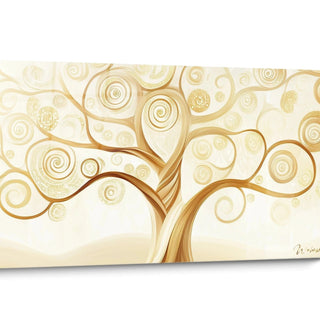 Gustav Klimt8
artworks
-
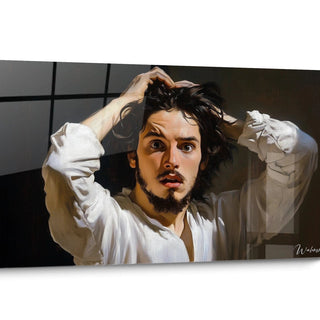 Gustave Courbet8
artworks
-
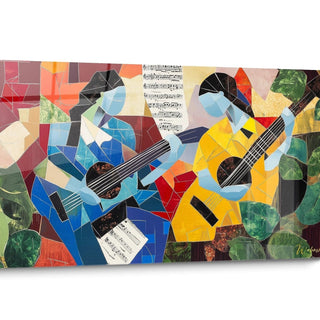 Henri Matisse4
artworks
-
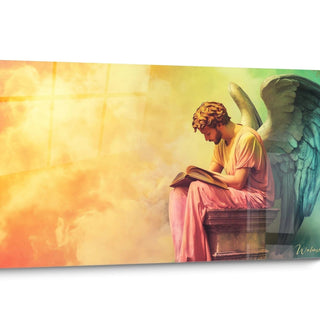 Hieronymus Bosch2
artworks
-
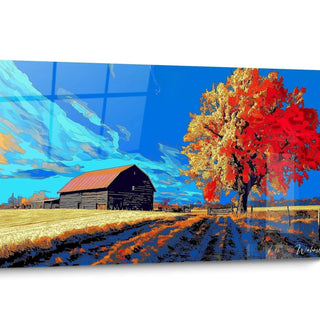 Jean Baptiste Camille Corot9
artworks
-
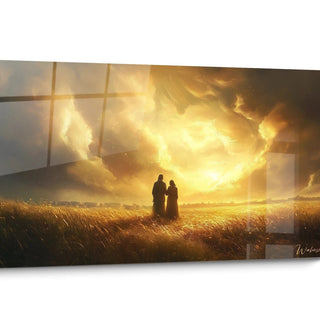 Jean François Millet7
artworks
-
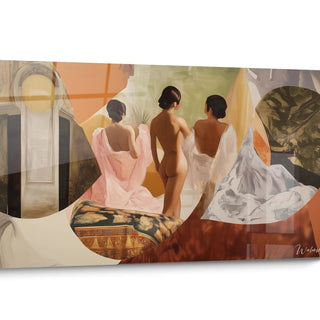 Jean-Auguste-Dominique Ingres10
artworks
-
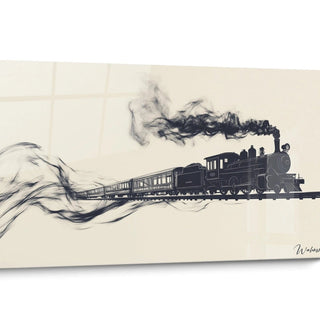 JMW Turner6
artworks
-
 Johannes Vermeer10
artworks
-
 Leonardo da Vinci5
artworks
-
 Michelangelo6
artworks
-
 Paul Gauguin6
artworks
-
 Peter Paul Rubens6
artworks
-
 Pierre-Auguste Renoir6
artworks
-
 Piet Mondrian11
artworks
-
 Rembrandt van Rijn4
artworks
-
 Sandro Botticelli9
artworks
-
 Sonia Delaunay6
artworks
-
 Théodore Géricault7
artworks
-
 Vincent Van Gogh11
artworks
-
 Wassily Kandinsky10
artworks

All about Paintings inspired by Pieter Bruegel the Elder
- Presentation Painting Pieter Bruegel the Elder
- Painting Pieter Bruegel the Elder Pastoral Universe
- Painting Pieter Bruegel the Elder Folkloric Symbolism
- Painting Pieter Bruegel the Elder Visual Narration
The works of Pieter Bruegel the Elder represent a major turning point in the history of Flemish art of the 16th century. Nicknamed “Bruegel the Peasant” for his marked interest in rural life, this major artist of the Northern Renaissance developed a unique approach that continues to captivate art lovers around the world. Each painting by Pieter Bruegel the Elder is distinguished by its narrative richness, his meticulous observation of popular customs, and his singular treatment of landscapes.
Reproductions of paintings by Pieter Bruegel the Elder are masterpieces for collectors and enthusiasts of Flemish art. These famous paintings bring exceptional historical depth and visual richness to any interior. The density of the scenes depicted, often populated by dozens of characters going about their daily activities, transforms each observation into a true discovery.
In the following tabs, discover three fundamental aspects that make Pieter Bruegel the Elder’s paintings timeless works: his unique approach to the pastoral universe, his rich folkloric symbolism full of teachings, and his complex visual narration that invites prolonged contemplation.
The Pastoral Universe in the Paintings of Pieter Bruegel the Elder
The paintings of Pieter Bruegel the Elder are distinguished by their authentic and detailed representation of 16th-century Flemish rural life. Unlike his contemporaries who favored idealized religious or mythological scenes, Bruegel chose to immortalize the daily lives of peasants with remarkable ethnographic precision. This unique approach transforms his works into true visual historical documents.
Why do Bruegel’s paintings offer a complete immersion in the rural world?
The strength of Pieter Bruegel the Elder’s paintings lies in their ability to capture the very essence of rural life in all its dimensions. Each scene is teeming with authentic details: agricultural tools of the time, clothing specific to the different rural social classes, and faithfully reproduced vernacular architectures. These elements create a true visual encyclopedia of 16th-century agricultural practices.
In "The Harvesters" (1565), Bruegel presents not only the agricultural techniques of the time but also captures the particular atmosphere of this crucial period in the peasant calendar. The stifling heat of summer can almost be felt physically through the postures of the workers and the particular light that bathes the scene.
- Faithful reproduction of agricultural seasonal cycles
- Precise details of Flemish village customs
- Meticulous representation of tools and work techniques
Peasant festivities: a privileged subject in Bruegel’s paintings
Scenes of village festivals occupy a prominent place in the work of Pieter Bruegel the Elder. "The Peasant Wedding" (1567) is an emblematic example of his ability to capture the essence of popular celebrations. The artist depicts not only the festive aspect but also reveals the social codes, the implicit hierarchies, and the characteristic human interactions of these gatherings.
These representations of festivities are never gratuitous: they serve to reveal the profound truths of the human condition. Bruegel observes his subjects with an ethnographic gaze, capturing the expressions, gestures, and behaviors that define the collective identity of Flemish rural communities.
How do Bruegelian landscapes transform our perception of rural spaces?
Pieter Bruegel the Elder’s paintings completely redefine our understanding of rural landscapes. His striking panoramas, as seen in "The Hunters in the Snow" (1565), present a totalizing vision of the territory. Unlike contemporary representations that often isolated natural elements, Bruegel harmoniously integrates human activity within a larger environment.
This approach revolutionizes the pictorial representation of rural spaces, creating a true visual ecosystem. Villages, fields, forests, and streams are articulated in a coherent composition that emphasizes the interdependence between humans and their natural environment. This holistic perspective makes Bruegel’s paintings particularly suitable for contemporary spaces seeking to evoke a deep connection with the natural world.
The lasting influence of these landscape representations is reflected in our modern appreciation of rural spaces. Bruegel’s paintings remind us of the importance of seasonal cycles and the symbiotic relationship between human communities and their natural environment, themes that resonate particularly within our current ecological context.
Folklore Symbolism in the Paintings of Pieter Bruegel the Elder
The paintings of Pieter Bruegel the Elder are brimming with a rich and complex folklore symbolism that transcends their apparent simplicity. Each work constitutes a true visual rebus where proverbs, popular traditions, and social critiques intertwine in a multi-layered narrative. This symbolic dimension transforms the experience of observing his paintings into a stimulating intellectual exploration.
How do Flemish proverbs embody themselves in Bruegel’s paintings?
The masterpiece "The Proverbs of the Netherlands" (1559) masterfully illustrates Bruegel’s ability to visually transpose popular wisdom. In this abundant composition, more than a hundred proverbs and idioms come to life in interconnected vignettes. Each character, each action represented corresponds to a specific vernacular expression, creating a visual dictionary of popular expressions from the time.
This transposition of language into images makes Bruegel’s paintings particularly suitable for intellectual living spaces. Their presence stimulates conversation and cultural exchange, transforming a simple decorative element into a catalyst for enriching social interactions. Owning a reproduction of a Bruegel painting is an invitation to a collective exploration of shared cultural references.
- Unique visualization of Flemish idioms
- Encoding of popular wisdom in everyday scenes
- Creation of visual puzzles that stimulate intellectual engagement
The social critique concealed in the paintings of Pieter Bruegel the Elder
Beneath the apparent simplicity of peasant scenes lies an incisive social critique. Living in an era of religious and political turmoil, notably during the Spanish occupation of the Netherlands, Bruegel developed an allegorical visual language to express potentially subversive comments. This political dimension confers a rare contextual depth to Bruegel’s paintings.
In "The Land of Cockaigne" (1567), Bruegel uses folklore to critique idleness and gluttony. This work, seemingly a simple representation of a paradise of abundance, is in reality a biting satire of excess and decadence. This double level of reading, characteristic of Bruegel’s paintings, makes them inexhaustible objects of contemplation.
How do mythological references enrich Bruegel’s iconography?
While primarily recognized for his peasant scenes, Pieter Bruegel the Elder skillfully incorporates mythological references into his visual repertoire. "The Fall of Icarus" (1558) perfectly illustrates this fusion of classical mythology and contemporary observation. The mythological drama of Icarus literally drowns in a daily landscape where human activities continue, indifferent to the tragedy unfolding.
This juxtaposition creates a fascinating visual tension between the extraordinary and the ordinary. Bruegel's paintings thus invite reflection on the place of grand narratives in our daily lives, on how universal dramas can go unnoticed amidst our daily concerns. This philosophical dimension adds a contemplative depth to spaces adorned with these works.
Bruegel's iconography also draws on carnival traditions and seasonal celebrations. "The Fight Between Carnival and Lent" (1559) explores the tension between indulgence and austerity through a profusion of symbols linked to popular rituals. This work demonstrates how Bruegel's paintings capture the very essence of the cultural cycles that punctuated Flemish community life.
The Complex Visual Narrative of Paintings by Pieter Bruegel the Elder
The paintings of Pieter Bruegel the Elder are distinguished by an exceptional level of visual narrative complexity. Unlike most works of his time, which prioritized a single focal point, Bruegel's compositions present a polyphonic narrative structure where dozens of micro-narratives coexist simultaneously. This characteristic transforms each painting into an inexhaustible universe to explore.
How does the panoramic composition revolutionize the viewer's experience?
The panoramic vision adopted by Bruegel in works such as "The Tower of Babel" (1563) or "The Census of Bethlehem" (1566) fundamentally redefines the relationship between the viewer and the artwork. Unlike traditional passive contemplation, Bruegel's paintings demand active participation: the eye is constantly in motion, discovering new details and scenes with each observation.
This immersive approach makes Bruegel's paintings particularly suitable for contemporary living spaces. A quality reproduction placed in a daily passage area offers a constantly renewed visual experience. Each day reveals a new aspect, a previously unnoticed detail, transforming the artwork into an evolving intellectual companion.
- Multifocal narrative structures that stimulate visual exploration
- Dynamic composition inviting multiple reading paths
- Narrative microcosms that reveal the diversity of the human experience
How do the seasons transform the narrative in Bruegel's paintings?
Bruegel's "Seasons" series masterfully illustrates his profound understanding of the structuring role of natural cycles in the human experience. Each seasonal painting does not merely represent a changing landscape, but tells how behaviors, work, and social relationships transform with the rhythm of the seasons.
"The Hunters in the Snow" (1565) is not limited to depicting a winter landscape, but narrates the complex adaptation of an entire community to the rigors of the cold. This temporal dimension considerably enriches the experience of Bruegel's paintings, transforming them into visual meditations on the relationship between cyclical time and human existence.
Why do Bruegel's paintings create a unique immersive experience?
The narrative immersion created by the wall art of Pieter Bruegel the Elder results from a meticulous orchestration between detailed foreground and panoramic background. In "The Fall of the Rebel Angels" (1562), the gaze constantly oscillates between the bustling chaos of the foreground and the broader cosmic structure suggested by the overall composition. This dynamic tension generates a particularly rich contemplative experience.
Bruegel's wall art invites prolonged contemplation that resembles a form of visual meditation. Their narrative density allows for daily observation over long periods without exhausting their potential for discovery. This characteristic makes them ideal for permanent living spaces where their presence sustainably enriches the daily experience.
The tactile dimension of the depicted scenes - textures of clothing, materiality of tools, grain of the stone - adds an additional sensory layer to the visual experience. High-quality reproductions of Bruegel's wall art manage to convey this tactile richness, creating an almost physical presence in the exhibition space.
FAQ: Pieter Bruegel the Elder Wall Art
What is the most iconic work among the wall art of Pieter Bruegel the Elder?
"The Tower of Babel" (1563) is often considered one of Bruegel's most iconic works, illustrating his mastery of monumental compositions and his ability to integrate a multitude of architectural and human details into a coherent narrative structure.
How to recognize the authenticity of a reproduction of a wall art by Pieter Bruegel the Elder?
A quality reproduction of a Bruegel wall art is recognized by the precision of the details, particularly in the miniature scenes and the facial expressions of the characters. Fidelity to the original colors, especially the earthy and greenish tones characteristic of his palette, is also an important indicator of authenticity.
What is the impact of the wall art of Pieter Bruegel the Elder on contemporary art?
Bruegel's influence on contemporary art mainly manifests in the complex narrative approach and the detailed representation of collective scenes. Artists like Peter Blake or the creators of immersive installations draw directly from his ability to create visual universes teeming with details and interconnected micro-narratives.
Further reading
Our articles on this topic
- Bruegel the Elder, the painter who painted the peasants
- Which Bruegel work to choose for your acrylic glass print?
- Why do some Bruegel landscapes contain more than 100 tiny figures?
- The Fantastic Landscapes of Jérôme Bosch and Pieter Bruegel
- Pieter Bruegel the Elder painting: which artwork to choose based on the materials of your rustic living room
L'art qui suscite l'envie
Maison belge d'art mural grand format
14 jourspour changer d'avis*
Protection Walenskyincluse
Fabriquéen Italie
FormatXXL
Kit de fixationtoujours fourni
* Hors tableaux personnalisés et tailles personnalisées


