



Painting Harp
A woman, a golden instrument, light pouring down: this is what the Harp Painting collection brings together. Each canvas captures that same suspended instant where fingers brush the strings, among flowing dresses, sea spray or golden flames. The vivid drips running through these compositions remind us that music, like painting, plays out in the moment and in movement. A harpist painting brings a wall this rare grace, blending delicacy of gesture with chromatic intensity, for a room that breathes silent melody.
 Harpist Wall Art in a Turquoise and Golden Gown - Moment of Musical Grace - Harp Edition$249.90
 Harpist Wall Art at Orange and Turquoise Sunset - Twilight Melody - Harp Edition$249.90
 Rainbow-Stringed Harpist Wall Art in a Golden Ball - Chromatic Melody - Harp Edition$249.90
 Golden Turquoise Harpist Wall Art on a Sailboat - Melody at Sea - Harp Edition$249.90
 Harpist Wall Art in a Golden Dress in a Vineyard - Harvest Melody - Harp Edition$249.90
 Harpist Wall Art Golden at Blue Night Dusk - Twilight Reverie - Harp Edition$249.90
 Harpist Wall Art in a Crimson Dress on a Cliff - Melody of the Cliffs - Harp Edition$249.90
 Harpist Wall Art in a White Dress in a Wedding Barn - Flowered Arch at Dusk - Harp Edition$249.90
 Harpist Wall Art on Purple and Golden Rocks - Melody Facing the Storm - Harp Edition$249.90
 Harpist Wall Art Golden Mosaic with Turquoise Veils - Desert Melody - Harp Edition$249.90
 Harpist Wall Art in Golden Red Gown - Fiery Concert - Harp Edition$249.90
 Harpist Wall Art Golden Gown Turquoise Fuchsia - Melody Under the Sun - Harp Edition$249.90
 Harpist in Rainbow Dress in a Flowered Conservatory - Melody Under Glass - Harp Edition$249.90
 Harpist in Ivory Dress Facing the Sea - Twilight Melody - Harp Edition$249.90
 Harpist Wall Art with Pink and Green Drips - Urban Melody - Harp Edition$249.90
 Harpist in Black Leather with Pink Splashes Wall Art - Stage Fury - Harp Edition$249.90
 Harpist in Gold with Pink and Blue Splashes Wall Art - Serenade at Dusk - Harp Edition$249.90
 Harpist in Ivory Dress with Loose Hair Wall Art - Melodic Breath - Harp Edition$249.90
In the same family
Also explore the theme Music
-
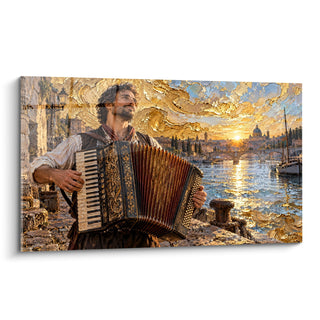 Accordion26
artworks
-
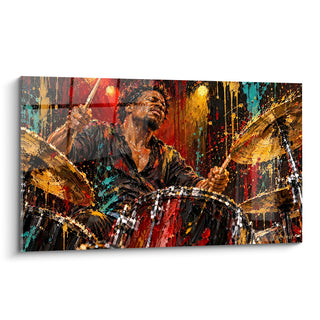 Battery40
artworks
-
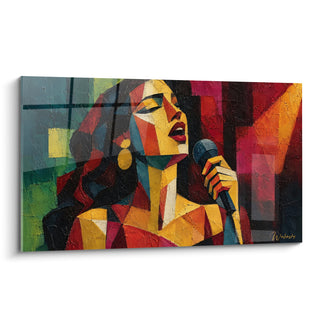 Song33
artworks
-
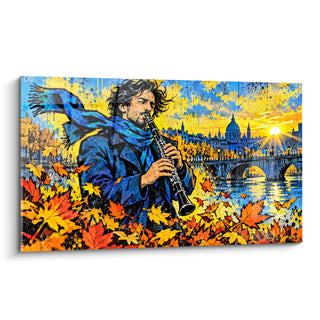 Clarinet3
artworks
-
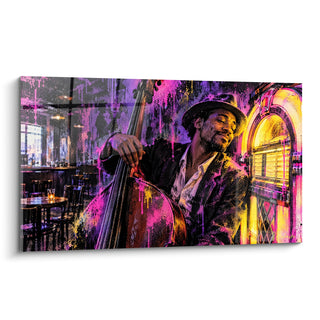 Double bass28
artworks
-
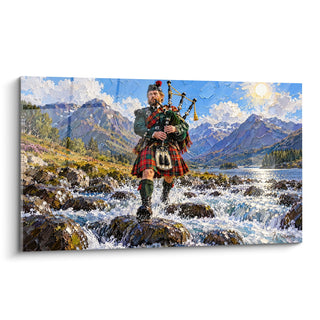 Bagpipes13
artworks
-
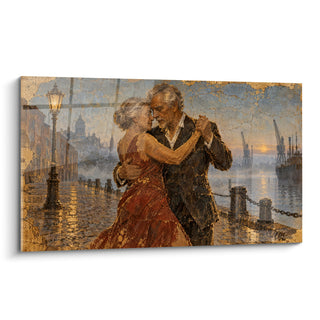 Ballroom dance34
artworks
-
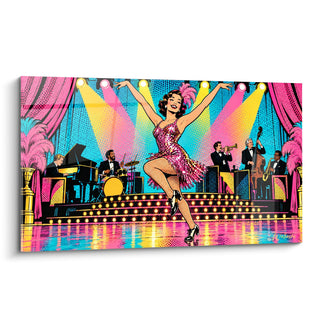 Disco51
artworks
-
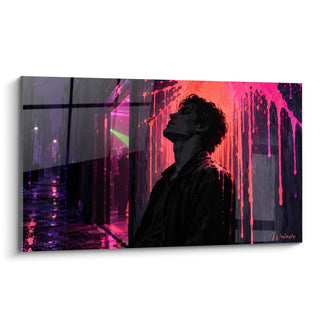 Nightclub26
artworks
-
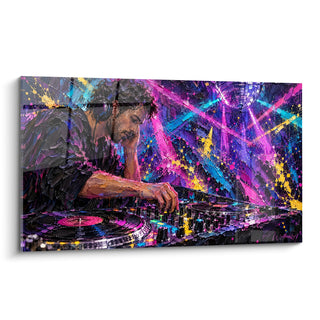 DJ66
artworks
-
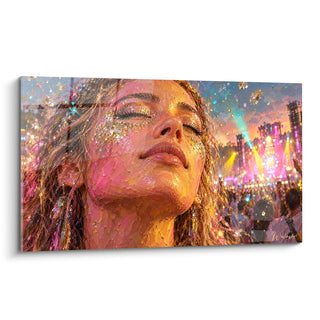 Electro27
artworks
-
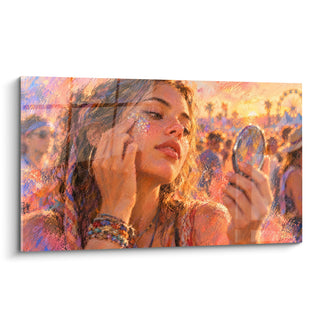 Music Festival11
artworks
-
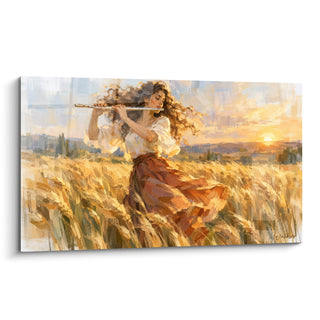 Flute14
artworks
-
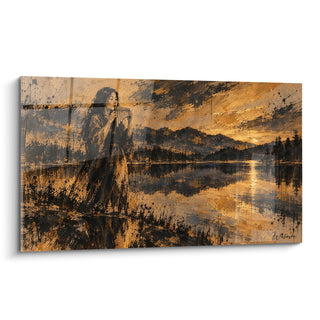 Panpipes20
artworks
-
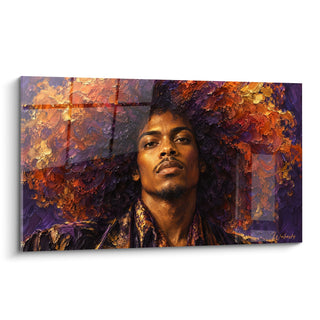 Funk13
artworks
-
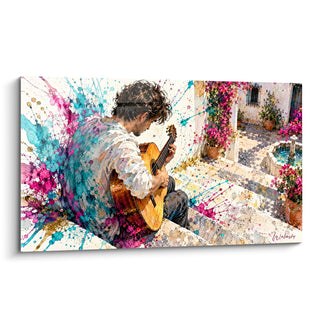 Guitar108
artworks
-
 Handpan20
artworks
-
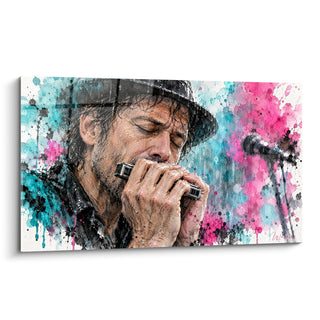 Harmonica3
artworks
-
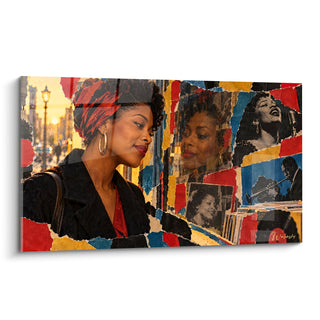 Old School Hip Hop40
artworks
-
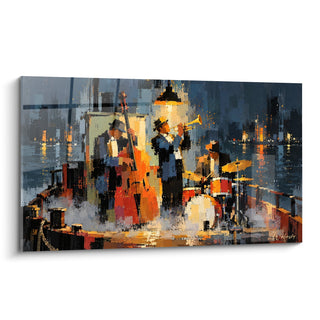 Jazz8
artworks
-
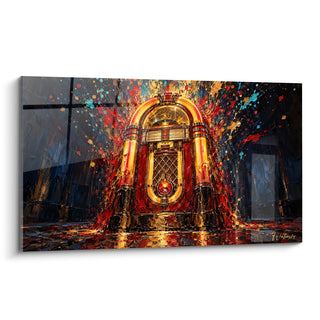 Jukebox12
artworks
-
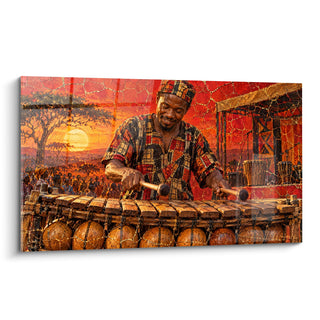 Various Musicians61
artworks
-
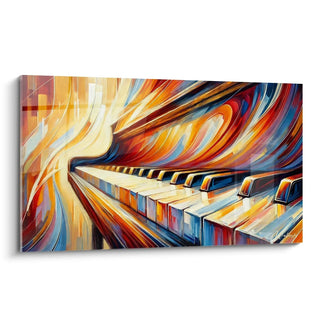 Musical note21
artworks
-
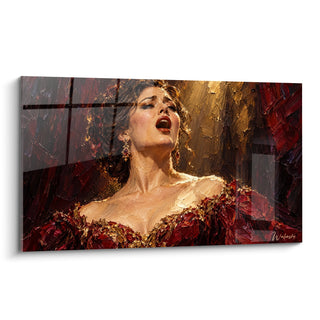 Opera23
artworks
-
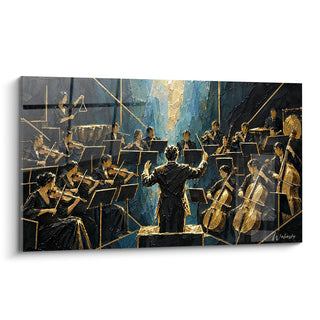 Orchestra6
artworks
-
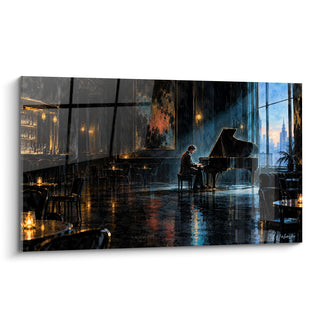 Piano295
artworks
-
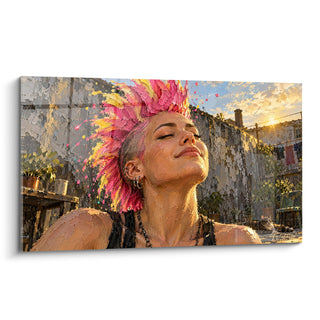 Punk35
artworks
-
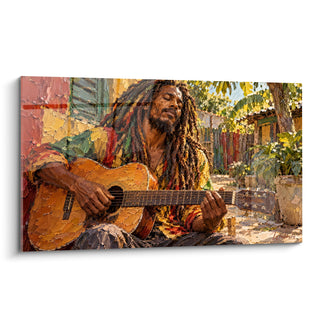 Reggae13
artworks
-
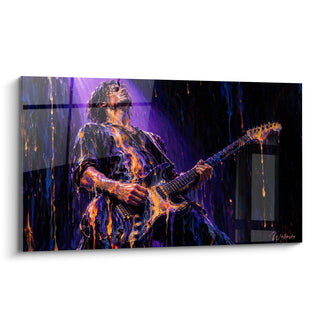 Rock48
artworks
-
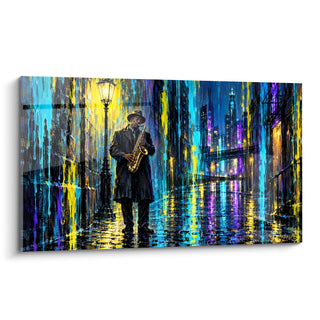 Saxophone64
artworks
-
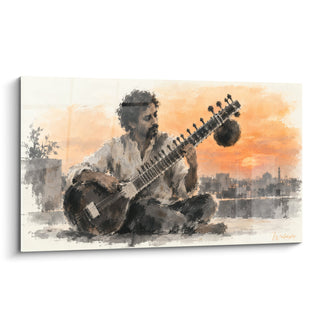 Sitar15
artworks
-
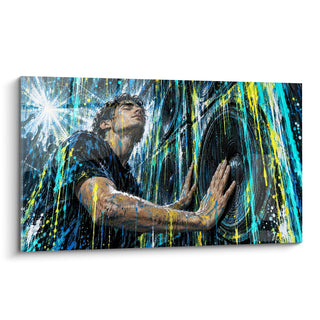 Sound System3
artworks
-
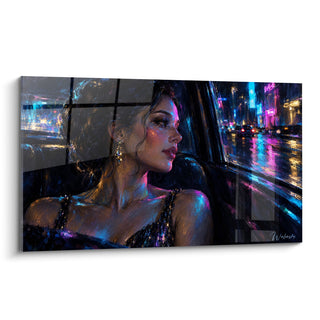 Music Star66
artworks
-
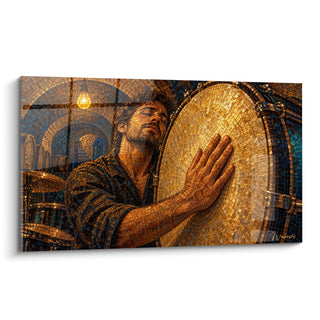 Drum9
artworks
-
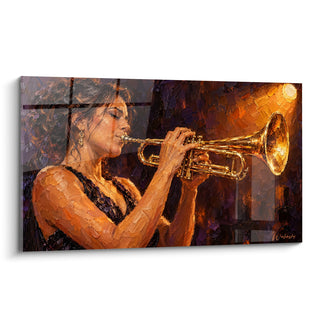 Trumpet14
artworks
-
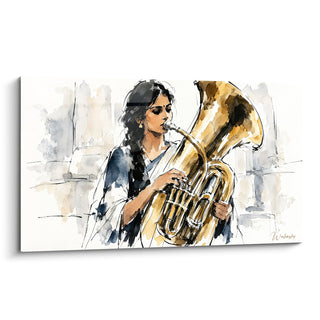 Tuba4
artworks
-
 Trombone2
artworks
-
 Ukulele41
artworks
-
 Vibraphone1
artwork
-
 Violin237
artworks
-
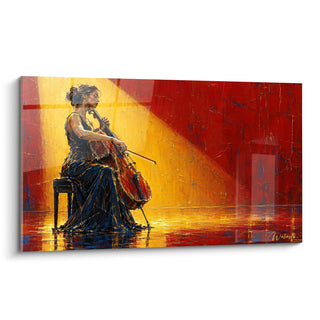 Cello56
artworks
-
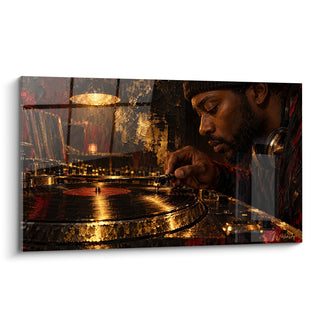 Vinyl43
artworks

All about Painting Harp
- Presentation of Harp Painting
- The instrument we forget
- Body and breath
- The overflowing backdrop
The Harp Painting collection brings together works that share a single subject and a single emotion: the musician caught in her gesture, leaning over her instrument, her face turned toward a luminous elsewhere. Whether she plays facing the sea, before a sunset or beneath splashes of vivid color, each canvas captures the moment when body and music seem to fuse. This repetition of the motif is not redundancy: it is a variation on a theme, like so many movements of a single pictorial score.
What sets these paintings apart is their ability to transform an instrument often perceived as discreet, almost erased from the collective imagination, into a true central subject. The harp becomes here an object of light, its golden strings tracing vertical lines that structure each composition. Around it, the artists play with contrasting palettes, mixing warm tones and electric flashes, so that each work dialogues with its setting while retaining a strong visual identity.
This collection is for those seeking more than simple wall decoration: an inhabited presence, a scene that tells a story without a word. Music lovers, romantics and enthusiasts of poetically charged scenes will find a particular echo here. But beyond this sensitivity, it is also a choice for anyone who wishes to bring a touch of movement and suspended elegance to a living room, bedroom or hallway.
Finally, these paintings echo one another through their pictorial treatment, often textured, sometimes close to impasto, which gives relief to fabrics and reflections on the strings. This visible, almost tactile material anchors each scene in a strong sensory reality. Hung alone or combined, these harp paintings form a coherent ensemble where music becomes image, and image becomes a form of silent melody.
Why the harp, so rare on walls, becomes a pictorial obviousness here
Why do we see the harp so rarely in usual wall art?
Unlike the piano or violin, the harp occupies a discreet place in the common visual imagination: too large, too rare, too associated with specific contexts such as symphony orchestras or ceremonies. The harp paintings in this collection reverse this discretion by placing the instrument at the absolute center of the composition, its golden curves becoming the visual anchor of each canvas. This very rarity of the subject, little exploited elsewhere, gives these works an immediate singularity: hanging a harp painting means choosing a motif you hardly encounter anywhere else on a wall.
What do the vertical lines structuring each canvas tell?
The taut strings of the harp create, on each painting in this collection, an almost abstract graphic rhythm: a series of parallel lines that guide the eye from top to bottom, or the reverse, depending on the musician's gesture. This repetitive, almost hypnotic motif recalls architectural structures or the scores themselves. It gives these harp paintings an almost geometric dimension within an otherwise figurative scene, creating a rare balance between formal rigor and pictorial emotion that captures the gaze before one even perceives the subject as a whole.
Why does this instrument inspire contemporary figurative painters so much?
The very form of the harp, with its sculpted column and golden strings, offers artists a rare visual pretext for playing with light and reflection. In these paintings, the instrument's gilded metal catches and returns the tones of the surrounding setting, whether a sunset or stage lighting. This interplay between material and illumination explains why the harp, more than other instruments, lends itself so well to textured, vibrant painting, where each string becomes a brushstroke in its own right.
What the musician's gesture tells us about these harp paintings
Why do these scenes always show a profile and never a face head-on?
In nearly every canvas of this collection, the musician is caught in profile, never in direct eye contact. This framing choice is not incidental: it concentrates attention on the gesture rather than the identity, on the action rather than the person. The profile also evokes a form of recollection, as if the musician were absorbed in an intimate dialogue with her instrument. These harp paintings thus play on a tension between human presence and effacement, between portrait and lived scene.
Where does this impression of frozen movement in the hair and fabrics come from?
Loose hair, rippling dresses, fabrics seemingly caught mid-flight: this collection multiplies signs of suspended movement. This treatment comes from a painting technique that favors impasto and broad palette-knife strokes, giving relief and a sensation of wind even on a motionless canvas. This formal choice sets up a constant tension between the still instant of painting and the fluidity of music, making each harp painting alive, as if the scene kept playing beyond the frame.
Why do these figures seem elsewhere, gazing toward the horizon?
In several compositions of this collection, the musician's gaze never rests on her hands but drifts toward a horizon, a sea, a distant light. This choice reflects an old idea tied to the harp: that of an instrument associated with reverie and elevation, almost spiritual in certain Western traditions where it accompanied sacred tales and songs. This direction of the gaze gives each canvas an almost narrative dimension, as if the music told of an elsewhere only the musician could perceive.
Why does the background of these harp paintings explode while the scene is so calm?
Why are the backgrounds so saturated while the central scene remains serene?
This striking contrast between a peaceful musician and explosive backgrounds, fluorescent drips or golden blazes, is the visual signature of this collection. It creates a tension between inner calm and outer agitation, between concentration and chromatic chaos. This opposition recalls that music itself is often born from a noisy environment it manages to transcend. In these harp paintings, the colored disorder of the setting never distracts from the subject: it instead underscores the concentration required to play, and gives each scene an almost theatrical depth.
What do the drips that seem to run down some canvases mean?
The vertical drips running through several works in this collection evoke a wall patinated by time, a living material transforming before our eyes. This technique, borrowed from urban art and abstract expressionism, gives otherwise classical scenes an unexpected modernity. It also creates a visual breath, a space where the gaze can rest between the precision of the portrait and the freedom of the painterly gesture. This process turns each harp painting into an encounter between two eras and two techniques, one figurative, the other resolutely contemporary.
Why do some settings evoke the sea, others fire, and still others a celebration?
Each environment chosen in this collection, whether a shoreline, the light of flames or a decorated barn, establishes a different narrative atmosphere around the same instrument. This varied choice allows the harp to traverse several emotional registers: marine escape, the intensity of a concert, the softness of a ceremony. This diversity of settings, while keeping the instrument as the common thread, lets whoever composes their wall choose the precise atmosphere they wish to establish at home, according to the room and the natural light that inhabits it.
FAQ about harp paintings
Why does the harp recur so much as a subject in this collection rather than another instrument?
The harp offers a unique vertical silhouette, golden strings that catch the light and a particularly photogenic hand gesture. Rarely represented elsewhere in wall art, it allows these canvases to stand out immediately from more classic musical scenes centered on the piano or violin, while evoking a timeless elegance specific to this instrument.
Are these harp paintings suitable for a very colorful room or a more sober one?
Both are possible depending on the canvas chosen: some compositions rely on warm, flamboyant tones that energize a neutral interior, while others remain more restrained and blend into an already rich palette. The key remains the coherence between the dominant drips of the canvas and the colors already present in the room.
Does this kind of scene speak only to musicians or harpists themselves?
Not only. These paintings appeal just as much to music lovers as to those drawn to the grace of movement, the poetry of a suspended moment, or simply the visual elegance of a figure in motion. The harp, by its rarity, also attracts those seeking an original subject, away from more expected musical scenes.
Further reading
Our articles on this topic
- How do you harmonize a harp painting with bohemian décor?
- Giving a harp painting to a passionate musician: the gift guide
- Celtic harp painting on acrylic glass: the elegance of Celtic music at home
- Luminous harp glass print: the perfect match for a design entrance
- Harmonica print on acrylic glass: why does this pattern catch the light so beautifully?
- Harmonica painting for a modern living room: creating a trendy wall decoration
L'art qui suscite l'envie
Maison belge d'art mural grand format
14 jourspour changer d'avis*
Protection Walenskyincluse
Fabriquéen Italie
FormatXXL
Kit de fixationtoujours fourni
* Hors tableaux personnalisés et tailles personnalisées


