


Saxophone Painting Collection
A wet alley, golden light spilling across the cobblestones, a silhouette breathing its melody into the night: this is the world of the Saxophone Painting collection. Here, the brass of the instrument becomes the beating heart of every composition, captured in urban atmospheres where rain, neon and shadow tell the story of jazz as much as the music itself. These saxophone paintings bring a nocturnal, vibrant intensity into your home, somewhere between a suspended breath and copper-toned light.
 Saxophone Music Wall Art Red and Yellow Hat - Color Mosaic - Music Edition$309.90
 Music Wall Art Yellow and Red Saxophonist Hat - Colorful Checkerboard Background - Music Edition$499.90
 Musician Saxophonist Bow Tie Pink Blue Whirlwind Wall Art - Breath of Color - Music Edition$499.90
 Blue Teal and Gold Saxophonist Music Wall Art - Breath in Fusion - Music Edition$499.90
 Music Wall Art Gray Gold Face and Saxophone - Intense Red Lips - Music Edition$499.90
 Music Wall Art yellow and red stylized saxophonist - White solar disc - Music Edition$499.90
 Music Wall Art red and yellow saxophonist yellow glasses - multicolored splashes - Music Edition$499.90
 Music Wall Art Blue Turquoise and Orange Saxophone - Urban Breath - Music Edition$499.90
 Music Wall Art Saxophone Navy Blue Multicolor Splashes - Jazz Vibration - Music Edition$499.90
 Music Saxophone Golden Navy Blue Geometric Wall Art - Jazz Solo - Music Edition$499.90
 Blue and Red Music Wall Art, Cubist Saxophone - Gilded Pavilion Open - Music Edition$499.90
 Music Wall Art saxophone golden cubist background burgundy - Solo nocturne - Music Edition$559.90
 Music saxophonist red and gold with hat Wall Art - Breath of the jazzman - Music Edition$559.90
 Music Saxophonist Gold and Midnight Blue in a Bar Wall Art - Nocturnal Improvisation - Music Edition$559.90
 Golden and Red Music Wall Art with Saxophone Face - Carmine Lips - Music Edition$559.90
 Music Wall Art Yellow Mustard and Red Saxophonist - Breath of the Saxophone - Music Edition$559.90
 Music Saxophone Red and Gold Geometric Wall Art - Jazz Breath - Music Edition$559.90
 Golden and Blue Saxophonist Music Wall Art - Breath of Jazz - Music Edition$559.90
 Music Wall Art Red and Burgundy Saxophone Fragmented Cubist - Triangular Facets - Music Edition$499.90
 Music Wall Art Purple Turquoise Saxophonist Bar Bottles - Cap and Vest - Music Edition$499.90
 Music Wall Art Yellow and Red Saxophonist Graphic - Vibrant Breath - Music Edition$499.90
 Music Wall Art Red and Gold Saxophone Geometric Shapes - Overlapping Bicolor Circles - Music Edition$499.90
 Music Wall Art Gold Saxophone and Burgundy Patchwork Geometric - Colorful Cubist Mosaic - Music Edition$499.90
 Golden Blue Saxophonist Music Wall Art Cubist - Breath of Jazz - Music Edition$499.90
In the same family
Also explore the theme Music
-
 Accordion26
artworks
-
 Battery40
artworks
-
 Song33
artworks
-
 Clarinet3
artworks
-
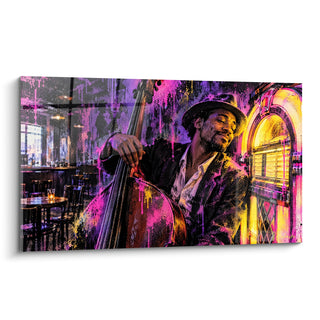 Double bass28
artworks
-
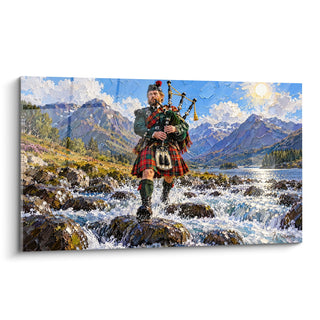 Bagpipes13
artworks
-
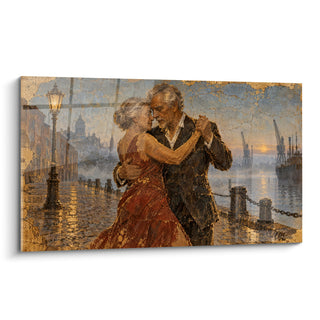 Ballroom dance34
artworks
-
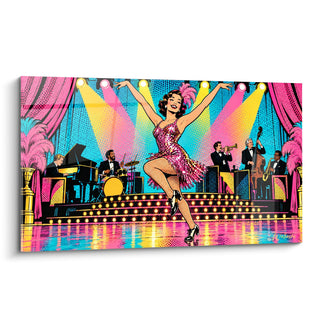 Disco51
artworks
-
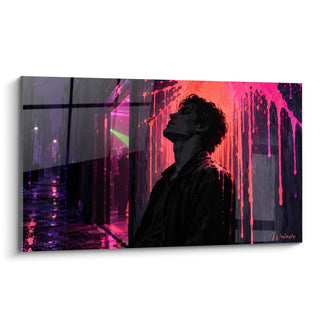 Nightclub26
artworks
-
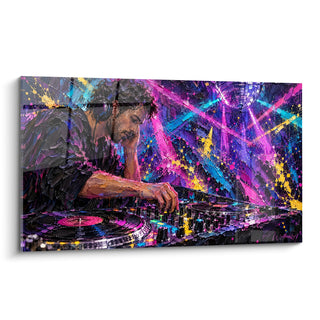 DJ66
artworks
-
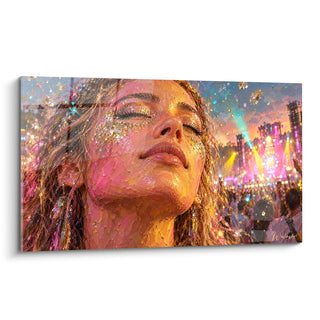 Electro27
artworks
-
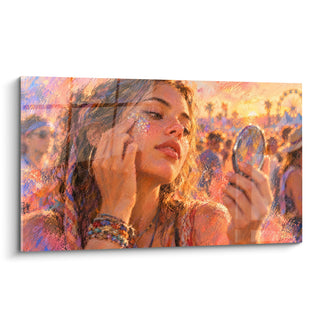 Music Festival11
artworks
-
 Flute14
artworks
-
 Panpipes20
artworks
-
 Funk13
artworks
-
 Guitar108
artworks
-
 Handpan20
artworks
-
 Harmonica3
artworks
-
 Harp18
artworks
-
 Old School Hip Hop40
artworks
-
 Jazz8
artworks
-
 Jukebox12
artworks
-
 Various Musicians61
artworks
-
 Musical note21
artworks
-
 Opera23
artworks
-
 Orchestra6
artworks
-
 Piano295
artworks
-
 Punk35
artworks
-
 Reggae13
artworks
-
 Rock48
artworks
-
 Sitar15
artworks
-
 Sound System3
artworks
-
 Music Star66
artworks
-
 Drum9
artworks
-
 Trumpet14
artworks
-
 Tuba4
artworks
-
 Trombone2
artworks
-
 Ukulele41
artworks
-
 Vibraphone1
artwork
-
 Violin237
artworks
-
 Cello56
artworks
-
 Vinyl43
artworks

All about Saxophone Painting Collection
- Saxophone Painting Overview
- Light on the wet street
- Brass as a character
- Cities and solitary silhouettes
The Saxophone Painting collection brings together canvases in which the instrument is never a mere object placed in the scene: it is the luminous centre around which the whole composition is organised. Whether it glows beneath a streetlamp, glints against a dark jacket or stands out against a blazing wall, the saxophone becomes the golden anchor of an urban night told in deep colours.
What unites these saxophone paintings is a shared way of treating artificial light as a character in its own right: streetlight halos, reflections on the wet pavement, streaks of neon cutting across the depths of the streets. This collection does not seek to illustrate music literally; it seeks to capture its atmosphere, that tension between solitude and vibration that defines jazz played in the shadows of the city.
The palettes move between nocturnal blues, warm golds and flashes of red or violet, creating a contrast that structures each composition and gives these canvases a strong presence on a wall, without ever tipping into oversaturation. This chromatic tension is the visual signature of the collection, recognisable from one canvas to the next.
This collection is made for those who love interiors touched by a subtle, elegant melancholy, music lovers as much as enthusiasts of dense pictorial atmospheres. It naturally finds its place in a living room, an office or a hallway where one wishes to create a presence full of character, somewhere between city, night and music.
Why do rain and reflections dominate these saxophone paintings?
Where does the golden glow covering the pavement come from?
On these saxophone paintings, the wet ground acts as a second screen: every light, whether from a streetlamp or a sign, reflects and doubles across it, amplifying the intensity of the scene. This device is not a mere aesthetic effect: it comes from urban painting of the early twentieth century, when artists began depicting cities at night, in the rain, to capture the fleeting brilliance peculiar to city streets. Hung at home, this play of reflections extends the room, as if the light kept running beyond the frame, bringing unexpected depth to a wall that would otherwise be silent.
Does the nocturnal blue serve a specific purpose in the composition?
The deep blue that envelops most of these saxophone paintings does not merely place the action at night: it creates a setting that makes every touch of yellow or gold stand out with redoubled force. This chromatic opposition, inherited from the great contrasts of pictorial chiaroscuro, lets the eye focus immediately on the instrument or the musician, without ever scattering across the rest of the scene. In a room, this bluish dominant establishes a hushed, almost introspective calm that contrasts with the energy suggested by the music depicted.
Why do these alleys always seem deserted?
The absence of crowds in these saxophone paintings is no compositional accident: it isolates the musician and reinforces the idea of a stolen, almost confidential moment between the artist and the city listening to him. This pictorial solitude echoes the tradition of the street musician, a familiar figure in great Western cities since the early last century, who plays as much for himself as for any passer-by. Hung in a living room or an office, this subdued atmosphere invites a form of contemplation, far from the bustle that urban scenes usually suggest.
What the gilded brass says in these saxophone paintings
Why does the instrument always catch the light first?
In every saxophone painting in this collection, the instrument's gilded metal acts as a visual magnet: it concentrates the scene's rare light sources and returns them with an intensity no other element of the painting possesses. This quality stems from the very nature of brass, an alloy able to capture and reflect the coloured warmth of artificial lighting far better than fabric or stone. This luminous focal point structures the reading of the work and, once hung, naturally draws the eye as soon as one enters the room, without any extra compositional effort.
Does the worked texture of the instrument change how the canvas is perceived?
The meticulous detail given to the keys, bell and curves of the instrument creates a textural contrast with the often more sketched silhouettes of the musicians. This precision refers to a pictorial tradition in which the technical object, almost scientific in its construction, is rendered with near-documentary care within a scene that is otherwise impressionistic or expressive. For anyone looking closely at these saxophone paintings, this minuteness reveals a patient craft that rewards prolonged observation, an asset for a canvas meant to be seen every day.
Why does gold dominate against sometimes dark settings?
The golden gleam of the instrument deliberately contrasts with the anthracite, black or navy tones that often make up the background of these scenes. This colour choice draws directly on the way copper and brass have long symbolised the sonic and visual richness of wind instruments in the imagination of early jazz. This opposition between surrounding darkness and metallic brilliance gives these paintings a rare ability to visually warm a shadowy space, without ever resorting to loud or garish colours.
What these saxophone paintings say about the city at night
Why do the skyscrapers always appear blurred in the background?
In several compositions in this collection, the urban skyline dissolves into imprecise, almost ghostly forms behind the sharp silhouette of the musician. This deliberate blur recalls peripheral vision at night, where only nearby light sources remain sharp while the distance melts into darkness. This visual choice allows these saxophone paintings to organise attention: the city exists, immense, but it fades behind the musical moment occupying the foreground, thereby reinforcing the intimacy of the scene depicted.
Does the bent or absorbed silhouette carry a particular meaning?
The musician's posture, often slightly hunched or completely absorbed in his breath, reflects the physical concentration required to play a wind instrument, quite different from the broad gestures of a violinist or pianist. This bodily attitude, visible in most of these saxophone paintings, comes directly from the real practice of the instrument, which demands precise control of breathing and an almost reverent posture. Reproduced in paint, this bodily tension gives the scene an authenticity that goes beyond simple decorative representation.
Why does the city always seem wet rather than sunlit?
The pervasive dampness on the pavement in these scenes is no minor climatic detail: it multiplies reflective surfaces and allows artificial light to multiply endlessly, creating a visual richness impossible to achieve in dry weather. This pictorial convention, inherited from urban night representations of the last century, turns a simple street into a kaleidoscope of liquid colours. For an interior, this visual choice brings a constant vibration to the canvas, as if the scene were never entirely still, even once hung on the wall.
FAQ on saxophone paintings
Why does the saxophone appear more often than other instruments in painted urban jazz scenes?
The saxophone has established itself as a visual symbol of jazz because its sinuous shape and golden gleam lend themselves particularly well to nocturnal painting: it catches artificial light better than a piano or a double bass, which are often bulkier and darker. This plastic quality explains its dominant presence in paintings depicting the atmosphere of night-time streets and clubs.
Are these saxophone paintings suitable for a room with no connection to music?
Yes, because the appeal of these canvases goes beyond the musical subject: they work above all as urban nocturnal scenes rich in light and atmosphere. An office, an entrance hall or a living room without any musical practice can welcome this collection for the chromatic intensity and visual story it establishes, regardless of any personal link to the instrument.
What distinguishes a saxophone painting from a more classic jazz scene showing a full orchestra?
Unlike orchestral scenes, which are often collective and lively, these saxophone paintings rely on the solitude of a single silhouette in the city, which creates an intimacy and melancholy absent from group representations. This focus on a single musician allows a more intimate and contemplative reading, suited to calm spaces rather than busy living areas.
Further reading
Our articles on this topic
- Which saxophone painting style should you choose for a modern living room?
- Gold saxophone painting on a dark background: the jazzy, elegant touch for an adult bedroom
- Vibraphone jazz painting: the rare instrument that elevates a modern living room
- Black and white jazz saxophone painting: the office decor that makes a statement
- Jazz trumpet picture: how to fit it into a modern living room?
L'art qui suscite l'envie
Maison belge d'art mural grand format
14 jourspour changer d'avis*
Protection Walenskyincluse
Fabriquéen Italie
FormatXXL
Kit de fixationtoujours fourni
* Hors tableaux personnalisés et tailles personnalisées


