

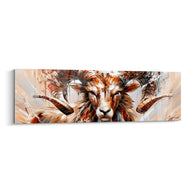

Which jazz painting size should you choose based on wall surface?
7 min read · by Walensky
JAZZ PAINTING
A trio at the piano, a leaning double bass, a saxophone catching the light of a streetlamp: jazz, in painting as on stage, never stays still. It is precisely this movement that complicates the choice of format. A painting that is too small stifles the energy of the scene, while one poorly proportioned breaks the visual rhythm the subject is meant to convey.
The direct answerFor a classic living room wall, plan for a jazz painting occupying 60 to 75% of the width of the wall or furniture beneath which it hangs. For a scene with several musicians, favor a wide format (such as L 120x70 cm or larger) rather than a square format, which suits a single portrait better, such as a close-up of a saxophonist.- Wall width matters, but the composition of the painting (portrait, trio, scene) guides the choice of format just as much.
- The rule of 2/3 to 3/4 of the furniture or wall width remains the most reliable benchmark.
- A wide format is more convincing for a concert scene than a square format, which is reserved for tight portraits.
Why the size of a jazz painting also depends on its composition?
An abstract geometric painting reads the same way regardless of its format: it can be enlarged without losing anything. Jazz, however, tells a story. Silhouettes leaning over their instruments, an arm frozen mid-motion, light falling on a single hand: each element needs space to breathe.
A close-cropped portrait of a saxophonist gains intensity in a square format, where the gaze stays focused on the face and the instrument. Conversely, a scene with several musicians loses all its breath if compressed into a square: it needs a wide format so that each silhouette finds its place without crowding the others.
The wrong format doesn't make a jazz painting smaller: it makes it static, like a piece cut before its solo.
The criteria for measuring and calculating the right size
Before choosing a format, three measurements are enough: the width of the available wall, the viewing distance from the sofa or the bar counter, and the ceiling height.
The 2/3 wall rule applied to jazz
The proportion rule most used in wall decoration is to have the painting occupy 60 to 75% of the width of the main piece of furniture (sofa, sideboard, bar counter) or of the wall if it is bare. For a jazz painting with several figures, aim for the upper end of this range: the composition needs scale so that the movement of the arms and instruments isn't cut off by the edges.
Viewing distance and ceiling height
In a narrow corridor, you walk past the painting; you don't sit facing it. A more compact format is enough, since the eye has only a few seconds to catch it. In a living room or a lounge bar, where you look at the wall from a sofa or a stool, a wider format remains legible even at a good distance, and that is often where the panoramic format comes into its own.

Favourite
Curved building painting in red and yellow with clipped shrubs - Fiery night clouds - Architecture Abstract Edition
From $273.90
Discover this paintingWhich format for your room? Living room, lounge bar, home studio
The format that works in a spacious living room smothers a corridor, and the one suited to a corridor disappears on a large bar wall. The room dictates as much as the composition.
Narrow wall or corridor: opt for a compact format
On a corridor wall or a small alcove, an L format (such as 120x70 cm) remains the safest starting point. A tight subject, such as a close-up portrait of a musician, works particularly well on this surface: you don't need distance to read it, and it keeps its impact even when glimpsed quickly.
Large living room or bar wall: panoramic or wide composition
On a large living room wall or behind a lounge bar counter, a panoramic format tells a scene with several musicians better than a square format. The eye sweeps the composition from left to right, as you would follow a gaze moving from one instrument to another on stage.
This principle of stage composition goes beyond jazz alone: the same logic appears in our article on horse painting size according to wall area, where a full-speed gallop likewise calls for a wide format so as not to cut the movement.
To visualise what a panoramic format looks like with several silhouettes in full action, the same principle applies to very different jazz scenes:
The first illustrates a scene with several figures in motion on a wide format, the second a suspended gesture captured with the same energy: two examples of how a generous format serves a dynamic composition, whether it is a trio of musicians or a single figure in full stride.
In a home music studio, where the eye often stays fixed at seated height (keyboard, console), favour a format slightly lower than average, centred on the equipment rather than the whole wall.
— Our selection


Pairing several jazz paintings to compose a wall scene
A large living room or bar wall doesn't necessarily call for a single very large format. Pairing two paintings of equivalent size, one centred on a musician's portrait and the other on a wider scene, recreates the dynamic of a concert without relying on one giant piece.
- Align the centres of the two paintings at the same height, around 1.50 m from the floor.
- Leave a gap equal to the width of a hand between the two works, never more.
- Vary the subjects (portrait and wide scene) rather than repeating the same framing twice.
This type of wall composition works particularly well in a selection of paintings for the living room, where large walls allow exactly this play of pairings.
— Also worth discovering


Current trends: XXL formats and colourful abstract jazz
Very open white walls, typical of contemporary living rooms and recent lounge bars, call for generous formats. A colourful abstract jazz painting, where silhouettes dissolve into vivid blocks of colour, handles the move to XXL or 2XL very well: the larger the canvas, the more the colours gain presence.
The support also plays a role in this choice. A print on acrylic glass reflects light slightly and accentuates contrasts, which suits colourful abstract jazz in a room with controlled light. A print on Dibond aluminium, with no reflection, is better suited to a window or full natural light, and slightly softens the tones on very large formats.

Frequently Asked Questions
What is the ideal height to hang a jazz painting?
The centre of the artwork should sit around 1.50 m from the floor, roughly at the eye level of a standing adult. In a lounge bar with high stools, this reference can be lowered slightly.
Can you hang a jazz painting in a small room?
Yes, provided you choose a tight subject (portrait, close-up of an instrument) rather than a scene with several musicians, which needs space to unfold without looking cramped.
How do you pair several jazz paintings on the same wall?
Align the centres at the same height, keep a regular gap between the works, and vary the framing (portrait and wide scene) to recreate the dynamic of a concert rather than a simple repetition.
What is the difference between a jazz painting on acrylic glass and on Dibond aluminium for a large format?
Acrylic glass deepens the colours and suits a room with controlled light; Dibond aluminium, with no reflection, stays legible facing a window or in full natural light, which matters more on a very large format.
This square format, with its circular and balanced composition, illustrates the alternative to the wide format well: useful in a home music studio where you want a calm presence rather than a scene in motion.
The right tempo for your wall
The right jazz painting format is never just a matter of centimetres. It is a matter of agreement between the available width and the rhythm the composition seeks to convey: a tight portrait breathes in an L format, a scene with several musicians needs a wide format to keep its momentum.
All that remains is to find the piece that will bring the wall in question to life within the jazz painting collection, and to let the format follow the energy of the subject rather than the reverse.
Explore our collections


