

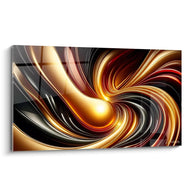

Sustainable wall art against decorative waste
11 October 2025 · 18 min read · by Walensky
You've just moved into your new living room and there it is, a disaster: that cheap painting you bought to brighten up the space is already fading after only a few months. The corners are peeling, the colors are dulling, and this piece that was supposed to transform your interior is now a constant reminder of your poor decorating choice.
Even worse, you realize that this bare wall taunts you every morning when you drink your coffee. This feeling of emptiness, of incompleteness, this impression that your home is sorely lacking in personality and warmth. You almost feel the silent judgment of your guests who glance at this sadly anonymous wall.
So you try to mask the problem : you change your decor every six months, accumulate disposable decorative objects, multiply impulsive purchases on discount decor sites. But it doesn't work, you're going around in circles in a cycle of decorative waste that costs you money and never really satisfies you.
Rest assured, it's not your fault. The problem is that no one has ever explained to you the fundamental difference between a decorative purchase and a durable artistic investment. The low-cost decor industry has created this culture of disposability that keeps you in frustration.
By the end of this article, you will know exactly how to choose durable wall art pieces that will last for years without losing their luster, and you will discover why investing in quality art is the secret to an interior that truly reflects you, without ever having to start over.
Why does your current wall decor disappoint you so much?
Imagine building a house on sand foundations. No matter how beautiful the facade, everything will eventually collapse. That's exactly what happens with cheap wall decor: you build your aesthetic universe on foundations that won't hold. And the longer you wait to switch to quality, the more money you lose on catch-up purchases that will never satisfy you.
🏠 Revealing testimonial: Sarah, interior architect, says: "I accompanied a couple who had spent over €800 in 2 years on discount paintings to decorate their living room. The result? A wall overloaded with mismatched works that were deteriorating. By replacing everything with a single quality wall art piece at €650, we created a stunning focal point that transformed the entire ambiance of the room."
Conversation with a decor expert
The golden rule of lasting wall art : A quality artwork that moves you for 10 years always costs less than ten ephemeral decorative purchases. You'll see the difference from the first week, and your guests will remember it months after their visit.

Our selection
Painting At the Heart of the Breeze - Abstract Boat Edition
$233.90
Discover this paintingWhat Really Happens When You Choose Wrong
You surely recognize yourself in these situations: you walk past your main wall and feel that pang of disappointment, you avoid taking photos of your living room during parties, or you secretly hide some paintings when you receive guests with discerning taste. These signals reveal that your wall decor isn't doing its main job: giving you pride every day.
What's happening is that you're caught in the trap of disposable decor. This industry makes you believe that wall art is just an "accessory" that can be easily replaced. But your brain, it knows the difference between an authentic artwork and a simple reproduction.
It's like the difference between wearing a quality perfume that gives you confidence all day long, and using a supermarket perfume that evaporates in an hour. Your visual environment acts exactly the same way on your daily well-being.
The Real Reason Behind Your Decor Disappointments
Contrary to what you've been led to believe, the problem isn't your budget or your lack of taste. The real cause is that you choose your wall artworks with fast-food criteria (quick, cheap, practical) instead of gourmet criteria (quality ingredients, craftsmanship, lasting experience).
Imagine buying a car by only looking at the purchase price, without worrying about fuel consumption, reliability, or resale value. You would end up paying much more in the long run. That's exactly what happens with discount wall art.
Result: you end up in a vicious cycle of permanent renewal that drains your decor budget and prevents you from creating that feeling of "home" that a harmonious and thoughtful interior provides.
✨ Revealing test: Look at your main wall for 30 seconds. If you feel indifference instead of satisfaction, it means your wall decor isn't doing its main job: connecting you emotionally to your space.
The Illusion of Permanent Variety
Many think that you need to change your decor regularly to avoid boredom. In reality, this belief keeps you in decor fatigue. An authentic wall artwork evolves with you: you discover new details in it, it changes atmosphere according to the light, it enriches with your memories.
It's like the difference between collecting fleeting adventures and building a deep relationship. One exhausts you, the other nourishes you.
Direct consequence: you spend more time searching for the perfect decor than enjoying your interior. Your living room becomes an eternal construction site instead of being your daily refuge.
The Invisible Factor That Changes Everything
What almost no one notices is the impact of support materials on the longevity of the artwork. A designer friend told me about seeing photo prints yellowing in less than a year due to exposure to natural light, while the same visuals on durable technical supports retained their vibrancy after a decade.
You can spot this problem at home by observing whether your current paintings have the same color intensity as on the first day, or if they seem "tired" compared to your memories of the purchase.
This invisible degradation undermines your daily satisfaction and forces you into premature replacements that weigh on your budget without you really realizing it.
3 telltale signs:
- You avoid photographing that corner of your home: That's because your subconscious has detected that something is wrong with the visual harmony
- You constantly feel the need to "add something": Sign that the current artwork doesn't create enough impact to anchor the space
- Your guests never comment on your wall decor: Proof that your choice doesn't generate the necessary emotion to leave a mark
The moment everything changes
The trigger is when you move from the logical "what can I afford" to "what do I really want to live with at home". It's like a domino effect: this new approach transforms your relationship with your space, then your confidence in your choices, then the way others perceive your interior. You'll recognize this shift when you start looking for artworks that tell your story rather than those that "go with" your furniture.
Fundamental principle: An interior that resembles you is built with assumed choices, not compromises. When you feel you "have to explain" why you chose a particular painting, it means you haven't found your artwork yet.
| ❌ Disposable decor | ✅ Durable wall art | 💡 Why this changes everything | 🎯 Tangible benefit |
|---|---|---|---|
| I replace it when I get tired of it | I always discover new details | Your eye becomes more refined and enriches the experience | Pleasure that grows with time |
| It goes with my current furniture | It expresses who I really am | Authenticity creates emotional impact | Sincere pride in your interior |
| I buy to fill the space | I invest to create an atmosphere | The intention determines the result | Visually impressive coherence |
| If it degrades, I buy it again | It's made to last for decades | Technical quality preserves the investment | Real savings in the long term |
— Also to discover


The method for choosing a wall art piece that will accompany you for years
Now that you understand the pitfalls to avoid, let's move on to the rewarding part. I will guide you to transform your approach to wall art, like a chef who would teach you to distinguish quality ingredients from industrial products. You will first learn to recognize signs of durability, then to evaluate emotional impact, and finally to optimize your investment. At each step, you will feel your confidence in your decorative choices grow.
🎯 Overview of your transformation: Like an architect who first builds the foundations, then the walls, then the roof, we will first secure technical quality (so it lasts), then develop your artistic eye (so it pleases you for a long time), then optimize integration (so it really transforms your space). Result at each step: technical serenity, then aesthetic satisfaction, then daily pride.
Step 1: Secure technical durability
Starting with this step is like checking the solidity of the foundations before choosing the color of the walls. This precaution will avoid you disappointments later and forced replacements. Once you master these technical criteria, you will feel the peace of mind that comes from knowing your investment is protected for years to come.
The materials that make the difference
- Aluminium Dibond or plexiglass support: These materials look like lightweight but rigid panels, they serve as an unbreakable and imputrescible base for your artwork. You will recognize them by their perfectly smooth appearance and surprising lightness. Absolutely avoid photo paper under glass which yellows and warps, even if it costs three times less, because you will pay four times more for replacements.
- UV-resistant pigment inks: These inks act as a "permanent sunscreen" for your painting, preventing colors from fading even when exposed to direct sunlight. The quality indicator: colors remain vibrant even after years of exposure. The impact: your investment retains its aesthetic and financial value.
- Protective surface finish: This invisible layer acts as a shield against humidity, dust and fingerprints. It is recognized by its slightly textured but perfectly smooth feel. The visible benefit: your artwork retains its original shine with a simple dusting.
Let's now move on to the practical verification of these criteria:
How to evaluate technical quality in 3 steps
The resonance test: Gently tap the support with your fingernail. A dull and firm sound indicates a dense and durable material, a hollow sound reveals a fragile support that is likely to warp. It's like tapping a fruit to check its ripeness. This verification takes you 5 seconds but avoids years of regrets.
⏱️ Time: 10 seconds | ✅ Successful when: Uniform and dull sound over the entire surface | ⚠️ Attention: A variable sound indicates weak spots in the support
The edge examination: Observe the edges of the artwork from different angles. The edges must be perfectly clean, without delaminations or printing smudges. This is the detail that separates artisanal manufacturing from industrial production. A professional always takes care of the finishes because he knows you will notice them daily.
⏱️ Time: 30 seconds | ✅ Successful when: Clean and even slices | ⚠️ Attention: Irregular edges often reveal a carelessly cut automated process
The resistance to trace test: Gently wipe a clean fingertip across an inconspicuous area. It should leave no mark and the surface should instantly return to its original appearance. This resistance guarantees minimal maintenance for years.
⏱️ Time: 15 seconds | ✅ Successful when: No visible traces, unchanged surface | ⚠️ Attention: Surfaces that retain traces will require constant cleaning
✅ Validation of the step: Your artwork should seem "built to last" rather than "quickly printed". You should feel the same confidence as when buying a recognized brand electronic device. If you have any doubts about the solidity, continue your search. Your intuition is right: quality is immediately felt.
Step 2: Develop your emotional connection
Now that you know how to recognize technical quality, we are going to awaken your personal artistic sensitivity. This is the transition from a decoration consumer to a collector of emotions. This step is more rewarding because you begin to feel that your choices truly represent you, creating that momentum where each good decision reinforces your confidence for the next.
Identify your personal aesthetic signature
The first glance exercise: When facing an artwork, note your very first reaction before even thinking about the price or integration. This raw emotion reveals your true taste, unpolluted by practical considerations. It's like falling in love: authentic attraction is felt immediately, before any rationalization.
⏱️ Time: 3-5 crucial seconds | ✅ Successful when: Clear emotional reaction (attraction or indifference) | ⚠️ Attention: Beware of artworks that leave you "speechless" due to hesitation rather than emotion
The daily projection test: Imagine this artwork in your living space for a whole month. Visualize yourself discovering it every morning, showing it to your loved ones, experiencing your moments of relaxation in its presence. If this projection excites you, you have found your lasting crush.
⏱️ Time: 2-3 minutes of visualization | ✅ Successful when: The idea of living with it provides positive anticipation | ⚠️ Attention: If you have to "convince yourself" that it might work, move on
Step 3: Optimize impact in your space
You now master the technical criteria and know your aesthetic preferences. This final step allows you to become a true atmosphere creator. You will learn to make your artwork dialogue with your space to create that harmony that impresses your visitors and provides you with lasting daily satisfaction.
Create perfect harmony with your environment
The rule of balanced proportions: Your artwork should occupy between 60% and 75% of the width of the main piece of furniture it overlooks. This proportion creates the visual balance that enhances both the artwork and the furniture. It's like the art of the perfumer who doses each essence to create the final harmony.
⏱️ Time: 5 minutes of measurement and calculation | ✅ Successful when: The whole seems "made to go together" | ⚠️ Attention: A painting that is too small is drowned, too large overwhelms the furniture
Optimizing natural lighting: Observe how the light in your room changes throughout the day and position your artwork to benefit from a flattering lighting during your favorite times. Well-lit artwork completely transforms the ambiance of a room.
⏱️ Time: 24 hours of intermittent observation | ✅ Successful when: The artwork remains attractive at all key moments | ⚠️ Attention: Avoid backlighting that creates annoying reflections
Mastered progression rule: You are ready to validate your choice when you check these three boxes: absolute technical confidence + immediate emotional connection + obvious harmonious integration. Never rush a purchase if one of these criteria leaves you in doubt.
Congratulations! You have just developed an expert eye that sets you apart from impulsive buyers. Now, let me share with you the subtleties that only true connoisseurs master, those details that immediately reveal an interior designed by someone with taste.
🎨 Collector's secret: Great collectors always choose their artworks in natural light and never under artificial lighting. Daylight reveals the true colors and subtleties you will discover at home. That's why prestigious galleries invest in lighting that perfectly mimics natural light.
Frequent question from our readers
"How can I be sure this artwork will still please me in 5 years? I'm afraid of getting tired of it..."
I perfectly understand this apprehension, it's even proof that you are taking this decision seriously. In reality, an authentic artwork ages with you like a good friend: you discover new facets of it according to your mood, the season, the moments of your life. Take the example of the Mona Lisa: millions of people rediscover it with each visit without ever getting tired of it. The secret? Choose an artwork that has narrative depth rather than a simple visual effect. The more details there are to explore, the less likely you are to get bored.
💡 Anti-boredom test: Observe the artwork for 2 full minutes. If your gaze continues to circulate and discover elements after this time, it's a good sign for the longevity of your enjoyment.
— In the same spirit


Our keen eye
Painting Artistic Big Bang Radiance - Limited Edition🥇
$233.90
Discover this painting →The 5 mistakes that turn a good investment into regret
Before finalizing your choice, I want to protect you from the classic pitfalls that even enlightened enthusiasts can encounter. These mistakes are normal and human, but now that you know them, you can easily avoid them.
- ⚡ Buying under the pressure of a limited promotion: It's tempting to "seize the opportunity", but the best artworks are never sold at a discount. This artificial urgency prevents you from taking the time for necessary reflection. Prefer to take a month to be sure rather than regret it for years. True professionals respect your decision-making time.
- 📐 Neglecting the exact measurements of your space: Many people visualize "approximately" and discover that the artwork is disproportionate once hung. Measure precisely and mark the location with masking tape before any purchase. A poorly proportioned artwork ruins the entire desired effect.
- 💡 Ignoring existing room lighting: Choosing a dark artwork for a dimly lit space, or conversely, creates a visual imbalance that is fatiguing to the eye. Observe your room at different times before deciding. Lighting can transform a beautiful artwork into a disturbing element.
- 👥 Being influenced by the opinions of others: Your loved ones have good intentions, but they won't be living with this artwork. Your personal feelings always take precedence. If you like it but "others don't understand," it's often a sign of an authentic and personal choice.
- 💰 Setting a budget that is too rigid: Arbitrarily limiting yourself sometimes prevents you from finding THE piece that will accompany you for decades. It's better to wait and save for the perfect artwork than to make multiple compromise purchases. It's an investment, not an expense.
🛡️ Checkpoints before validation: Verify that you feel enthusiasm (not just satisfaction), that the artwork integrates harmoniously into your visualizations, that the technical quality reassures you completely, and that you fully embrace this choice in front of your entourage. Warning sign: if you have to justify or explain your choice, dig deeper.
— Other selected pieces


Our selection
Painting Echoes of Millennial Rocks - Abstract Edition
233,90€
Discover this painting →Your most frequent technical questions
For a 60x40cm piece of professional quality, expect to spend between 200€ and 800€ depending on the artistic complexity and finish. It's cheaper than a high-end smartphone that you'll keep for 3 years, for an artwork that you'll appreciate for 20 years. To optimize: start with a quality masterpiece rather than several average artworks.
The visual impact is immediate upon hanging, but the profound satisfaction develops over 2-3 weeks, the time it takes for your eye to adjust and realize how much your space has gained in personality. Your guests will notice it on their first visit.
Yes, invest in a hanging system adapted to the weight (special dowels for partition walls or wall fixings for solid walls). Allow 20-30€ for a professional kit. A quality artwork deserves a secure hanging that showcases it and protects your investment.
A monthly dusting with a dry microfiber cloth is sufficient for modern supports. Absolutely avoid chemical products. For exceptional stains, a slightly damp cloth on technical supports. It's less maintenance than a wooden piece of furniture!
Absolutely, it's even an advantage of lightweight modern supports. Unlike traditional paintings under glass, you can reorganize your decor according to your desires or moves. Just allow for several hanging points in your main rooms.
Your decorative transformation begins now
In a few weeks, when you return home after a long day, your gaze will fall upon this wall art piece that reflects your personality and you will instantly feel that sense of truly being home. Your guests will notice this particular atmosphere without being able to explain it, this impression that your interior has a soul and tells your story. You will no longer frantically search for the "perfect" decoration because you will have found it.
More deeply, this approach will develop your confidence in your aesthetic choices which will impact other aspects of your life. You will become that person whom people consult for decorating advice, the one who knows how to create memorable atmospheres. Your relationship with art and beauty will naturally enrich.
The most difficult thing - understanding the mechanisms of sustainable decoration - is now behind you. You just need to take that first step: take the time to really observe your main wall and imagine the artwork that will transform it. You now have all the keys to make the choice that will accompany you for years to come.
✨ Your new decorative chapter awaits you: You are only one decision away from transforming your visual everyday life. Trust your educated instinct, you now know how to recognize quality. Your dream interior is waiting for your courage to take action.
Also to read: 🌱 Discover our articles on ecological art


