

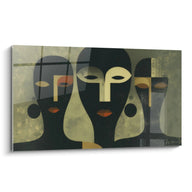

Do unglazed framed artworks create a warmer look next to books?
April 4, 2026 · 9 min read · by Walensky
A few weeks ago, while redoing my personal library, I removed the glass from an old engraving before hanging it above my shelves. The change was immediate: the piece suddenly seemed to converse with the books, to share their texture and tactile presence. What was just a decorated wall became a true cultural ecosystem, where paper, bindings and ink talk to each other in a palpable harmony.
Here is what an unglazed framed artwork brings to your books: a material coherence that creates warmth, the removal of reflections that encourages visual intimacy, and a tactile authenticity that turns your library into a sensory sanctuary.
How many times have you gazed at your reading corner sensing that something was missing? Your books are carefully aligned, your framed artworks hung with precision, yet the whole remains cold and impersonal. The glass of the frames reflects the light, creating invisible visual barriers that fragment the space instead of unifying it.
This feeling is not inevitable. In fact, the choice of framing radically influences the atmosphere of a reading space. And the good news: the solution is simpler than you think. Let's discover together how unglazed artworks turn your library into a truly warm place.
The tactile magic: when art shares the texture of paper
Look closely at your books. Their edges reveal the materiality of paper, their bindings bear witness to the passing of time, some covers carry the traces of a noble patina. Now look at an artwork under glass: it floats in its frame, protected certainly, but isolated behind a transparent barrier that disconnects it from its surroundings.
An unglazed framed artwork fundamentally changes this dynamic. The absence of this glass surface allows the paper of the illustration, engraving or watercolor to exist on the same sensory plane as your books. The grain becomes visible, the irregularities of the support are revealed, the texture comes alive.
This material coherence is not merely aesthetic. It creates a visual and tactile continuity that soothes the gaze. Your brain unconsciously perceives this harmony: paper against paper, fiber against fiber. The space no longer contains disparate objects but composes a unified collection where each element resonates with the others.
The artist's library effect
In the studios of painters and writers, unglazed artworks naturally sit alongside books. This absence of formal protection reflects a daily intimacy with art. By reproducing this approach at home, you instill in your library the same atmosphere of a creative studio, the feeling of a lived space rather than merely a decorated one.
Light and reflections: the equation of visual intimacy
Glass is the silent enemy of a warm ambiance. Even anti-reflective glass catches light, creates bright areas, sometimes turning your artwork into a partial mirror. Near a window or a reading lamp, these reflections become frankly bothersome.
Without glass, the framed artwork absorbs light instead of reflecting it back. The paper, whether matte or slightly satin, gently diffuses the ambient brightness. This absorption creates a soothing, almost meditative presence. The artwork does not shout its existence through flashes of light; it settles discreetly into your visual field, as your favorite books would.
I have observed this effect in my own library. My botanical engravings without glass, installed between two shelves, seem to emerge naturally from the wall. They do not fight for attention. Conversely, the Japanese print I keep under glass in the hallway systematically draws the eye with its reflections, creating an involuntary visual tension.
Amplified reading comfort
This luminous softness directly impacts your comfort. In a reading corner, reflective surfaces tire the eye. By eliminating glass from your wall artworks, you create a restful visual environment, conducive to concentration and prolonged reading.

Favorite
Painting golden veins sparkling on pearly white and beige background - Mineral Luxury - Abstract Marble Edition
$233.90
Discover this paintingEmbraced authenticity: toward a less perfect, more living decoration
Our era values authentic imperfection. Unglazed framed artworks perfectly embody this philosophy. They accept aging slightly, bearing the discreet traces of passing time, exactly as your old books develop their character over the years.
This embraced vulnerability creates an emotional warmth impossible to reproduce with hermetic protection. A slight undulation of the paper, a gradual patina of the colors, a subtle deposit of dust in the recesses of the relief: these micro-events tell a story, that of an artwork that truly lives in your space.
Near books, this philosophy finds its most coherent expression. Your volumes are not sealed under plastic; why should your artworks be sealed under glass? This philosophical coherence translates visually into a palpable harmony, an impression that each element naturally belongs to the whole.
— Our selection


Which unglazed artworks should you favor near your books?
Not all creations lend themselves equally to this free framing. Certain techniques particularly thrive without glass protection in a bibliophile environment.
Antique engravings excel in this context. Their thick paper and generally stable ink, their existing patina harmonize beautifully with old books. The slight imperfections of the paper converse with the yellowed edges of your vintage editions.
Lithographs and art reproductions on matte paper also deliver excellent results. Their non-reflective surface absorbs light like a book page, creating the sought-after visual continuity. I am particularly fond of botanical reproductions on laid paper, whose ribbed texture recalls that of antique bibliophile papers.
Watercolors and drawings on thick paper can also do without glass, provided your library is not exposed to direct sunlight. Their fragile delicacy adds a poetic dimension to the whole, a reminder that beauty does not always require protected perfection.
Formats to favor
Near books, medium formats (A4 to A3) create the ideal balance. They converse with the shelves without dominating them, punctuate the space without fragmenting it. Several small unglazed artworks arranged as a constellation work wonderfully, evoking the pages of a book open on the wall.

The art of protecting without isolating
Removing glass does not mean abandoning all protection. A few simple precautions allow you to preserve your artworks while retaining the sought-after tactile warmth.
Choose a frame with a mat (this passe-partout that creates a border between the artwork and the frame). This distance protects the paper edges from direct contact with the wood, reducing the risk of acid transfer. The mat also adds visual depth that compensates for the absence of glass.
Apply a spray fixative to particularly fragile artworks. This thin protective layer, invisible to the naked eye, stabilizes the pigments and limits dust absorption without creating a reflective barrier. I systematically use it on my reproductions before framing them.
Position your unglazed framed artworks away from direct light. Near a library, this constraint becomes an advantage: the recesses between shelves, walls perpendicular to windows, spaces above tall shelving naturally offer these protected zones.
— Also to discover


Composing harmony: the artwork and the book as a duet
The final installation determines the success of this warm synergy. A few simple principles maximize the desired effect.
Create thematic correspondences. A botanical engraving above your gardening books, an antique map near your travel narratives, a writer's portrait among his bibliography: these narrative echoes reinforce the coherence of the whole.
Play with density contrasts. Near very crowded shelves, favor spare artworks that offer visual breathing room. Conversely, a minimalist library will welcome more detailed compositions that add richness without overloading.
Think about the circulation of the gaze. The eye should be able to travel naturally from the books to the artwork and back. Align the bottom of your frame with a shelf, or position it along the vertical axis of a stack of beautiful books. These subtle alignments create a soothing visual fluidity.
Transform your library into a warm jewel box
Discover our exclusive collection of Library paintings that naturally converse with your books to create the perfect harmony between art and literature.

In the same spirit
Reflection Painting in Black and Gold - Abstract Face Edition
$233.90
Discover this painting →Your library transformed: from functional to sanctuary
Imagine your reading corner in a few weeks. The unglazed artworks you have chosen now punctuate your shelves with a gentle yet assured presence. The light from your lamp no longer creates bothersome reflections, but caresses books and illustrations evenly. Your fingers brush the frame as you reach for a book, and this texture reminds you of the tactile pleasure of a beautiful book.
This transformation requires only one decision: daring to remove the glass, or choosing from the outset artworks framed without this barrier. The warmth that results is not measured in degrees but in emotions, in visual comfort, in that indescribable sensation that a space is no longer simply decorated but truly inhabited.
Start modestly. Remove the glass from a single artwork this week. Observe how it converses differently with your library. You will probably never want to go back.
Frequently asked questions
Don't unglazed artworks risk deteriorating quickly near books?
This concern is understandable, but largely overestimated in a normal indoor environment. A library actually constitutes a stable microclimate : relatively constant temperature, moderate humidity, no direct contact. Books themselves survive for decades under these conditions, and your framed artworks will benefit from the same natural protection. The main enemies of paper are direct sunlight, excessive humidity and frequent handling. If your library avoids these pitfalls (which is generally the case), your unglazed artworks will age gracefully, developing that noble patina that adds character. Gentle dusting every three months with a soft brush is sufficient maintenance. This measured vulnerability is part of the charm: your decoration lives and evolves, like your favorite books whose pages gradually yellow with time.
Can you remove the glass from an existing frame, or must you buy special frames?
Excellent news: you can absolutely remove the glass from most existing frames! It is even the solution I recommend for testing this approach without investment. Simply open the back of the frame, remove the glass, then reassemble everything. Two precautions to take: check that the artwork has a mat (passe-partout) that will maintain a distance between the paper and the back of the frame, essential for air circulation and mold prevention. If your artwork sits directly against the backing, slip a conservation board between the two. Then make sure the rear fastening system holds the assembly firmly despite the absence of the glass that sometimes served as pressure. You may discover that certain frames reveal their beauty without glass: raw wood frames, patinated antique moldings, handcrafted finishes gain presence when nothing reflects the light. This rediscovered simplicity pairs perfectly with the authenticity of a well-stocked library.
Which types of artworks absolutely need to stay under glass even near books?
Some creations do require glass protection, even if this slightly reduces the sought-after warmth effect. Photographs, particularly sensitive to UV and oxidation, greatly benefit from anti-reflective glass that extends their lifespan without excessively compromising luminosity. Works with fragile pigments such as pastels, charcoal or certain very delicate watercolors also require this protection, as the slightest draft or contact could alter their powdery surface. Pieces of high value, whether sentimental or financial, deserve the security of glass: a precious original, a family heritage, a signed limited edition justify this protective barrier. In these cases, opt for high-quality museum anti-reflective glass that minimizes reflections while effectively protecting. You can create a mixed composition: a few works under glass for these special cases, surrounded by several reproductions and engravings without glass that will bring the desired tactile warmth. This alternation even creates an interesting visual rhythm in your library.
Explore our collections


