


Should you favor abstract or figurative art in a pediatric practice?
November 17, 2025 · 8 min read · by Walensky
I have seen waiting rooms turn crying fits into moments of calm curiosity. After twelve years designing therapeutic environments for children, I have learned that choosing between abstract art and figurative art for a pediatric practice is not merely a question of aesthetics. It is a decision that directly shapes the emotional experience of young patients.
Here is what the right artistic choice brings to your pediatric practice: a measurable reduction in pre-consultation anxiety, cognitive stimulation suited to each age group, and an environment that turns the medical visit into a positive experience. These three benefits create a space where children feel safe, where parents breathe more easily, and where you practice under optimal conditions.
Many practitioners hesitate between these two artistic approaches. You may fear that abstract art will disorient young children, or that figurative art will feel too childish for preteens. This indecision often delays the fit-out, leaving impersonal blank walls that amplify the stress of consultations.
Rest assured: there is a clear logic to this choice, grounded in child psychology and therapeutic architecture. I will show you how to select the artistic approach that fits your patient population, your specialty, and the atmosphere you want to create.
The magic of figurative art: when the familiar becomes reassuring
Figurative art in a pediatric practice works as an emotional bridge. Recognizable representations (animals, landscapes, characters) offer children visual landmarks that ease anxiety. I have watched three-year-olds point at an illustration of a teddy bear and instantly forget their apprehension.
For toddlers aged 0 to 6, figurative art offers a major neurological advantage. Their developing brains process identifiable shapes more easily. A painting of a colorful hot-air balloon or a flowering garden creates a visual story the child can make their own. This cognitive connection draws attention away from the medical environment.
Figurative art also excels in examination rooms, where the child is alone with the practitioner. A mural depicting a seabed with tropical fish becomes a natural conversation starter. This visual mediation makes your work easier: the child watches the clownfish during the examination, turning a potentially stressful moment into a game of observation.
The limits of too much figuration
Be cautious, however, of overly literal or childish representations. A pediatric practice that welcomes patients up to age 18 should avoid commercial cartoon characters. Preteens feel infantilized by Mickey or Disney princesses, creating a counterproductive mismatch. Favor stylized figurative art : animals in graphic silhouettes, pared-down landscapes, delicate botanical representations that speak to every age.
Abstract art: stimulating imagination without imposing a reading
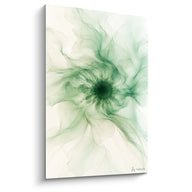
Abstract art holds a unique power in pediatric spaces: it tells nothing specific, allowing each child to project their own emotions onto it. A composition of soft geometric shapes in pastel tones creates a soothing atmosphere without directing attention to any particular subject.
For specialized practices such as pediatric endocrinology or pediatric cardiology, abstraction avoids problematic associations. A child followed for a chronic condition sees the practice as a neutral place, not a fairy-tale universe disconnected from their reality.Abstract art respects this forced maturity while maintaining visual gentleness.
I equipped a waiting room with abstract paintings in blue-green gradients, and the feedback was unanimous. Parents appreciated the sophisticated environment, far from pediatric clichés. Children aged eight and older found a space that treated them as individuals in their own right. Abstraction paradoxically created more emotional connection than conventional illustrations.
Choosing the right abstractions
Not every abstract style suits a pediatric practice. Avoid aggressive compositions, harsh black-and-red contrasts, or angular forms that generate visual tension. Favor organic abstractions : fluid curves, harmonious palettes, balanced compositions that evoke nature without depicting it literally. Think gentle Kandinsky rather than energetic Pollock.


Favorite
Colorful woman portrait painting - Expressive Vibrations - Figurative abstract edition
$233.90
Discover this paintingThe hybrid strategy: combining both approaches intelligently
Here is what I recommend in 70% of projects: a zoned strategy that uses the strengths of each approach according to the space and its function. This method respects the varied developmental needs of your patients.
In the waiting room, where infants and teenagers share the same space, create a main mural composition in abstract art in soft, soothing colors. Then add discreet figurative touches: a mobile with stylized birds, a shelf displaying contemporary animal sculptures. This abstract foundation maintains an overall sophistication, while the figurative accents give the youngest children points of attachment.
For individual examination rooms, differentiate by use. The room dedicated to infants benefits from a large, soft figurative painting : clouds, balloons, reassuring rounded shapes. The room for adolescent consultations adopts a mature abstract approach. This personalization demonstrates your attention to the specific needs of each age.
— Our selection

Colors speak louder than style
Beyond the debate of abstract versus figurative, the color palette determines 60% of the emotional impact in a pediatric practice. I have seen perfectly chosen figurative works fail because of unsuitable colors.
Pastel tones (sky blue, mint green, soft yellow, powder pink) work universally in pediatrics. They soothe without sedating and stimulate gently without overexciting. Avoid bright red, which accelerates the heartbeat, or intense orange, which can generate agitation in sensitive children.
A golden rule: chromatic consistency across your works creates a harmonious environment. Even if you mix abstract and figurative pieces, keep a palette of three to four dominant colors that dialogue with one another. This visual unity reassures unconsciously, signaling a controlled and secure space.

— Also to discover


Matching your choice to your professional identity
Your artistic selection also communicates your medical approach. A general pediatric practice oriented toward large families and quick consultations benefits from a warm, accessible figurative environment. Parents immediately feel at ease in this familiar universe.
Conversely, a specialized practice in developmental disorders or child psychiatry gains credibility with a more neutral artistic approach.Abstract art avoids excessive stimuli that are problematic for certain children who are hypersensitive. It creates a calming therapeutic framework that supports concentration and dialogue.
Ask yourself: what experience do you want to create? A protective, playful universe leans toward gentle figuration. A respectful, mature space favors harmonious abstraction. Your artistic decision thus becomes consistent with your philosophy of care.
The decisive test before investing
Before finalizing your choices, test virtually. Request high-resolution visuals of your selected works and temporarily project them onto your walls with a video projector. Observe reactions during test consultations. This on-site validation eliminates 90% of the misjudgments that occur when looking at catalog reproductions.
Transform your practice into a soothing therapeutic space
Discover our exclusive collection of paintings for medical offices that combine artistic expertise with an understanding of pediatric needs to create the perfect environment.

Your practice, a reflection of a child-centered approach
The choice between abstract art and figurative art for your pediatric practice is not binary. It is a nuanced decision that deserves thought, because it shapes the daily experience of your young patients. A well-considered visual environment reduces anxiety, facilitates therapeutic communication, and sets your practice apart.
Picture your waiting room tomorrow morning: a four-year-old quietly observes a stylized forest illustration while her teenage sister appreciates the sophistication of an abstract composition on the opposite wall. Their parents relax in this balanced space that respects each individual. You walk in to call your patient, and the positive atmosphere is already established.
Start by identifying your dominant patient population and your professional positioning. Then select two or three key works that embody the atmosphere you want. This gradual transformation of your pediatric practice will create a space where healing begins even before the consultation, through the calming power of well-chosen art.
FAQ: Your questions about art in pediatric practices
Could abstract art unsettle young children?
It is a legitimate concern, but unfounded if you choose the right works.Abstract art with soft forms and harmonious colors has never unsettled a child in my twelve years of observation. On the contrary, it offers a soothing freedom of interpretation. The problem arises with aggressive abstractions (sharp angles, violent contrasts, chaotic compositions) that indeed create visual tension. Favor organic abstractions inspired by nature: fluid gradients, generous curves, calming palettes. A blue abstract painting with green tones evoking calm water will be perceived positively by a three-year-old, even if they cannot verbalize what it represents. What matters is the emotional resonance, not intellectual understanding. Test it simply: show the work to a few young patients and observe their spontaneous reaction before investing.
How many paintings should you plan for a 60 m² practice?
The rule I apply systematically: one major artistic focal point per functional space, complemented by two or three secondary elements. For a pediatric practice of 60 m² typically comprising a waiting room, two examination rooms and an office, I recommend five to seven works in total. In the waiting room (the main space), install a large composition of at least 80x120 cm that becomes the dominant visual element, complemented by two or three smaller pieces (40x60 cm) creating a dialogue. Each examination room receives one medium work (60x80 cm) positioned facing the examination table. Your personal office hosts a piece that resembles you, since this space reflects your identity. Avoid overload: too many works create counterproductive visual confusion in a medical setting. The goal is visual breathing room, not a gallery. Three perfectly chosen and well-placed paintings are preferable to seven average works saturating the space.
Can you mix reproductions of famous works with contemporary creations?
Absolutely, provided you maintain overall aesthetic coherence. I have equipped several pediatric practices with this hybrid approach, which is very effective on a budget. A high-quality reproduction of a work by Miró or Calder (artists who speak wonderfully to children) can coexist perfectly with original contemporary creations, as long as the color palette remains harmonious. The advantage of reproductions: they bring cultural legitimacy that cultivated parents appreciate. The advantage of original creations: they give your space uniqueness and personality. My recommendation: invest in one or two original pieces for your key spaces (the main waiting room, your favorite consultation room), and complement them with high-end reproductions for secondary spaces. Just make sure all reproductions are on stretched canvas or fine art paper with quality framing, never laminated posters that immediately betray their cheap nature and devalue your entire fit-out.


