

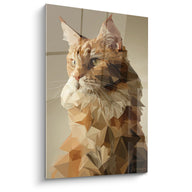

Acrylic glass printing for abstract paintings: what are the real advantages?
8 min read · by Walensky
ABSTRACT PAINTINGS
A navy-blue gradient melting into gold, a yellow splash seemingly suspended in charcoal: on an abstract painting, it is often the material quality of the color that makes everything. And that material quality depends on a detail we too often overlook before buying: the support on which the work is printed.
The direct answerAcrylic glass gives an abstract painting an optical depth and color saturation that no other support can reproduce: light passes through the transparent layer before bouncing back off the image, creating a sense of relief and a brilliance close to fresh paint. It is the support to favor for abstracts with vivid colors, gradients or strong contrasts, provided it is hung in a room where light does not hit it head-on.- Acrylic glass creates optical depth through a double-layer effect: the image seems to float beneath the surface.
- Vivid colors and gradients gain in saturation, unlike the softer rendering of matte aluminum.
- This support suits a room with controlled light; in direct sunlight, aluminum avoids reflections.
What is acrylic glass printing applied to abstract art?
In practice, the image is printed then mounted beneath a transparent, glossy sheet of acrylic glass. Light passes through this layer before reaching the pigments, then travels back to the viewer's eye. This double passage gives the sensation of volume, almost of a display case.
For a figurative work, the effect is pleasing. For an abstract painting, it becomes almost essential: fluid forms, curves and flat color areas have no narrative detail to catch the eye, so the material quality of the color itself must do the work. Acrylic glass gives it that visual thickness abstraction demands.
All the paintings in the shop are exclusive digital creations, printed in North America, then produced on acrylic glass or aluminum depending on the room where you plan to hang them. They are not exact reproductions of museum works: they are original compositions designed for the wall.
The 5 major advantages of acrylic glass for an abstract painting
Acrylic glass is not just a matter of aesthetics: each physical property of the material plays a precise role in the final rendering of an abstract composition.
Optical depth and 3D effect
The transparency of the glass creates a space between the eye and the image. On a composition with fluid curves, such as a blue-gold or grey-gold gradient, this produces an impression of frozen motion, as if the color had just been applied and had not yet dried.
Brilliance and saturation of vivid colors
Incandescent oranges, vivid pinks, yellows bursting against a dark background: these are exactly the tones acrylic glass enhances. The glossy surface amplifies contrast and renders colors denser than a matte support.
- UV resistance : the inks used resist fading, even after several years of exposure to daylight.
- Premium glossy finish : a look reminiscent of art galleries, with a smooth, grain-free surface.
- Easy maintenance : a simple microfiber cloth is enough, with no harsh products.
- Lightness : despite its glass-like appearance, the support remains light, with mounting hardware included.
On an abstract painting, color has nothing to tell beyond itself. The support carrying it must therefore amplify it, not smother it.
Take a painting with organic shapes and golden tones: under acrylic glass, color transitions gain richness, almost thickness. This is precisely the case of the Souffle d'Or painting, where the beige and gold curves take on a completely different dimension once placed under this glossy finish.
Another telling example: a composition playing on the contrast between an incandescent orange flow and a mineral charcoal background benefits particularly from acrylic glass, as the brilliance effect accentuates this tension between warmth and coolness. These are precisely the works where contrast is strong that gain most from this support.

Acrylic glass vs other supports: aluminum, canvas, paper
The choice of support radically changes the personality of the same abstract painting. Here is how the three most common options behave with a colorful composition.
| Support | Color rendering | Reflections | Ideal for |
|---|---|---|---|
| Acrylic glass | Vivid, saturated, optical depth | Yes, glossy surface | Room with controlled light, walls without a window facing them |
| Aluminum | Softer, faithful, matte | None | Facing a window, strong natural light |
| Paper / classic print | Dulls over time | No | Temporary use, ephemeral decor |
Paper simply has no place in lasting decoration: it yellows, becomes fragile, and cannot withstand the ambient humidity of a living room or dining room. The real decision therefore lies between acrylic glass and aluminum. To explore the question from the angle of durability and matte rendering, our article on aluminum printing for abstract paintings details precisely what this support changes on a contemporary composition.
If you are still torn between a glossy finish and a true painting technique, our comparison between acrylic glass printing and traditional painting answers this question precisely. And for the broader question of acrylic versus oil on an abstract work, our guide to acrylic and oil for abstract paintings makes a good complementary read.
— Our selection


When to choose acrylic glass depending on the abstract style
Not all abstract compositions react the same way under glass. Three use cases stand out clearly.
Vivid and contrasting colors — a painting where bright pink meets thick, expressive textures, as in a colorful abstract square artwork for the dining room, takes full advantage of the glossy finish, which accentuates every nuance.
Subtle gradients and soft tones — on a more muted palette, blue, white and gold blending gradually, acrylic glass adds that touch of depth that keeps the composition from looking flat.
Minimalist and understated compositions — here the choice is more personal: some will prefer the calm matte look of aluminum, others the gallery touch of glass. There is no wrong answer, only a question of the atmosphere sought.
To go further in this register, the artistic abstract painting collection gathers several compositions where this logic of contrast and gradient recurs from one work to another. And if the scraped style, with its shifting textures, particularly interests you, the selection of abstract paintings in scraped style is worth a detour.
— Also to discover


Care and durability of an abstract painting on acrylic glass
An acrylic glass painting is cleaned like a well-kept window: a soft cloth, slightly damp if needed, never an alcohol- or ammonia-based product that could dull the surface over time.
- Dust regularly with a dry microfiber cloth.
- Avoid direct exposure to a heat source (radiator, fireplace).
- Hang it away from prolonged excessive humidity.
The ink resists UV well, which limits fading over time, even in a bright room. The real point of vigilance remains location: avoid a wall that receives direct sun for several hours a day, to preserve both the brilliance of the colors and visual comfort against reflections.

In the same spirit
Golden splashes on anthracite background painting - Fragment of light - Colorful Abstract Edition
From $273.90
Discover this painting →Frequently asked questions
Is acrylic glass more resistant than canvas for an abstract painting?
The shop does not offer stretched canvas: its paintings are printed on acrylic glass or aluminum, two rigid supports that are stable over time, which do not sag and do not suffer from humidity variations like a classic canvas.
What is the difference between acrylic glass printing and aluminum?
Acrylic glass is glossy and reflects light, with greater depth and color saturation. Aluminum is matte, without reflection, with a softer, more discreet rendering, ideal facing a window.
Does acrylic glass degrade the colors over time?
No: the inks used resist UV, which limits fading. The main factor of aging remains prolonged direct exposure to a strong heat source, to be avoided whatever support is chosen.
How to maintain an abstract painting on acrylic glass?
A simple microfiber cloth, dry or slightly damp, is enough. No abrasive product is needed, and regular dusting preserves the brilliance of the glossy surface.
The support is never a technical detail to tick at the end of an order. It decides whether your abstract painting will have that almost liquid depth or that soft, discreet matte finish. For a composition with vivid colors, clear gradients or marked contrasts, acrylic glass remains the choice most faithful to the artwork's intent, provided you think about the room's light before ordering.
If you are looking for the piece missing from your living room, the abstract painting collection gathers all available compositions in acrylic glass and aluminum, to compare directly according to your interior.
Explore our collections


