

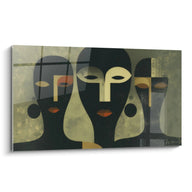

THE ORIGINALS
A bare kitchen wall is an obvious gap that has lasted far too long. We've chosen the quartz worktop, the lacquered fronts, the designer hood, and then forgot the large white expanse above the table, as if the kitchen didn't deserve a strong artwork. A mistake.
A modern kitchen, with its clean lines and cool materials, actually needs an original creation to breathe. Not a framed poster bought at a big-box store. Something with relief, character, and a texture that catches the light from the LED spotlights.
The direct answerFor a modern kitchen, choose an original artwork with bold colours and a pronounced texture (epoxy effect, sculpted relief) rather than a classic reproduction: it creates a real focal point, holds up well to the room's environment when printed on acrylic glass or Alu Dibond, and complements the cool materials of the furniture. The creations in the Les Originaux collection, designed exclusively by Walensky's artists, are made for exactly this.- A texture or relief catches light differently depending on the time of day, unlike a flat print.
- Keep the artwork away from direct splash zones (hob, oven) and favour a dry, well-ventilated wall.
- The format is chosen according to the width of the available wall, not an imposed standard.
Why an original artwork changes everything in a modern kitchen
A classic decorative reproduction stays flat, predictable, and often seen a thousand times elsewhere. An original creation, by contrast, has visual depth: undulations whose intensity shifts with the lighting, areas of matter that play with shadow, a finish you won't find at every neighbour's place.
In a modern kitchen, where everything is smooth (stainless steel, glass, lacquer), this contrast of material becomes a decorative asset in its own right. The artwork breaks the surrounding coldness without betraying the room's uncluttered character.
A modern kitchen doesn't need more furniture. It needs a wall that tells a story.
This is where the Les Originaux collection comes into its own: exclusive digital creations, printed in North America, designed to become the decorative focal point of a living space, kitchen included.
The technical criteria specific to the kitchen
A kitchen is not a living room. Steam, grease splashes, temperature variations: the environment imposes constraints that few decorating guides take seriously.
Resistance to heat and humidity
The support matters more than the subject of the artwork. Paintings printed on acrylic glass or Alu Dibond withstand the humidity variations of a properly ventilated kitchen well, provided they are not hung directly above a hob or in the direct path of the steam from a kettle left running continuously.
Keep a reasonable distance between the artwork and any direct heat source (hobs, oven). A side wall, the wall beside the table or a little-used secondary worktop, remains the safest choice.
Material effect under kitchen lighting
The recessed spotlights of a modern kitchen often shine straight down, creating grazing light. On a textured surface, this produces shadow reliefs that change with the time of day. On a smooth, glossy surface such as acrylic glass, the light bounces and deepens the colours, which is ideal if the room lacks natural brightness.
Conversely, facing a south-facing window, matt Alu Dibond avoids the distracting reflections that prevent you from seeing the artwork properly in full daylight.

Styles and techniques of original artworks that work in a modern kitchen
Three families of creation stand out particularly well in a contemporary kitchen: the epoxy effect, geometric relief, and textured impasto.
- The epoxy effect : fluid drips and an almost liquid finish, perfect for a central island in stainless steel or black quartz.
- Geometric relief : sculpted volumes reminiscent of natural stone, a good counterpoint to a very minimalist kitchen.
- Textured impasto : a material that seems to burst from the wall, for a kitchen that embraces a touch of warm character.
The Onde Cuivré painting, for example, plays with copper and green undulations that catch the light differently depending on the viewing angle:
In the same spirit, a composition in turquoise and orange tones such as Marée Ardente brings a bold splash of colour without clashing with a worktop in light wood or polished concrete.
These three creations share the same visual language: vivid colours, a pronounced material effect, and a landscape format that stretches naturally above a table or bar. To explore other directions in this vein, the abstract painting collection gathers several compositions from the same register.
— Our selection


Where and how to hang an original artwork in the kitchen
The wall above the table is the most obvious location, but not necessarily the most original. A free wall facing the island, or the section above a little-used secondary worktop, often offers better visual distance.
The centre of the artwork should sit about 1.50 m from the floor, at eye level. In an open kitchen connected to the living area, align this height with that of the other paintings in the room to maintain a coherent reading line.
As for lighting, an adjustable spotlight or a dedicated LED track makes all the difference: it reveals the relief of a textured artwork far better than a diffuse central ceiling light. If your kitchen lacks this kind of ambient lighting, angle an existing spotlight towards the chosen wall; the effect is often spectacular on an acrylic glass surface.
Pairing the original artwork with the rest of the wall decor
A strong artwork doesn't need companions. But if the kitchen already includes a shelf, a clock or a small photo frame, it's better to unify the palette rather than multiply styles.
A piece such as the Tourbillon clock in pink and gold textured finish actually serves a double purpose: textured artwork and functional object combined, which precisely avoids visual overload.

To go further on the overall balance of the room, our guide to wall decor for a modern kitchen explains how to compose a wall without overloading it, and our article on precautions to take for a painting in the kitchen completes the practical rules mentioned above.
If you are looking for other options in a more floral and textured register, the painting collection for the kitchen brings together compositions designed specifically for this environment.

Frequently asked questions
Can you put an original artwork in a kitchen?
Yes, provided you choose a suitable support such as acrylic glass or Alu Dibond and avoid placing it right next to the hobs. Most modern kitchens, which are well ventilated, pose no particular problem.
How do you protect an original painting from heat and humidity in the kitchen?
By installing it on a wall away from direct steam sources and airing the room regularly. Acrylic glass and Alu Dibond supports withstand the normal humidity variations of a kitchen well, unlike a classic wooden frame that can warp over time.
Which artwork size should you choose for a modern kitchen?
Aim for 60 to 75% of the width of the wall or piece of furniture concerned. Above a table for six, an L format (120x70 cm) already works very well; for a wider wall facing an island, the XL or XXL formats listed on the product page take over.
Is an original artwork a good decorative investment?
It is, over time, because an original creation does not date like a passing trend. The paintings from the Les Originaux collection, designed exclusively and offered from $228.90, remain a relevant focal point even as the rest of the decor evolves around them.
A well-functioning modern kitchen doesn't necessarily need a bare wall to stay understated. It needs an original artwork that gives it a signature, a relief, a reason to look up while waiting for the water to boil. The Les Originaux collection was designed for exactly this: exclusive creations, not anonymous reproductions, that turn a simple wall into the true focal point of the room.
Explore our collections


