

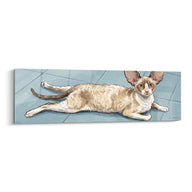


Abyssinian Cat Geometric Wall Art
The Painting Abyssinian Cat Geometric revisits feline elegance through a contemporary artistic prism. This collection celebrates the natural grace of the Abyssinian by blending angular lines and a bold color palette. Each creation transforms this majestic feline into a geometric cat wall art, where colorful facets capture its intense gaze and slender silhouette. Perfect for lovers of modern feline wall decoration, this artistic universe brings sophistication and character to your living space.
 Abyssinian Cat Polygonal Wall Art - Modern Geometric Art - Abyssinian Cat Edition$249.90
 Abyssinian Cat Art Deco Wall Art - Golden Feline Elegance - Abyssinian Cat Edition$249.90
 Abyssinian Cat Mosaic Wall Art - Golden Geometric Art - Abyssinian Cat Edition$249.90
 Abyssinian Cat Polygonal Wall Art - Golden Geometric Portrait - Abyssinian Cat Edition$249.90
Explore further
In Abyssinian Cat Geometric Wall Art
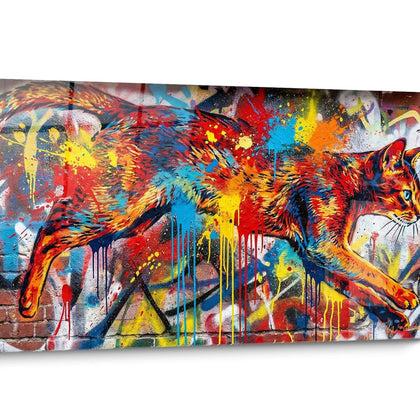
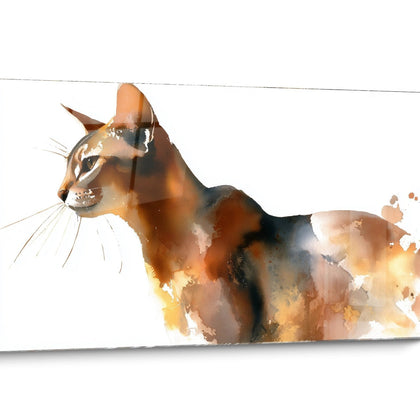
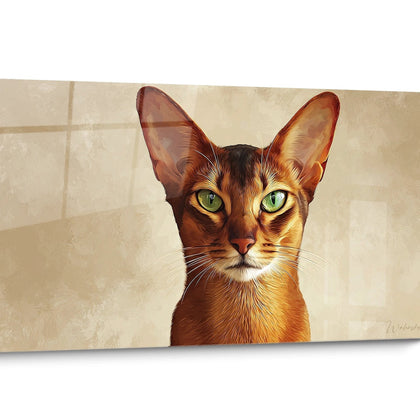

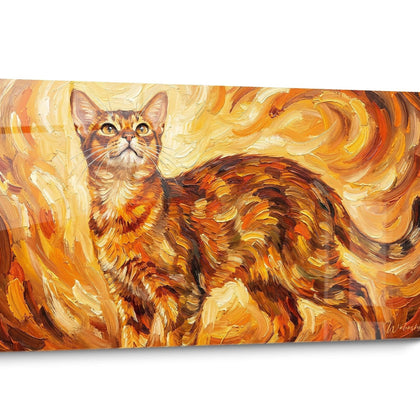
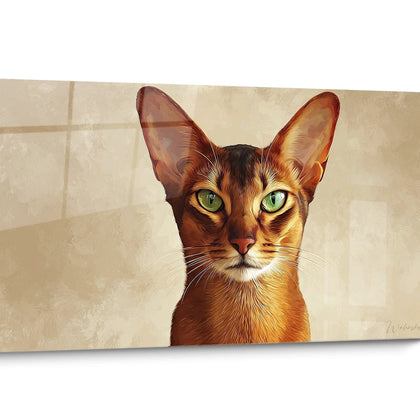
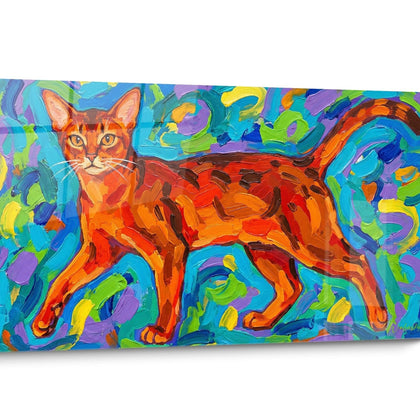
All about Abyssinian Cat Geometric Wall Art
- Presentation of the Abyssinian Cat Geometric Painting
- Architectural Aesthetics
- Visual Dynamism
- Decorative Integration
The geometric Abyssinian cat painting revolutionizes the contemporary decorative approach by fusing feline elegance with the visual codes of structured abstraction. This avant-garde representation transforms the recognizable silhouette of the Abyssinian cat into a composition of polygons, angular lines and streamlined shapes, creating a decorative work that engages in dialogue with modern interior architecture. The intersection between the organic and the mathematical generates a captivating visual tension, perfectly suited to spaces that celebrate refined minimalism and graphic boldness.
The Intersection Between Pure Geometry and Feline Essence
The geometric Abyssinian cat painting transposes the physiognomic characteristics of the feline into a radically contemporary visual language. Faceted triangles reconstruct the pointed ears emblematic of the breed, while nested rhombuses evoke the slender musculature of the animal. This analytical deconstruction respects natural proportions while sublimating them through a modernized cubist approach.
How does polygonal fragmentation amplify the expressiveness of the Abyssinian gaze?
The geometric fracturing technique concentrates attention on the almond-shaped eyes characteristic of the breed through converging pyramidal structures. The guiding lines created by the angular assembly naturally lead the gaze toward the intensity of the feline stare, reproduced through contrasting color blocks. This compositional strategy transforms a simple animal portrait into a structured contemplative experience, where each segment contributes to the overall expression.
The architectured color palette serving the ticked tabby coat
The variations of ochre, ginger and coppery tones characteristic of the Abyssinian coat are translated into distinct color zones delimited by sharp edges. This colorimetric segmentation reproduces the characteristic agouti effect through the superposition of differentiated geometric planes. The graduated shades unfold according to a mathematical logic that respects the natural luminous vibration of the coat while amplifying it through geometric contrast.
The integration of metallic golden or coppery tones on certain polygons creates points of light capture that energize the composition. This approach recalls the techniques used in the gilded Abyssinian cat painting while maintaining a more pronounced structural rigor. The play of metallic sheen emphasizes the facial architecture and accentuates the precious dimension of the work.
The balance between formal symmetry and organic asymmetry
The geometric construction simultaneously exploits the bilateral symmetry of the feline face and the calculated introduction of irregularities that avoid rigidity. Polygons of varying dimensions create a visual rhythm that evokes natural movement without literal representation. This tension between mathematical order and organic spontaneity generates a contained energy characteristic of the attentive posture of the Abyssinian.
Multidimensional Perspectives and Reconstructed Spatial Depth
The geometric Abyssinian cat painting exploits the principles of isometric perspective to create an illusion of three-dimensionality from a flat surface. The angular facets suggest inclined planes that catch the light differently, generating perceptual depth without recourse to traditional gradient techniques. This approach continues the visual research of the modern Abyssinian cat painting by radicalizing the break with conventional figuration.
What kinetic effects arise from geometric fragmentation?
The multiplication of edges and changes of planar orientation creates an effect of optical vibration that animates the pictorial surface. Depending on the viewing angle and the variations of natural or artificial lighting, some polygons seem to advance while others recede, generating controlled perceptual instability. This phenomenon transforms the work into a dynamic experience rather than a static image.
The interaction with ambient lighting becomes a compositional element in its own right. The angular surfaces reflect light directionally, creating zones of brightness and shadow that continuously redefine themselves according to the time of day and the orientation of the light sources. This changing quality evokes the graceful movement of the Abyssinian without narrative representation.
The vector mapping of feline anatomy
Unlike traditional pictorial approaches, the geometric method breaks down the body volume into measurable and reproducible sections. Each polygon corresponds to a precise anatomical portion: the curve of the skull becomes a succession of ascending triangles, the line of the muzzle articulates into interlocking trapezoids. This structural rationalization offers a simultaneously analytical and aesthetic reading of Abyssinian morphology.
The transition zones between segments create lines of force that structure the composition along dynamic diagonal axes. These directional vectors guide the visual path while suggesting the muscular tension and elasticity characteristic of the breed. The whole generates an impression of potential energy comparable to the stylized representations of the Pop Art Abyssinian cat painting, but with greater chromatic sobriety.
Dimensional amplification through monumental formats
The geometric nature of the composition lends itself particularly well to large formats, where the multiplication of facets becomes truly immersive. On significant dimensions, the observer can perceive each polygon individually while grasping the reconstructed silhouette as a whole, creating a double scale of reading. This visual granularity transforms the wall into an active architectural surface that restructures the surrounding space.
Harmonization with Structured Contemporary Environments
The geometric Abyssinian cat painting asserts itself as an element of visual dialogue in architectural interiors characterized by clean lines and frank volumes. Spaces featuring metal joinery, glass partitions or furniture with angular design find in this work a coherent visual echo that reinforces the overall aesthetic identity without redundancy.
What synergy can be created between decorative geometry and architectural materiality?
Surfaces with pronounced textures such as raw concrete, brushed metal or structured wood establish an enriching material contrast with the geometric flatness of the work. This tactile opposition simultaneously enhances the roughness of constructive materials and the graphic precision of the painting. Scandinavian or industrial minimalist environments particularly benefit from this association, which introduces an organic dimension without compromising formal rigor.
Integration into contemporary professional spaces such as creative offices, showrooms or design studios amplifies the innovative dimension of these places. The simultaneous reference to animality and mathematical rationality evokes a balance between creative intuition and structured thinking, values often sought in these contexts. The imposing format of the painting creates a focal point that humanizes the space without introducing conventional figurative elements.
Color combinations with extended monochrome palettes
In environments dominated by grays, whites and blacks, the warm tones of the Abyssinian coat transposed into geometric segments bring a calculated warmth. This injection of earthy colors avoids the pitfall of excessive coldness while maintaining a restrained sophistication. The alternative also exists with monochrome versions of the geometric motif that retain only the formal structure, thus creating a purely graphic work comparable to certain expressions of the minimalist Abyssinian cat portrait painting.
Environments with copper, gold or rose metallic accents find in the chromatic variations of the geometrized Abyssinian coat a natural decorative continuity. These color harmonies create visual fluidity between the wall artwork and the functional elements of the space.
Association with other artistic expressions of the Abyssinian
Spatial juxtaposition with different stylistic approaches creates an enriched visual narrative. A private exhibition wall could combine the geometric Abyssinian cat painting with variations such as the Abyssinian cat watercolor painting or the realistic Abyssinian cat painting, thus creating a multi-perspectival exploration of the breed. This thematic collection strategy transforms the space into a personal gallery celebrating the diversity of contemporary visual languages.
For a more comprehensive approach to this feline theme, exploring the full Abyssinian cat painting collection allows you to identify the stylistic and chromatic complementarities suited to each specific spatial configuration.
Why choose a geometric Abyssinian cat painting for an industrial loft?
The geometric aesthetic naturally dialogues with exposed metal structures, visible ducts and the raw volumes of converted industrial spaces. The angular lines of the painting visually extend the structural architecture while introducing a reference to living things that humanizes these potentially austere environments. The monumental format reinforces the decorative presence required in large volumes.
Is the geometric Abyssinian cat painting suitable for colorful interiors?
Although particularly well suited to monochrome environments, this type of work can create a controlled contrast in colorful interiors, provided a tonal consistency is respected. Versions using palettes extended beyond the natural tones of the coat allow a chromatic adaptation to more expressive environments while retaining the characteristic geometric rigor.
How does the geometric Abyssinian cat painting influence spatial perception?
The multiplication of directional lines and fragmented planes creates a centrifugal visual dynamic that perceptually widens the surrounding space. Diagonal compositions suggest an extension beyond the physical frame, while chromatic contrasts between polygons generate a depth that visually compensates for restricted spaces. This ability to optically restructure the environment is a major asset in constrained spatial configurations.
Further reading
Our articles on this topic
- Abyssinian Cat Square Painting for a Hallway: How to Get the Composition Right
- Large Sphynx Cat Painting: Which Model for a Home Entrance?
- Abyssinian cat painting for a professional office: combining elegance and seriousness
- Somali or Abyssinian cat painting: which texture and palette for your decor
- Abyssinian cat canvas XXL: the perfect choice for an adult bedroom
- Cat painting Singapura or Abyssinian: which one to choose for your decor?
L'art qui suscite l'envie
Maison belge d'art mural grand format
14 jourspour changer d'avis*
Protection Walenskyincluse
Fabriquéen Italie
FormatXXL
Kit de fixationtoujours fourni
* Hors tableaux personnalisés et tailles personnalisées


