



African Tribal Art Canvas Black and White
The Tribal African Art Painting Black and White celebrates the authenticity of ancestral traditions through striking visual creations. This collection captures the essence of traditional African tribal motifs with a clean monochrome aesthetic. Each work reveals the cultural richness of the African continent: ritual masks, sacred symbols and black and white ethnic compositions. An artistic tribute to the millennial civilizations that will transform your spaces into authentic art galleries.
 Stylized Tribal Mask Wall Art - Black and White Geometric Face - African Tribal Art Edition$499.90
 Modern Tribal Mask Wall Art - Black and White Geometric Face - African Tribal Art Edition$499.90
 Abstract African Mask Wall Art - Spiritual Gaze - African Tribal Art Edition$309.90
 Cubist Face Wall Art - Modern Mask - African Tribal Art Edition$559.90
 Black African Abstraction Wall Art Whispers of the Void - Africa Edition$499.90
Explore further
In African Tribal Art Canvas Black and White
-
 African Tribal Art Wall Panel64
artworks
-
 Colorful African Tribal Art Wall Canvas7
artworks
-
 Golden African Tribal Art Canvas8
artworks
-
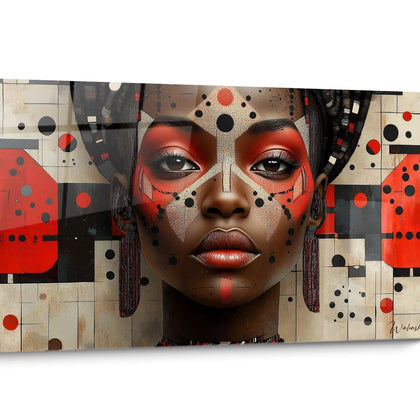 African Tribal Art Portrait Wall Art19
artworks
-
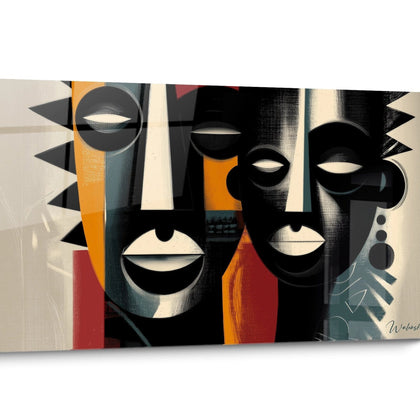 African Tribal Cubist Art Canvas6
artworks
-
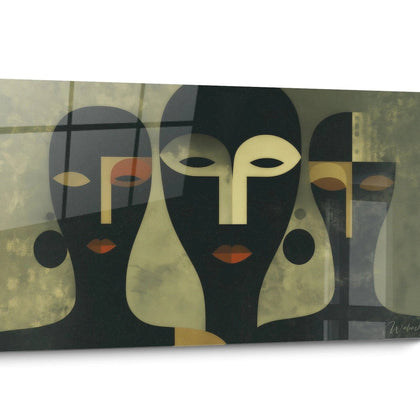 Abstract African Tribal Art Canvas16
artworks
-
 Modern African Tribal Art Canvas24
artworks
All about African Tribal Art Canvas Black and White
- Painting Presentation African Tribal Art Black and White
- Monochrome Aesthetics
- Decorative Integration
- Symbolism and Impact
The collection of black and white African tribal art paintings embodies the very essence of chromatic contrast in service of ancestral power. These monumental creations capture the soul of Sahelian, Sudanese and sub-Saharan traditions through a visual purification that transcends eras. Unlike traditional polychrome compositions, this monochrome variation focuses attention on graphic lines, sacred geometric patterns, and faces sculpted by light. Each large-format piece instantly transforms a bare wall into a cultural manifesto, where ritual masks, symbolic scarifications, and warrior adornments express themselves in absolute chromatic duality. The absence of color paradoxically amplifies emotional depth, creating a majestic visual presence suited to contemporary spaces seeking raw authenticity without decorative compromise.
Chromatic Purification in Service of Tribal Heritage
The black and white African tribal art painting represents a radical approach to ethnographic representation, where the elimination of the color palette reveals the architectural structure of ancestral compositions. This chromatic sobriety allows the ceremonial scarifications, crested ritual hairstyles, and facial ornaments that define the identity of the Dogon, Masai, or Peul peoples to be exposed without detours. Large formats exploit this duality to create areas of light and shadow that mimic the natural lighting of traditional huts at dawn.
Why choose a monochrome representation for tribal art?
Restriction to black and white transforms ethnic motifs into pure graphic expression, eliminating any chromatic distraction to focus the gaze on sacred proportions and spiritual symmetries. This approach recalls the rock paintings of the Tassili n'Ajjer or the mural frescoes of initiation sanctuaries, where ochre and charcoal were sufficient to transmit cosmogonic narratives. In a minimalist Scandinavian or industrial interior, this color abstinence creates a natural synergy while immediately injecting cultural depth.
The monumentality of faces sculpted in chiaroscuro
Large-scale tribal portraits gain dramatic intensity when rendered in grayscale. The lines of expression of the elders, the zebra-like war paintings, and the piercing gazes of the warriors acquire a quasi-documentary photographic dimension. This technique recalls the anthropological photographs of explorers at the beginning of the 20th century, but reinterpreted with a contemporary artistic sensibility. The monumental scale allows appreciation of every detail of skin textures, hair weaves, and traditional metallic appliqués.
Alliance with pure modernist spaces
An XXL black and white African tribal art painting naturally asserts itself in lofts with immaculate white walls, executive offices with pure geometric lines, or living rooms with exposed raw materials. This chromatic harmony allows a strong cultural reference to be introduced without creating a visual break with the architectural environment. Collectors can also explore the variations available in the abstract African tribal art painting collection for more conceptual interpretations, or turn to the modern African tribal art painting creations that fuse tradition and contemporary innovation.
Integration Strategies in Contrasting Environments
Installing a large-scale black and white African tribal art painting requires spatial consideration regarding the balance of visual masses and the flow of gazes. In a professional reception room, these artworks function as cultural anchors that instantly humanize otherwise impersonal spaces. The deliberate choice of monochrome allows for harmonious coexistence with chrome furniture, black lacquered surfaces, or polished concrete finishes without generating visual cacophony.
How to maximize visual impact in open architecture?
Double-height spaces, monumental stairwells, and industrial mezzanines particularly benefit from these oversized tribal representations. Positioned facing the main entrance, a monochromatic composition depicting a ritual dance or an assembly of tribal chiefs immediately captures attention while establishing an atmosphere of cultural dignity. The black and white palette avoids a garish effect while maintaining a strong presence even from a distance.
Complementarity with contemporary natural materials
These wall creations dialogue beautifully with solid oak furniture, woven vegetable fiber suspensions, and Berber rugs with geometric patterns. To extend this tribal aesthetic, enthusiasts can consider the works from the African tribal art painting portrait collection, which highlight individual expressions, or explore the variations of African tribal art painting gold to introduce a refined metallic accent.
Optimal impact zones in private residences
Above a patinated leather sofa, in the axis of a wall bookcase, or facing a skylight overlooking a Zen garden, the black and white African tribal art painting transforms a simple wall into a meditation focal point. Master bedrooms benefit from this soothing presence, which, unlike stimulating colorful compositions, promotes an atmosphere of contemplative serenity. Panoramic formats depicting narrative sequences (hunt, harvest, ceremony) create a horizontal dynamic that visually widens narrow rooms.
What role does texture play in these monochrome compositions?
Although limited to the black-white-gray spectrum, these works often integrate textural effects that simulate the cracked wall surfaces of Sahelian dwellings, the grains of natural pigments, or the reliefs of bogolan fabrics. This tactile visual dimension compensates for the absence of chromatic vibration and adds a sensory richness perceptible even from afar. For those seeking more stylistic interpretations, the African tribal art cubist painting range offers bold formal deconstructions that fragment traditional motifs.
Symbolic Resonance and Timeless Presence
Beyond their decorative function, black and white African tribal art paintings embody a mnemonic transmission where each geometric motif, each body posture, and each ceremonial accessory conveys precise cosmological meanings. Dogon Kanaga masks, Maasai shields with concentric patterns, or Baoulé statues with codified proportions acquire in this monochrome transcription a universality that transcends cultural boundaries. The informed buyer does not simply acquire an image: they introduce into their daily life a fragment of ancestral wisdom crystallized.
The aesthetic permanence in the face of decorative trends
Unlike the ephemeral trends in interior design, these black and white tribal representations possess a visual stability guaranteed for several decades. Their restricted palette immunizes them against variations in taste regarding trendy colors, while their anthropological anchoring confers a cultural legitimacy independent of fashion cycles. Investing in these monumental formats is therefore a lasting choice for professional spaces wishing to project an image of durable cultural depth.
What messages do monochrome tribal compositions convey?
Scenes of palaver under the palaver tree, initiation dances, or portraits of griots transmit values of collective wisdom, intergenerational transmission, and spiritual connection to the earth. In a executive office, these themes resonate with notions of enlightened leadership and long-term vision. In a family living space, they recall the importance of community ties and respect for elders. The chromatic restriction amplifies these messages by eliminating any visual frivolity.
The energetic balance of dual compositions
African philosophy has always recognized the complementarity of opposites: day/night, masculine/feminine, earth/sky. The black and white matte treatment materializes this fundamental duality visually, creating in the domestic space a constant reminder of the necessary balance. Extra-wide formats allow this dialectic to be deployed over several meters, transforming an entire wall into a visual meditation on the harmony of opposites. To enrich this stylistic exploration, the African tribal art painting collection offers a comprehensive panorama of possible interpretations, while those who appreciate vibrant compositions can turn to the colored African tribal art painting which celebrate the vibrancy of traditional pigments.
Does a black and white painting suit already neutral spaces?
Paradoxically, it is precisely in monochrome environments that these tribal works reveal their full power. Far from creating monotony, they introduce variations in textures, patterns, and depths that considerably enrich the visual reading of the space. A loft entirely in white benefits from a black and white cultural anchor that structures the gaze without breaking the overall chromatic harmony.
How do these representations evolve with natural light?
One of the most fascinating aspects of these monochrome creations is their metamorphosis according to the time of day and season. The grazing morning light accentuates contrasts and highlights engraved details, while midday diffused light softens tonal transitions. In the evening, indirect lighting creates shadow zones that animate faces and give the impression of movement to dance scenes. This perpetual variation ensures that the work never becomes static or predictable.
What dimension to prioritize for maximum impact?
For black and white African tribal art paintings, formats exceeding 120 cm in width allow you to fully appreciate the complexity of polyfigurative compositions and the fineness of geometric patterns. Panoramic scenes depicting processions or villages particularly benefit from being deployed over 150-200 cm, creating an immersive window into the tribal universe. In constrained spaces, a vertical format of 100x150 cm capturing a monumental portrait of a warrior or matron generates a presence as impressive as a horizontal format.
Further reading
Our articles on this topic
- Modern African Mask Painting and White Sofa: How to Create a Successful Match
- Ethnic Wall Art: Inspiring Ideas for a Unique Design
- Geometric African Mask Painting: The Design Asset for a Professional Office
- African tribal painting in black and red for an entrance with character
- 5 Tips for Choosing a Unique and Authentic African Artwork
- Gift idea African tribal art portrait painting: which model to give depending on the person
L'art qui suscite l'envie
Maison belge d'art mural grand format
14 jourspour changer d'avis*
Protection Walenskyincluse
Fabriquéen Italie
FormatXXL
Kit de fixationtoujours fourni
* Hors tableaux personnalisés et tailles personnalisées


