



Baroque Floral Wall Art
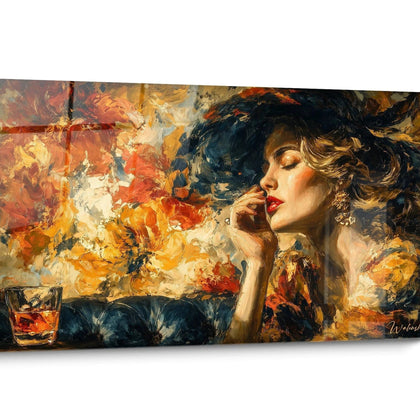
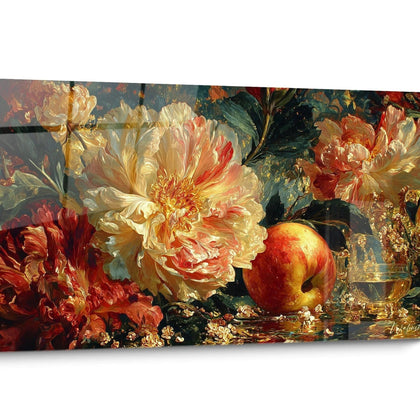
The Baroque Painting Floral collection celebrates the perfect union between the opulence of Baroque style and the delicacy of floral compositions. These art Baroque mural floral works transform every space into a refined gallery, where sumptuous roses, majestic peonies, and romantic bouquets flourish in rich and deep tones. Perfect for adding sophistication and character to your decor, these Baroque floral decoration creations embody timeless elegance and artistic romanticism.
 Still Life Abundant Radiance Wall Art - Baroque Edition$499.90
 Noble Reverie Sumptuous Wall Art - Baroque Edition$499.90
 Flowers Dance Petals Wall Art - Baroque Edition$499.90
 Crimson Sonata Flowers Wall Art - Baroque Edition$499.90
 Still Life Pictorial Delight Wall Art - Baroque Edition$499.90
 Still Life Fire and Pearl Wall Art - Baroque Edition$499.90
 Woman Floral Ecstasy Artwork - Baroque Edition$499.90
 Flower Wall Art Solar Metamorphosis - Baroque Edition$499.90
 Floral Soul Statue Wall Art - Baroque Edition$499.90
 Passionate Flowers Wall Art - Baroque Edition$559.90
 Woman Contemplative Gaze Wall Art - Baroque Edition$559.90
Explore further
In Baroque Floral Wall Art
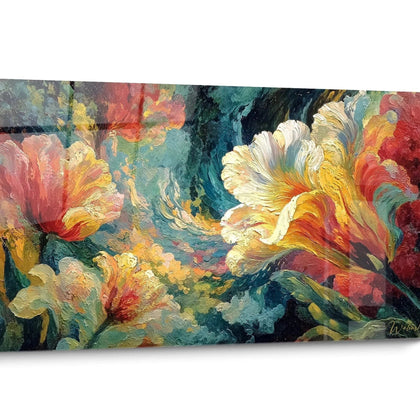
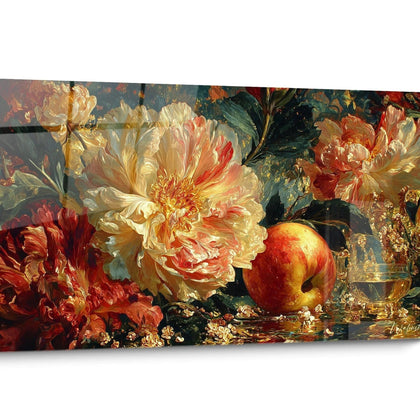
All about Baroque Floral Wall Art
- Presentation Floral Baroque Painting
- Baroque Floral Motifs
- Ambiances & Spaces
- Style & Associations
Majestic embodiment of 17th century aesthetics, the wall painting baroque floral celebrates vegetal opulence with a dramatic intensity characteristic of the era. These monumental compositions transform every interior into an art gallery where generous peonies, blooming roses, and voluptuous tulips intertwine in an overflowing chromatic symphony. Unlike classic botanical representations, these large-format wall creations capture the essence of the Baroque movement: unrestrained exuberance, theatricality, and visual richness. Each floral arrangement is part of a pictorial tradition valuing profuse ornamentation, pronounced light contrasts, and the sensual celebration of nature tamed by art.
The Legacy of Monumental Baroque Floral Compositions
Baroque floral paintings draw their visual vocabulary from Flemish and Dutch still lifes of the Golden Age, where each petal tells a story of wealth and vanity. These sumptuous arrangements present a learned accumulation of botanical specimens impossible to gather in reality: spring roses alongside autumn dahlias, early irises conversing with late chrysanthemums. This temporal distortion creates a suspended floral eternity, capturing the ephemeral peak of each flower in an immortalized composition.
Symbolism and Language of Flowers in Baroque Aesthetics
Beyond their visual splendor, these representations convey a codified language inherited from European courts. Peonies evoke prosperity and honor, while striped tulips recall the financial speculation of the Dutch tulip mania. Irises embody royalty and power, creating layered works where beauty and meaning overlap. This narrative dimension radically distinguishes the baroque floral painting from simple contemporary botanical reproductions.
How to recognize an authentic baroque floral composition?
Several visual characteristics allow to identify these specific creations. First, look for the pronounced chiaroscuro, this dramatic alternation between illuminated areas and deep shadows that sculpts each corolla. Then observe the compositional density: a true baroque floral painting leaves no space empty, every square centimeter participates in the visual abundance. Finally, note the frequent presence of insects, butterflies, or dewdrops that amplify the realism and introduce a memento mori dimension recalling the fleetingness of natural beauty.
These large-format compositions, often exceeding 120 centimeters in width, create an immersive wall presence impossible to ignore. Their monumental scale transforms observation into a contemplative experience, inviting the eye to get lost in the twists of intertwined stems and the depth of multi-layered arrangements. Like Baroque still life compositions, these works magnify the represented object to visual ecstasy.
Reception Spaces and Decorative Floral Theatricality
The baroque floral painting excels particularly in reception areas where its instant visual impact creates a memorable first impression. Spacious entrances, formal living rooms, and dining rooms become botanical theaters when adorned with these dramatic vegetal compositions. Their rich color palette – deep carmines, royal purples, emerald greens, and luminous golds – naturally dialogues with classic architectural elements: moldings, paneling, and wainscoting.
What is the relationship between monumental scale and spatial perception?
The generous dimensions of these wall decorations (often between 100 and 180 centimeters) confer on them the status of an architectural focal point rather than simple decoration. Placed above an Empire console, a Regency buffet, or a marble fireplace, they establish a vertical visual axis that amplifies the perceived ceiling height. This compositional verticality contrasts with the horizontality of the furniture, creating a dynamic tension that animates the space without cluttering it.
Decorative synergies with exceptional furniture
These monumental floral representations find their natural allies in period furniture or historically inspired furniture. A Chesterfield sofa in emerald velvet responds to the chromatic depth of the foliage, while a Louis XV chaise longue in damask silk echoes the sensuality of the represented petals. Precious woods – flamed mahogany, sculpted walnut, waxed oak – create a warm counterpoint to the chromatic exuberance of the compositions. This alliance between the golden opulence of Baroque and plant vitality generates interiors of unparalleled visual richness.
For high-end commercial spaces – luxury boutiques, boutique hotels, gourmet restaurants – the Baroque floral painting immediately establishes an atmosphere of timeless elegance. Its historical aristocratic references confer cultural legitimacy, while its floral vitality tempers any potential austerity. This double formal and organic dimension perfectly meets the expectations of a clientele seeking both refinement and warmth.
Chromatic Orchestration and Dialogue with Decorative Heritage
The successful integration of a Baroque floral painting requires a thorough understanding of its specific chromatic harmonies. Unlike contemporary minimalist palettes, these compositions exploit the entirety of the visible spectrum with maximum intensity. Carmine reds converse with deep greens according to the principles of complementarity, while touches of gold and copper add a metallic dimension evoking the sumptuous frames of aristocratic galleries.
Bold contemporary stylistic associations
The current maximalist approach, embodied by the currents of eclectic design and the return of the "grandmillennial style", offers fertile ground for these dramatic floral compositions. Paired with panoramic wallpapers, multi-layered jacquard textiles, and collections of eclectic decorative objects, they participate in an aesthetic of mastered accumulation where each element reinforces the others. This trend contrasts sharply with Scandinavian sobriety and rehabilitates the visual pleasure of ornamentation.
Can a Baroque floral painting be integrated into a contemporary interior?
Absolutely, according to the principle of controlled contrast. Placing a monumental Baroque floral composition against a raw concrete wall or in a loft with clean lines creates a captivating stylistic tension. This temporal juxtaposition – ornamental historicism against stripped-down modernity – generates a narrative depth that neither style could achieve in isolation. Contemporary furniture with simple geometric shapes highlights the organic complexity of the floral arrangements, while the latter infuse warmth and humanity into potentially cold spaces.
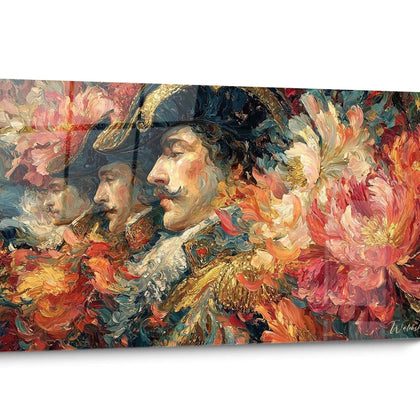
The collection of red baroque paintings particularly harmonizes with interiors that value bold chromatic accents. In addition, exploring baroque portraits allows you to create a thematic mural gallery where human figures and floral compositions dialogue according to the conventions of aristocratic salons. For an overview of decorative possibilities, the complete collection of baroque paintings offers an exhaustive panorama of available stylistic variations.
What types of lighting enhance a baroque floral painting?
Favor directional light sources such as adjustable track spotlights or articulated wall lights that recreate the characteristic chiaroscuro. Warm white LED lighting (2700-3000K) faithfully restores the copper and gold tones without altering subtle color nuances. Avoid diffused lighting that flattens visual reliefs and attenuates the dramatic lighting that constitutes the baroque aesthetic.
How to compose a gallery wall including a baroque floral painting?
Position the floral composition as a dominant central element, then arrange asymmetrical complementary pieces of smaller dimensions around it: antique mirrors, framed botanical engravings, small classic landscapes. Respect a visual breathing space of at least 15 centimeters between each element to avoid saturation. This dimensional hierarchy naturally guides the eye to the centerpiece while creating a cohesive ensemble.
Is a baroque floral painting suitable for private spaces such as bedrooms?
Perfectly, provided you adapt the chromatic intensity to the restful function of the space. Favor compositions dominated by softer tones – pale pinks, creamy whites, tender greens – which retain the compositional richness of the baroque while promoting a soothing atmosphere. Placed facing the bed or on the perpendicular wall, the painting becomes the last object contemplated before sleep, establishing a soothing visual ritual.
Further reading
Our articles on this topic
- How to Choose a Baroque Painting for a Home Entrance
- Baroque Wall Decor for a Romantic Adult Bedroom
- Dark background baroque painting: create a velvet-like atmosphere at home
- Gilded baroque statue painting: how to integrate it into a modern interior
- Baroque painting: matching it with a midnight blue or green wall, how to choose
- Large-format Flemish baroque painting in acrylic: managing light in a bright living room
L'art qui suscite l'envie
Maison belge d'art mural grand format
14 jourspour changer d'avis*
Protection Walenskyincluse
Fabriquéen Italie
FormatXXL
Kit de fixationtoujours fourni
* Hors tableaux personnalisés et tailles personnalisées


