


Burmilla Cat Portrait Wall Art
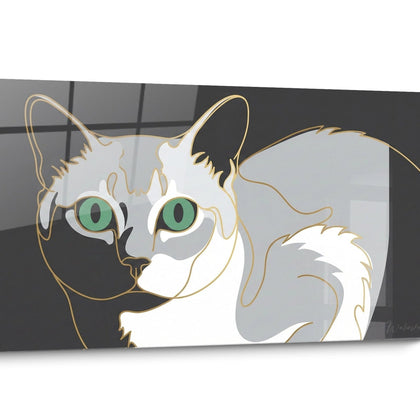
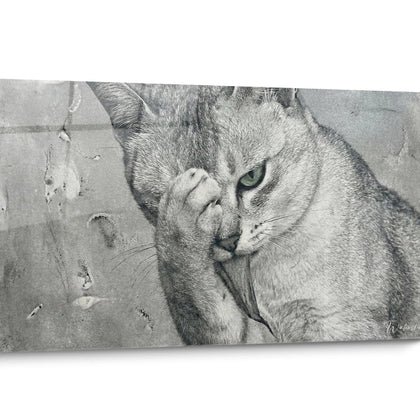
The Painting cat Burmilla Portrait captures the refined essence of this exceptional breed with silky fur and expressive eyes. This collection highlights the unique beauty of the Burmilla through carefully crafted artistic compositions. Each portrait of cat Burmilla reveals the gentle personality and aristocratic charm of this endearing feline. Perfect for cat lovers and collectors of contemporary feline art, this gallery transforms your interior into an elegant space.
 Burmilla Cat Wall Art Green Eyes - Captivating Gaze - Burmilla Cat Edition$249.90
 Green-Eyed Cat Wall Art - Piercing Gaze - Burmilla Cat Edition$249.90
 Burmilla Cat Artistic Portrait Wall Art - Emerald Gaze - Burmilla Cat Edition$249.90
 Burmilla Cat Artwork with Green Eyes - Elegant Portrait - Burmilla Cat Edition$249.90
 Burmilla Cat Artwork with Green Eyes - Silver Elegance - Burmilla Cat Edition$249.90
 White Cat with Heterochromatic Eyes Artwork - Hypnotic Gaze - Burmilla Cat Edition$249.90
 Minimalist Cat Portrait Wall Art - Tender Gaze - Burmilla Cat Edition$249.90
 Cat Wall Art Green Eyes - Mysterious Gaze - Burmilla Cat Edition$249.90
 Burmilla Cat Wall Art Green Eyes - Emerald Gaze - Burmilla Cat Edition$249.90
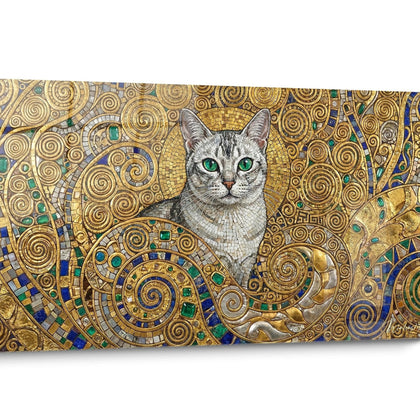
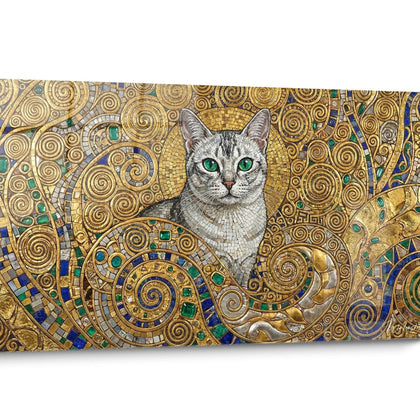
 Cat Wall Art Green Eyes - Golden Marble - Burmilla Cat Edition$249.90
All about Burmilla Cat Portrait Wall Art
- Painting Presentation Portrait Cat Burmese
- Capturing the Feline Expression
- Large-Format Portrait
- Sophisticated Animal Décor
The painting cat Burmese portrait captures the very essence of this majestic breed through a striking visual rendering. This artistic representation highlights the unique physiognomy of the Burmese: its green eyes underlined with natural kohl, its luminous silver coat, and an expression that is both gentle and mischievous. Unlike action scenes or multiple compositions, the portrait focuses exclusively on the face and the penetrating gaze of this refined feline, creating an immediate emotional connection with the viewer. This intense focus transforms your space into an intimate gallery where the personality of the Burmese fully expresses itself, bringing a contemplative dimension to your wall décor while celebrating the natural elegance of this breed little known to the general public.
The Intensity of the Burmese Gaze in a Wall Portrait
The painting cat Burmese portrait reveals the unique emotional depth of this breed through a close-up framing that magnifies every expressive detail. The eyes of the Burmese, veritable emerald green or aquamarine jewels depending on the lineages, are the absolute focal point of these wall creations. The natural black line that underlines their eyelids, a genetic heritage of the breed, creates a natural makeup that the artist amplifies to produce a hypnotic effect.
How does the portrait enhance the distinctive features of the Burmese?
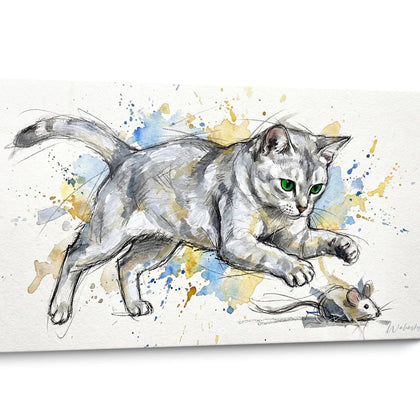
Portrait representation allows to explore the subtle nuances of the tipped or shaded coat characteristic of this breed. Unlike a full-body composition, the portrait format concentrates attention on the delicate transition between the light silver base and the shaded black or chocolate tips. This gradient area, particularly visible around the muzzle, cheeks, and forehead, constitutes the visual signature of the Burmese. Representations in painting cat Burmese watercolor particularly exploit these natural chromatic transitions.
The psychology of animal portraiture in contemporary décor
Positioning a Burmese portrait in a professional office or reception area conveys specific values: discreet refinement, understated elegance, affirmed character but not aggressive. The direct gaze of the feline establishes a living presence in the room without dominating the space, unlike more imposing portraits of wild animals. This subtlety is particularly suitable for environments where sophistication and accessibility must coexist.
The balance of proportions in the close-up portrait
Monumental portrait formats of Burmese create a striking visual impact by amplifying the natural proportions of the feline's head. The slightly tilted ears, moderately large with their rounded tips, frame the face harmoniously. The moderately short muzzle, neither crushed like in Persians nor elongated like in Orientals, offers a perfect balance for a centered composition. These intermediate proportions allow for a representation that avoids morphological extremes while remaining immediately recognizable.
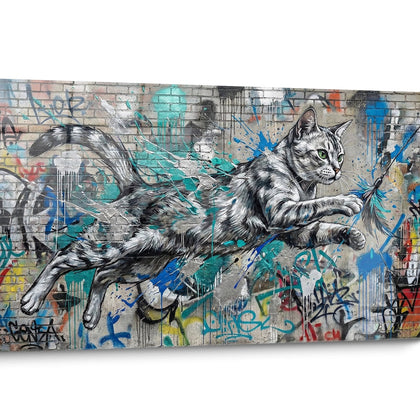
The variations in painting cat Burmese colored transform this classic portrait into a vibrant contemporary artwork, where natural silver tones meet bold palettes.
Monumental Format at the Service of Feline Portrait
Why choose a large format for a Burmese portrait?
The imposing size of a painting of a Burmilla cat portrait in a large format radically transforms the perception of the animal. At a monumental scale, every detail becomes visual architecture: individual whiskers transform into guidelines, reflections in the iris become luminous constellations, and the texture of the fur reveals its complex structure. This amplification does not seek photographic realism but creates a sculptural presence that dialogues with the architectural volumes of the room.
Spaces with high ceilings, extended wall-galleries, or spacious circulation areas find in these monumental portraits a powerful visual anchor. The Burmilla's eye, enlarged to several centimeters in diameter, becomes a graphic meditation and a natural convergence point for the gaze in large volumes.
The asymmetrical composition in the close-up portrait
Unlike classic centered portraits, some representations exploit the natural asymmetry of the feline pose: head slightly tilted, gaze directed towards a point outside the frame, ears oriented differently. These compositional choices create a narrative dynamic where the Burmilla seems to react to an invisible element, suggesting a story beyond the frame. This narrative approach fundamentally distinguishes the artistic portrait from simple photographic reproduction.
Lovers of graphic compositions will appreciate the versions in black and white painting of a Burmilla cat which intensify structural contrasts.
The psychological impact of the enlarged feline gaze
At human size or larger, the Burmilla's gaze acquires an almost hypnotic quality. The characteristic vertical pupils, captured at a specific moment of dilation, create a sense of living presence. This visual intensity works particularly well in relaxation or meditation spaces, where the silent connection with the image promotes mental calmness. The portrait then becomes a contemplative companion rather than a simple decorative element.
The management of backgrounds in the large format portrait
On large dimensions, the treatment of the background becomes of paramount importance. Uniform backgrounds highlight the silhouette and concentrate attention on the features, while textured backgrounds create atmospheric depth. Some creations integrate subtle geometric patterns that dialogue with the organic curves of the feline's face, creating a sophisticated visual tension particularly suited to contemporary design interiors.
Integrating the Burmilla Portrait into Refined Spaces
The painting of a Burmilla cat portrait naturally fits into decors where discreet elegance and refinement combine without ostentation. Unlike representations of wild or exotic animals, the Burmilla evokes domestic sophistication and accessible luxury. Its silvery fur with changing reflections harmoniously dialogues with noble materials: brushed steel, smoked glass, bleached wood, satin textiles.
Which spaces particularly enhance the Burmilla portrait?
Spacious entrance halls benefit from the silent welcome effect offered by this portrait: the feline's gaze creates a warm presence without the intrusion of a human presence. Private libraries and reading areas find in this representation a contemplative companion consistent with the studious atmosphere. Dressing rooms and beauty spaces resonate with the natural elegance of the Burmilla, a breed often described as a "feline model" by specialized breeders.
For environments requiring graphic sobriety, minimalist paintings of a Burmilla cat offer a refined approach preserving the essence of the subject.
Association with other animal decorative elements
The portrait of the Burmilla can initiate a feline-themed gallery or function as a statement piece. When paired with other portraits of short-haired breeds with gentle expressions (Tonkinese, Burmese), it creates a cohesive collection around the theme of Asian feline elegance. Alternatively, positioned alone against abstract compositions or minimalist landscapes, it brings the organic and lively touch that humanizes overly conceptual spaces.
Temporality in the perception of a static portrait
A fascinating aspect of animal portraiture lies in its ability to capture a suspended moment. The Burmilla, captured at the precise moment its attention focuses, creates a temporal tension: the observer subconsciously anticipates the next movement, the imminent blink, the rotation of an ear. This perpetually unfulfilled expectation keeps the work alive in daily perception, avoiding the effect of gradual familiarization that neutralizes static decorative elements.
Sophisticated versions like the Burmilla cat painting golden add a luxurious dimension particularly suited to reinvented classic interiors.
Portrait as a marker of cultural identity
Choosing a Burmilla rather than a Maine Coon, Persian, or Bengal communicates precise aesthetic preferences. The Burmilla, a relatively confidential breed resulting from an accidental cross between a Burmese and a Persian Chinchilla in the 1980s, signals in-depth feline knowledge. This iconographic choice positions the owner as an enlightened connoisseur rather than a trend follower, appreciating discreet rarity rather than obvious popularity. To discover the full range of available stylistic variations, explore the complete Burmilla cat painting collection.
Is a Burmilla portrait suitable for modern minimalist interiors?
Absolutely. The streamlined profile of the Burmilla, its gentle lines without morphological exaggeration, and its naturally restrained color palette integrate perfectly into minimalist spaces. The portrait acts as an organic focal point that softens geometric rigor without creating a stylistic break.
How does the Burmilla cat portrait painting influence the atmosphere of a room?
The direct gaze and serene expression of the Burmilla generate a contemplative and soothing atmosphere. Unlike depictions of animals in action that energize the space, the static portrait invites calm and introspection, particularly suited to decompression zones.
Can a Burmilla portrait be combined with abstract works?
This combination works remarkably well. The figurative realism of the portrait dialogues with abstraction, creating a balance between representation and interpretation. The silvery tones of the Burmilla harmonize particularly well with the monochrome or metallic palettes of contemporary abstract compositions.
Further reading
Our articles on this topic
- Burmilla Cat Painting: Which Portrait to Choose Based on the Recipient's Personality
- Burmilla silver cat realistic portrait painting: the guide to choosing well
- Burmilla painting: the charm of its silver coat on the wall
- Burmilla Cat Painting for Modern Living Room: Showcase the Silver Tipping on Your Walls
- Burmilla Cat Watercolour Painting: The Soft Touch for a Calming Adult Bedroom
- Burmilla Cat Portrait: Which Style to Choose Based on Your Room's Light
L'art qui suscite l'envie
Maison belge d'art mural grand format
14 jourspour changer d'avis*
Protection Walenskyincluse
Fabriquéen Italie
FormatXXL
Kit de fixationtoujours fourni
* Hors tableaux personnalisés et tailles personnalisées


