


Famous Bridges Impressionist Wall Art
Our Painting Ponts célèbres Impressionniste collection celebrates the iconic architecture of bridges through the prism of Impressionism. Each artwork captures the changing light and reflections on the water that inspired Monet and his contemporaries. From ponts impressionnistes sur toile to vibrant touches of color, this series pays homage to emblematic structures such as the pont japonais of Giverny or the Parisian bridges. Ideal for lovers of art impressionniste architectural, this collection brings elegance and poetry to your interior.
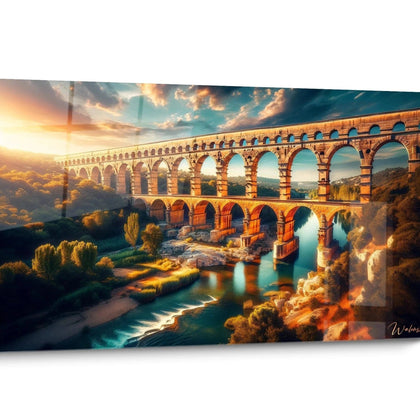
 Pont Du Gard Wall Art No.1 - France Around the World Edition$499.90
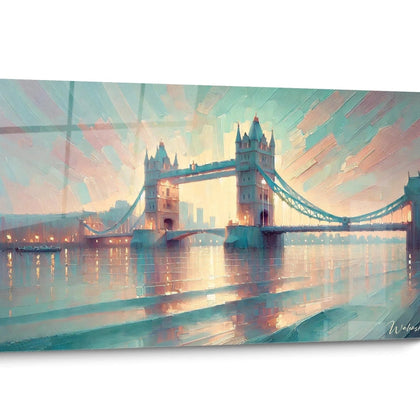
 Tower Bridge Wall Art N°1 - England Around the World Edition$499.90
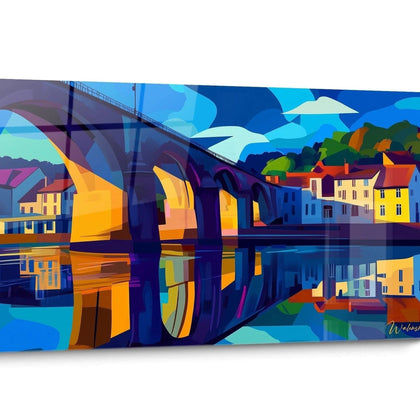
 Bridge and Water Lilies Wall Art - Impressionist Garden - Normandy Edition$499.90
Explore further
In Famous Bridges Impressionist Wall Art
All about Famous Bridges Impressionist Wall Art
- Presentation Murals Bridges Impressionistic
- Light and River Architecture
- Masterpieces and Reinterpretations
- Large Format Deployment
The bridge murals famous impressionistic embody a fascinating encounter between 19th-century engineering and the pictorial revolution that transformed artistic perception. These monumental representations capture metallic and stone structures under changing skies, immortalizing works such as the Japanese Bridge in Giverny, the Waterloo Bridge in London, or the Parisian railway bridges in a symphony of vibrant colors and atmospheric lights. Acquiring such large-format reproductions allows integrating this dynamic tension between human construction and sensitive observation into contemporary spaces requiring a striking visual presence.
The Impressionistic Approach to River Structures and Metal Architectures
The bridge famous impressionistic transforms radically the representation of urban and rural infrastructures. Unlike the technical engravings of the time, the artists of the movement favored atmospheric variations rather than architectural precision. This revolutionary approach makes each work a unique temporal study, where the same bridge appears transformed according to the time of day, the season, or the weather conditions.
How do aquatic reflections redefine spatial perception in these compositions?
Liquid surfaces occupy a structuring function in these representations, visually doubling the architecture through fragmented symmetries. Quick touches and juxtaposed colors create vibrant mirrors where arches and pillars dissolve into chromatic undulations. This optical dissolution generates a particularly striking perceptual depth on imposing formats, amplifying the immersion effect for the modern observer seeking a work capable of visually transforming a contemporary architectural space.
Temporal series and their contemporary decorative translation
Monet, notably with his series of Charing Cross Bridge and his multiple views of the Saint-Lazare railway bridge, established a revolutionary serial methodology. For the enthusiast seeking a bridge famous impressionistic today, this approach offers possibilities for bold staging: installing several interpretations of the same structure in a hallway or extended circulation space creates a visual narrative sequence that dialogues with the physical movement of the viewer. This decorative strategy exploits the temporal dimension inherent in these works.
Why did industrial metallic structures fascinate the masters of the movement?
The emergence of railway and metal bridges coincided with the rise of Impressionism, these new architectures symbolizing the industrial modernity that painters wanted to integrate into their visual vocabulary. The intertwining of beams and rivets offered complex games of shadows and lights, particularly captivating under the smoky skies of stations or the morning mists. For the current buyer of large-format reproductions, these compositions bring a softened industrial sophistication by the impressionistic chromatic palette, perfect for contemporary professional spaces or lofts with exposed structures seeking a refined historical resonance.
Integrating a famous bridge in an impressionistic style into a personal collection also creates a precise cultural anchoring, evoking the golden age of European urban transformation while maintaining a universal aesthetic that transcends ephemeral decorative trends.
Masterpieces of Impressionist Bridges and Their Monumental Visual Legacy
The Japanese Bridge in Giverny: botanical icon and structural meditation
Among the famous impressionist bridge paintings, the representations of the Japanese bridge in Monet’s garden at Giverny hold a unique place. This arched emerald green structure, submerged in wisteria and reflected in the water lilies, transcends its architectural function to become a contemplative portal. The later versions, with violet and orange hues almost abstract, bear witness to a progressive dissolution of form in favor of pure impression. For contemporary residential spaces seeking a soothing yet chromatically bold artwork, these compositions offer a rare balance between serenity and color intensity.
What role do London bridges play in the series of urban fogs?
The series of Westminster Bridge, Waterloo Bridge and Charing Cross Bridge created by Monet during his stays in London constitute incomparable atmospheric explorations. The industrial fog of the Thames transforms these massive Victorian structures into spectral silhouettes, bathed in sulphurous violets, roses and yellows. These monumental works, reproduced in large format, generate a ghostly presence particularly suited to spaces requiring a sophisticated contemplative atmosphere. Variations in fog density between versions allow for a choice between subtle evocation and intense chromatic affirmation.
Parisian railway bridges and industrial modernity
The Pont de l'Europe at Gare Saint-Lazare, immortalized by Caillebotte and Monet, represents the confluence between technical prowess and modern urban life. The compositions show the black metallic structures silhouetted against locomotive fumes, with anonymous passersby crossing these new aerial boulevards. For contemporary professional environments or urban apartments seeking a visual dialogue with metropolitan infrastructure, these representations offer a direct historical resonance with current issues of mobility and urban transformation.
How to identify a museum-quality reproduction for these specific subjects?
Acquiring a large-format painting of famous impressionist bridges requires particular attention to subtle chromatic nuances: aquatic reflections require faithful reproduction of juxtaposed warm and cool tones, while skies must preserve the complex gradations characteristic of the movement. Generous dimensions amplify the immersive effect of visible brushstrokes and apparent texture, fundamental elements of the original impressionist experience. Prioritizing reproductions that respect the grain of the brushstroke guarantees a wall presence that goes beyond simple decoration to become a daily perceptual experience.
Monumental Deployment of Impressionist Bridges in Contemporary Architecture
Why do imposing formats amplify the perceptual impact of these compositions?
Impressionist paintings of famous bridges reach their full expressive potential when deployed in monumental dimensions. The characteristic techniques of the movement – visible brushstrokes, juxtaposed pure colors, absence of defined outlines – require a scale allowing for the complete experience of optical distance where the elements blend harmoniously. A generous format of 150 to 200 centimeters transforms a wall into a temporal window overlooking the misty Thames or Monet’s gardens, creating an illusory depth that small formats cannot reproduce.
Installation strategies to maximize architectural effect
Installing a large-format painting of famous bridges in an impressionistic style requires a specific spatial approach. Horizontal compositions depicting London bridges integrate ideally above low furniture or in widened hallways, their panoramic format accentuating the perception of horizontal amplitude. Conversely, vertical views of the Japanese bridge with lush vegetation are suitable for narrow and high spaces, drawing the eye upwards. The optimal viewing distance – approximately twice the diagonal of the artwork – should be anticipated to guarantee the optical fusion of colors characteristic of the movement.
Dialogue between historical infrastructure and current living space
Integrating these representations into contemporary interiors establishes a fascinating historical counterpoint. The clean lines of modern furniture contrast with the vibrant texture and dissolution of forms in the impressionistic style, creating a productive visual tension. Palettes dominated by aquatic blues-greens and golden ochres harmonize naturally with contemporary materials such as polished concrete, glass, or brushed steel, while bringing the chromatic warmth often absent from minimalist environments.
Lighting considerations to preserve chromatic integrity
The subtle nuances of changing skies and aquatic reflections in a painting of famous bridges in an impressionistic style require particular attention to ambient lighting. Direct sunlight progressively degrades the delicate pigments, particularly the violets and pinks characteristic of twilight scenes. Indirect natural lighting or artificial sources with a neutral color temperature (3500-4500K) preserve color fidelity while avoiding reflections that disrupt the visual reading of textured touches.
Why choose a painting of famous bridges in an impressionistic style for a professional office?
These artworks bring immediate cultural sophistication while maintaining universal visual accessibility. Unlike hermetic abstractions, the bridges remain identifiable while offering the perceptual complexity characteristic of the movement, subtly stimulating attention without distracting.
How to combine multiple impressionistic representations of bridges in the same space?
Favoring seasonal or temporal variations of the same subject (the Japanese bridge in spring then in autumn) creates a thematic consistency while illustrating the fundamental serial approach of the movement. Alternating horizontal and vertical formats generates a dynamic visual rhythm along the circulations.
Are impressionistic paintings of famous bridges suitable for high-traffic areas?
Absolutely. Their generally harmonious palette and universally understandable subject make them suitable for halls, waiting rooms or reception areas where a work must communicate immediately without requiring contextualization, while resisting repeated observation thanks to their chromatic richness and texture.
Further reading
Our articles on this topic
- Brooklyn Bridge painting, watercolor style, for a modern living room
- Bridge painting for a long hallway: using perspective to enhance the space
- The Symbolism of Bridges in Landscape Compositions
- Paintings of Bridges (Pont des Arts)
- Gift idea: famous bridges wall art, choosing the right bridge for the traveler's or architect's personality
- Do paintings of bridges symbolize the transition toward rest?
L'art qui suscite l'envie
Maison belge d'art mural grand format
14 jourspour changer d'avis*
Protection Walenskyincluse
Fabriquéen Italie
FormatXXL
Kit de fixationtoujours fourni
* Hors tableaux personnalisés et tailles personnalisées


