


Japanese Archery Wall Art
Our Japanese Archery Painting collection celebrates the millennial art of kyudo, a zen and martial discipline par excellence. Each work captures the grace of the warrior, the tension of the bow and the deep spirituality of this ancestral practice. Immerse yourself in the universe of Japanese martial art through refined compositions that reveal the beauty of ritual gestures and the philosophy of traditional archery. These creations combine zen aesthetics and samurai tradition, bringing serenity and character to your decoration.
 Samurai Archer on Horseback Wall Art - The Art of Kyudo at Sunset - Archery Edition$499.90
 Samurai Archer on Horseback Wall Art - Cherry Blossom Warrior - Archery Edition$499.90
 Samurai Archer Wall Art - Traditional Martial Art - Archery Edition$559.90
Explore further
In Japanese Archery Wall Art
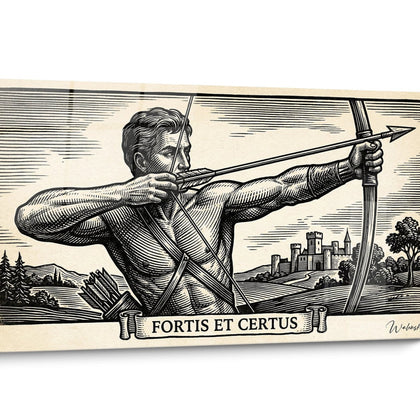
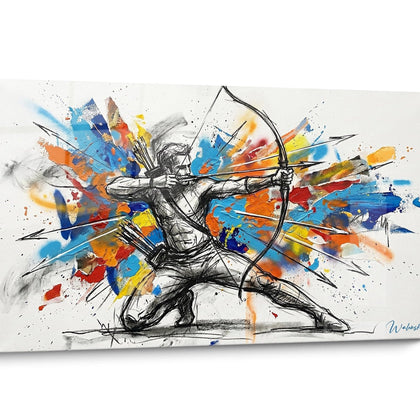
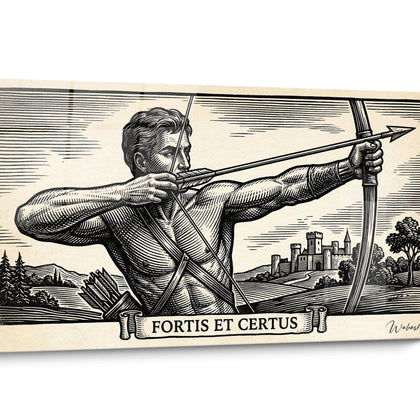
All about Japanese Archery Wall Art
- Presentation Archery Painting Japanese Arch
- Symbolism and Kyudo Aesthetics
- Japanese-Inspired Decorative Integration
- Traditional Scenes and Techniques
The archery painting Japanese arch is part of the millennial tradition of kyudo, this ancestral martial art where each gesture has a spiritual and meditative dimension. These large-format mural representations capture the very essence of this Japanese discipline, depicting archers in traditional hakama attire, armed with their long asymmetrical yumi bows. Unlike Western representations focused on sporting performance, these works convey a deep zen philosophy, a balance between mental concentration and bodily harmony. Every detail counts: the ritual hassetsu posture in eight distinct phases, the controlled tension of the tsuru string, the suspended moment of hanare where the ya arrow leaves the bow in a fluid and refined movement. These decorative creations transform your interior into a contemplative sanctuary, recalling that Japanese archery transcends simple technique to become a path of personal development.
Kyudo as Artistic and Spiritual Expression
Why does the Japanese archery painting appeal to enthusiasts of Japanese culture?
The Japanese archery painting embodies a philosophy where every movement becomes meditation. Unlike Western disciplines focused on competitive precision, kyudo values the archer's inner journey . These mural representations immortalize moments of total communion between the mind and the gesture, capturing this search for formal perfection where the target becomes secondary. The compositions highlight the beauty of natural circular movement, the elegance of the kamae posture, the dignity of the vertical tenouchi hold.
The symbolism of the traditional elements depicted
Each visual element of the Japanese archery painting tells a precise symbolic dimension. The yumi, this asymmetrical bow measuring up to 2.21 meters, symbolizes the union of heaven and earth, its longer upper part evoking spiritual elevation. The ya bamboo arrows represent moral rectitude and pure intention. The makiwara, this traditional training target, represents the ego that the archer must transcend. The ceremonial white clothing symbolizes the purity of intention necessary for practice.
The minimalist aesthetics of kyudo scenes
These mural creations favor a refined aesthetics characteristic of Japanese art. Backgrounds often stripped down, with neutral tones or subtle sakura cherry blossom motifs, direct all attention to the archer's ritual gesture. This visual sobriety facilitates contemplation and mental peace. For those seeking contemporary variations, the abstract archery painting offers modern interpretations that retain this zen essence while adopting a geometric and colorful visual language.
How do these paintings convey the values of bushido?
The Japanese archery painting conveys the fundamental principles of bushido, the code of honor of the samurai. The absolute concentration visible on the archer's face embodies shin, sincerity and authenticity. The stable and rooted posture reflects courage and determination. The harmonious fluidity of the movement expresses respect for forms and tradition. These works recall that kyudo was practiced by warriors to simultaneously develop technical mastery and spiritual elevation, bodily discipline and refinement of the soul.
Integrating a Japanese Archery Painting into a Japanizing Space
Pairing with zen-inspired decor
The Japanese archery painting naturally becomes the centerpiece of an interior inspired by Japanese aesthetics. Its monumental presence harmoniously dialogues with complementary decorative elements: a tatami floor with clean lines, translucent shoji screens diffusing soft light, a minimalist ikebana with asymmetrical floral compositions. This synergy creates an atmosphere conducive to meditation and relaxation, transforming your living room or relaxation space into a true domestic sanctuary.
What color palette to favor around a kyudo scene?
Japanese archery paintings generally feature subdued color schemes: deep blacks, pristine whites, nuanced grays, with occasional touches of traditional red or discreet gold. To optimize their visual impact, accompany them with natural tones in your decor: sandy beiges evoking raw wood, muted greens reminiscent of the mosses in Zen gardens, earthy ochres. These color harmonies reinforce the feeling of authenticity and connection with nature, a fundamental principle of the Japanese wabi-sabi aesthetic.
Strategic positioning in the living space
A large-scale Japanese archery painting requires a thoughtful placement maximizing its contemplative potential. Prioritize a clear wall facing your relaxation or meditation area, allowing for prolonged observation without distraction. The work gains presence when it benefits from sufficient distance, a minimum of three meters, to appreciate the overall composition and technical details simultaneously. Avoid areas of intense traffic that would fragment the contemplative experience.
Association with other Japanese cultural elements
These wall representations perfectly integrate into a coherent cultural staging. Place nearby a tokonoma shelf welcoming a traditional Japanese craft object: raku pottery, collector's katana sword, framed shodo calligraphy. A byobu screen with pine or crane motifs can structure the adjacent space. A chabudai table surrounded by zabuton cushions completes the layout, creating an area where tea rituals and meditative moments naturally extend the Zen philosophy embodied by the archer.
The Scenes and Traditional Techniques of Japanese Archery
The eight ritual phases of the shot represented
The Japanese archery painting frequently captures hassetsu, these eight codified steps transforming each shot into a meditative ceremony. Some compositions immortalize the ashibumi, the initial foot positioning forming a precise angle of sixty degrees. Others freeze the moment of dozukuri where the body anchors vertically, the spine perfectly aligned. Representations of the kai, this maximum tension where the archer and his bow become one, exude a palpable intensity. The hanare, spontaneous release of the arrow, is often represented in all its transcendent fluidity.
What types of traditional locations serve as a backdrop?
The backgrounds of Japanese archery paintings evoke sacred spaces where this discipline is practiced. Some works represent the traditional dojo with precise ritual dimensions, its noble wooden floor patinated by decades of practice. Others place the archer in an outdoor kyudojo, with the majestic silhouette of Mount Fuji or a bamboo forest swaying in the breeze in the background. Scenes of yabusame, archery on horseback during Shinto ceremonies, transport you to the universe of millennial sanctuaries with vermilion torii gates.
The representation of the different regional styles
Kyudo encompasses several traditional schools with distinct technical characteristics, sometimes illustrated in these wall artworks. The Heki-ryu style, the oldest, favors a martial approach inherited from the samurai. The Honda-ryu emphasizes formal elegance and gestural precision. The Ogasawara-ryu, developed for the aristocracy, insists on the ceremonial and aesthetic dimension. These nuances are visually translated through slightly different postures, specific clothing, characteristic shooting angles that connoisseurs immediately identify.
How to identify an authentic Japanese archery painting?
To distinguish a representation faithful to the kyudo tradition, check several iconographic elements. The yumi bow must present its characteristic asymmetry, the nigiri grip located in the lower third. The archer's gesture must respect the natural biomechanics of circular movement, without artificial tension. Traditional clothing includes the pleated hakama, the white or black keikogi, and the three-fingered rigid yugake glove. Facial expressions should reflect concentrated serenity rather than strained effort. This visual authenticity guarantees a work respectful of the centuries-old tradition.
Where to place a Japanese archery painting to create a meditative atmosphere?
Prioritize a tranquil space such as a bedroom oriented towards serenity, an office requiring concentration, or a dedicated meditation corner. The visual presence of the archer fully engaged in their gesture naturally promotes mental refocusing and introspection.
Is a Japanese archery painting suitable for a martial arts dojo?
Absolutely, these representations find their ideal place in dojos practicing traditional Japanese martial arts: aikido, judo, karate, kendo. They constantly recall the common values of discipline, respect, constant improvement that underpin all these disciplines inherited from the bushido.
How to maintain a large-scale Japanese archery painting?
Avoid direct exposure to sunlight which would gradually discolor the pigments. A delicate monthly dusting with a dry microfiber cloth is sufficient. Maintain a stable humidity between 40-60% to preserve the materials. These precautions guarantee optimal preservation of your decorative investment for several decades.
Further reading
Our articles on this topic
- Samurai painting: decoding the hidden symbols behind the armor, the sword and the warrior's stance
- Do Miyamoto Musashi's Zen Paintings Reflect the Way of the Sword and Brush?
- Vintage karate painting: the Japanese retro poster that changes everything in your decor
- Japanese archery painting for a modern living room: the symbolism of kyudo at the service of your décor
- Gift idea: archery painting for a passionate archer – which style to choose based on personality
- Vintage Archery Painting: Wall Décor That Inspires Focus and Precision
L'art qui suscite l'envie
Maison belge d'art mural grand format
14 jourspour changer d'avis*
Protection Walenskyincluse
Fabriquéen Italie
FormatXXL
Kit de fixationtoujours fourni
* Hors tableaux personnalisés et tailles personnalisées


