


Japanese Spaniel Dog Portrait Wall Art
The Painting Japanese Spaniel Dog Portrait captures all the nobility of this iconic breed. This collection celebrates the timeless elegance of the Japanese Spaniel in artistic portrait, with its expressive gaze and aristocratic bearing. Each work reveals the finesse and unique character of this legendary Japanese dog. Perfect for lovers of high-end dog decoration, this collection transforms your space into a refined gallery paying homage to this majestic companion.
 Golden and Copper Toned Portrait Wall Art - Deep Gaze - Japanese Chin Edition$249.90
 Artistic Portrait Wall Art Black White and Gold on Light Gray Background - Royal Elegance - Japanese Spaniel Edition$249.90
 Expressive Portrait Wall Art with Golden Tones and Artistic Crackle Effects - Intense Gaze - Japanese Chin Edition$249.90
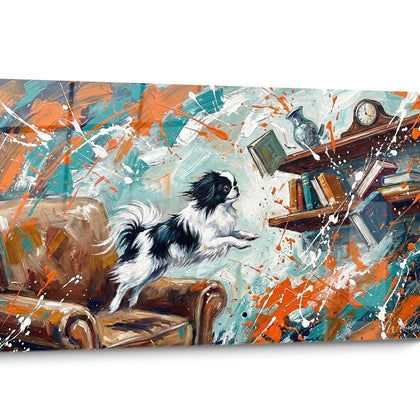
 Artistic Portrait Wall Art in Vibrant Turquoise and Orange Colors - Faithful Companion - Japanese Spaniel Edition$249.90
Explore further
In Japanese Spaniel Dog Portrait Wall Art
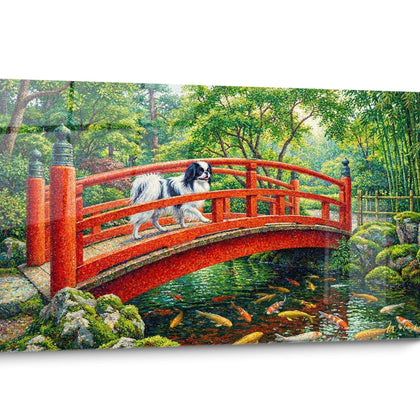
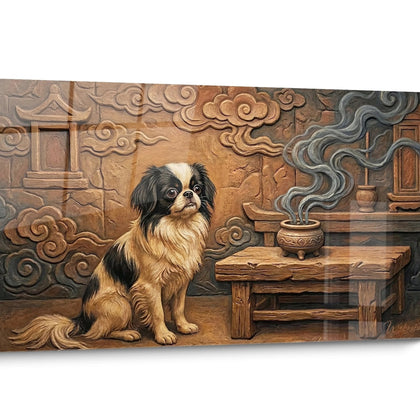
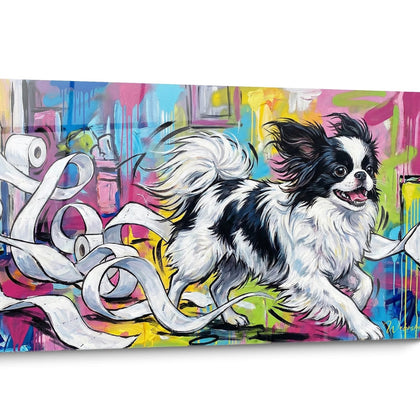
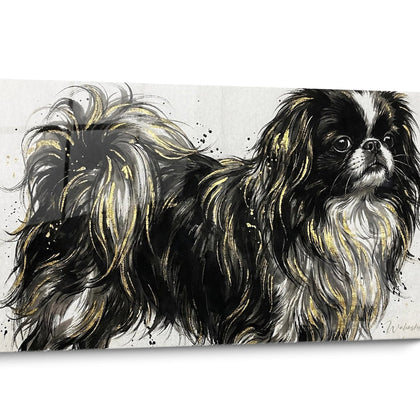
All about Japanese Spaniel Dog Portrait Wall Art
- Presentation Japanese Spaniel
- Realistic Portrait of a Japanese Breed
- Asian Dog Decor
- Wall Enhancement
The painting Japanese Spaniel portrait celebrates the aristocratic elegance of this iconic Japanese breed, capturing its expressive gaze and unique physique. These large-scale wall representations magnify the refined charm of this imperial companion, with its characteristic silky coat and noble expression. Designed for lovers of rare Asian breeds and collectors of oriental dog art, these creations offer a majestic decorative presence that immediately transforms the atmosphere of an interior. The captivating gaze of the Japanese Spaniel, immortalized in a meticulous portrait, brings a unique emotional dimension to your living space.
Iconic Features of a Japanese Spaniel Portrait
The Japanese Spaniel painting portrait is distinguished by the faithful representation of the unique morphological traits of this imperial breed. The flattened muzzle and characteristic flat face create a facial composition instantly recognizable, while the large, round, expressive eyes are the focal point of any successful representation. Imposing wall formats allow for the precise capture of the texture of the traditional bicolor coat, alternating bright white areas and symmetrical black or red markings.
Why choose a realistic portrait of a Japanese Spaniel rather than an abstract representation?
Japanese iconographic tradition favors anatomical fidelity in canine representation, where every physiological detail carries symbolic meaning. The realistic portrait preserves the aristocratic essence of this palace breed, immortalized in ukiyo-e prints for centuries. This documentary approach allows Japanese Spaniel owners to instantly recognize the morphological specifics of their companion, creating an immediate emotional connection. For lovers of oriental animal art, stylized interpretations offer a contemporary alternative, but the classic portrait remains the reference for celebrating racial authenticity.
The unique facial expression in Japanese dog portrait art
The Japanese Spaniel has an exceptional facial expression , the result of centuries of selection in the Nipponese imperial courts. Artists specializing in this breed capture the slightly surprised gaze, a result of the prominent orbital structure, which gives these portraits an incomparable vitality. The dark nasal pigmentation delicately contrasts with the dominant white coat, creating contrasts that are fully exploited in the large wall formats. Slightly raised lip corners evoke a permanent benevolent expression, a distinctive element sought in museum-quality representations.
Anatomical details valued in monumental compositions
Imposing wall creations reveal subtleties invisible on reduced formats: the silky texture of the richly fringed drop ears, the elegant curve of the graceful neck, the symmetrical distribution of pigment markings according to strict breed standards. Discerning collectors seek representations faithful to the FCI standard of the breed, with the pronounced stop and characteristic domed skull. These specific anatomical elements transform a simple dog portrait into a true morphological study, particularly appreciated in interiors dedicated to ancestral Asian breeds or spaces showcasing Japanese cynophile heritage.
Decorative Integration of a Japanese Spaniel Portrait in Asian Aesthetics
The Japanese Spaniel dog painting naturally fits into a decorative approach inspired by Japanese refinement, where sacred animal art holds a prominent place. This breed, historically reserved for Shogunate nobility and emperors, conveys values of prestige and exclusivity that enrich the atmosphere of a living room or executive office. Monumental dimensions transform these representations into true stylistic statements, visually anchoring the space in a sophisticated oriental aesthetic.
How to combine a Japanese Spaniel portrait with Japanese decorative elements?
Decorative harmony is achieved by combining the canine portrait with authentic Japanese cultural references: byobu screens with floral motifs, Imari ceramics, Hokusai prints, or minimalist ikebana arrangements. The natural color palette of the Japanese Spaniel, dominated by pure white and shades of ebony or russet, elegantly dialogues with the traditional neutral tones of wabi-sabi. Imposing wall formats create a focal point comparable to traditional vertical kakemono, structuring the space according to the principles of asymmetrical composition ma characteristic of Japanese aesthetics.
Symbolic enhancement in high-end professional and residential spaces
In Asian corporate environments or residences valuing Japanese cultural heritage, these portraits convey values of loyalty and aristocratic distinction. Law firms specializing in Nippo-European international relations, showrooms for Japanese luxury brands, or residences of collectors of Oriental art prefer these representations for their symbolic charge. The benevolent gaze and noble posture of the Japanese Spaniel create a welcoming atmosphere while maintaining an aura of prestige, a sought-after balance in refined reception areas.
Complementarity with Asian animal art collections
Lovers of Oriental canine iconography often develop thematic collections grouping different Asian palace breeds: Pekingese, Imperial Shih Tzu, noble Akita. The Japanese Spaniel dog painting portrait harmoniously completes these collections thanks to its distinctive proportions and specific cultural heritage. Monumental formats allow establishing a consistent visual hierarchy in private galleries or exhibition hallways, where each breed occupies its dedicated wall territory. This curatorial approach transforms a simple living space into a veritable domestic cynophile museum, particularly appreciated by passionate breeders and confirmation judges specializing in Japanese breeds.
Optimizing the Visual Impact of the Monumental Portrait
Highlighting a large-scale Japanese Spaniel dog portrait requires careful consideration of wall architecture and visual circulation within the space. These monumental creations require clear surfaces where the eye can fully appreciate the anatomical details without obstruction. Owners of Japanese Spaniels often prefer a placement at eye level in the main living rooms, creating a silent dialogue between the artwork and the occupants.
What wall arrangement maximizes the impact of the canine portrait?
The optimal placement is on a main wall panel free of openings, ideally facing the entrance of a room to create an immediate discovery effect. Interior designers specializing in Japanese aesthetics recommend preserving a minimal breathing space of 40 centimeters around the frame, respecting the principle of ma (significant interval). This isolated arrangement confers on the portrait the status of a masterpiece, comparable to traditional kakejiku displayed in the tokonoma of aristocratic residences. Imposing formats transform the wall into a true visual sanctuary dedicated to this imperial breed.
Managing depth of field in restricted spaces
Contrary to popular belief, monumental portraits of Japanese Spaniels adapt remarkably well to compact urban spaces thanks to their composition centered on the face. The close-up technique, inherited from intimate photographic portraits, creates an illusion of spatial expansion by drawing the gaze towards the expressive depth of the subject. Parisian apartments with constrained volumes or Asian lofts exploit this particularity to generate powerful focal points without visual clutter. The brilliant white coat of the breed acts as a natural reflector, amplifying ambient brightness and perceptually enlarging the space.
Optimal environmental color associations
The natural bicolor contrast of the Japanese Spaniel dialogues harmoniously with neutral wall backgrounds : pearl gray, sand beige, off-white, or even deep black to accentuate the brightness of the coat. Contemporary minimalist interiors particularly benefit from this chromatic sobriety, which avoids any visual saturation. Discerning collectors avoid walls with complex patterns that would compete with the portrait's anatomical details, preferring subtle textures such as fine stucco, polished concrete, or traditional Japanese paper. This environmental purification allows the expressive gaze of the Japanese Spaniel to radiate fully, creating the emotional dialogue sought by lovers of authentic animal portraits.
Nocturnal enhancement and lighting sequences
Demanding owners install programmable indirect lighting systems that transform the painting into a living architectural element, whose presence evolves rhythmically throughout the hours, in the image of the luminous variations celebrated in traditional Japanese aesthetics.
Is a Japanese Spaniel painting suitable for spaces dedicated to pets?
Absolutely, high-end dog grooming salons, veterinary clinics specializing in Asian breeds, and luxury pet accessory boutiques use these portraits to create a distinctive visual identity. The nobility of the breed enhances professional expertise and reassures customers about the level of refinement of the services offered.
How to choose between an adult Japanese Spaniel portrait or a puppy portrait?
The adult portrait emphasizes racial majesty and conformity to morphological standards, ideal for breeders and purists. The puppy portrait focuses on tenderness and universal emotional appeal, more suitable for family spaces. Monumental formats are better suited to adult subjects whose racial features support enlargement without infantilization.
Does the Japanese Spaniel painting portrait require any particular maintenance?
Representations of this light-coated breed benefit from regular dusting with an antistatic microfiber cloth to preserve the brightness of the white areas. Avoid direct sunlight exposure, which could alter the subtle nuances of the photographic or pictorial rendering, particularly critical for faithfully reproducing the characteristic silky texture of the breed.
Further reading
Our articles on this topic
- Which size of Japanese Spaniel painting to choose for a hallway: the calculation method
- How to choose a Pekingese portrait to decorate a modern apartment
- Birthday gift idea: Akita Inu dog painting for a memorable birthday
- Custom Pekingese Portrait Painting: The Original Gift That Captures Their Character
- Which painting style to choose for a white Japanese Spitz
- Barzoi painting for a Japandi living room: harmonizing animal elegance and minimalism
L'art qui suscite l'envie
Maison belge d'art mural grand format
14 jourspour changer d'avis*
Protection Walenskyincluse
Fabriquéen Italie
FormatXXL
Kit de fixationtoujours fourni
* Hors tableaux personnalisés et tailles personnalisées


