


Japanese Zen Watercolor Wall Art
Our Zen Watercolor Painting Japanese collection celebrates the contemplative beauty of traditional Japanese art. Each piece captures the essence of minimalist Japanese painting with its delicate washes, cherry blossom motifs, bamboo and soothing landscapes. These creations evoke the serenity of Japanese gardens and the harmony of wabi-sabi. Perfect for creating a meditative and refined atmosphere, these zen paintings Asian-inspired transform your interior into a haven of peace.
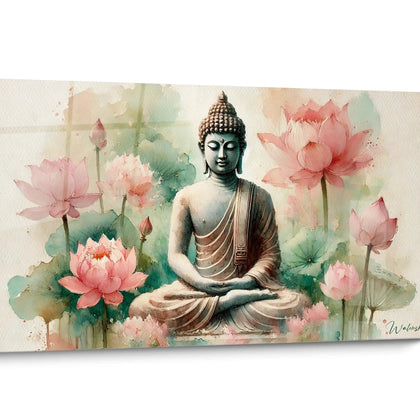
 Spiritual Harmony Artwork - Zen Buddha Edition$249.90
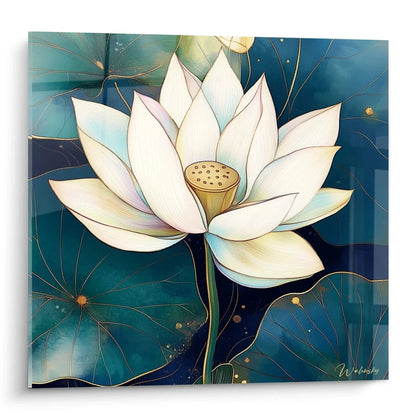
 Lotus Wall Art Pure Grace - lotus flower edition$249.90
 Lotus Flower Eternal Grace Wall Art - Lotus Flower Edition$249.90
 Lotus Inner Peace Wall Art - lotus flower edition$249.90
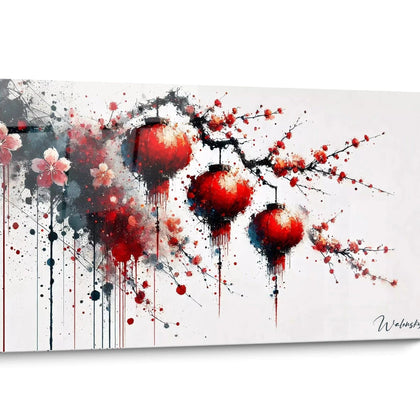
 Flowers and Lanterns Wall Art - Zen Edition$249.90
Explore further
In Japanese Zen Watercolor Wall Art
All about Japanese Zen Watercolor Wall Art
- Painting Zen Watercolor Japanese
- Japanese Watercolor Aesthetics
- Japanese Zen Atmosphere
- Buying & Placement Guide
A zen painting Japanese watercolor is a majestic decorative artwork that blends traditional Japanese aesthetics with the fluid techniques of watercolor paintings. These large-scale mural creations capture the essence of Eastern philosophy through delicate compositions where each brushstroke evokes the serenity of ancestral Asian landscapes. Japanese watercolor art is characterized by its subtle gradations, vaporous transparencies, and contemplative minimalism that instantly transforms any space into a soothing sanctuary. Perfectly suited to modern interiors seeking timeless sophistication, these monumental representations combine the cultural heritage of Japan with an imposing visual presence capable of harmoniously structuring contemporary architectural volumes.
The Art of Japanese Watercolor at the Service of Zen Decoration
The zen painting Japanese watercolor draws its authenticity from the pictorial tradition of suiboku-ga, this centuries-old technique where Chinese ink is diluted into infinite nuances. Current monumental representations perpetuate this heritage through compositions where cherry blossoms, misty mountains, graceful bamboos, and arched bridges unfold on large wall surfaces. This generous dimension amplifies the sought-after meditative effect, allowing the eye to travel through the different strata of translucent pigments.
Why choose a Japanese-inspired watercolor wall decoration?
Japanese watercolor is characterized by its approach to emptiness and fullness, a fundamental principle of Zen aesthetics. Unlike saturated Western compositions, these creations cultivate negative space as an essential compositional element. Washes degrade perfectly mimicking the morning mist enveloping Mount Fuji, while controlled splashes suggest the sea spray of the Pacific coast. This technical mastery creates a particularly striking atmospheric depth when the work reaches imposing dimensions.
The emblematic motifs of zen Japanese watercolor paintings
Botanical representations occupy a predominant place in this artistic universe. The sakura with its ephemeral pink petals symbolizes Buddhist impermanence, while the twisted pine embodies resilience in the face of the elements. Majestic cranes evolving in lacustrine landscapes bring a vertical dynamism to horizontal compositions, creating a visual balance conducive to contemplation. Exploring our collection of zen watercolor paintings reveals the stylistic diversity of these contemporary interpretations.
Subtle Chromaticism and Japanese Natural Palette
The color range favors organic tones inspired by Japanese seasons: deep indigo of mountain rivers, autumnal ochre of maple foliage, jade green of spring rice fields. These soothing nuances facilitate integration into residential environments seeking a relaxing atmosphere. The tonal variations created by the superposition of transparent washes generate an interior luminosity that evolves according to the ambient lighting, giving the work a living presence throughout the hours.
Creating an Authentic Zen Atmosphere with Japanese Aesthetics
Integrating a Japanese Zen watercolor painting into your home transcends simple decorative acquisition, becoming an intentional act of contemplative design. These monumental wall art pieces function as spiritual windows opening onto meditative landscapes, transforming domestic spaces into serene refuges. The psychological influence of Japanese watercolor compositions lies in their ability to slow mental pace through their fluid organic forms and progressive color transitions.
How does a Japanese watercolor visual influence the interior atmosphere?
The wabi-sabi philosophy permeates every compositional element of these representations, celebrating beauty in natural imperfection and refined simplicity. Watercolor bleeds, far from being flaws, embody the acceptance of the natural cycle and authenticity. This aesthetic approach resonates particularly in contemporary minimalist interiors where each decorative element must justify its presence through its emotional charge and substantial visual impact. A generous format amplifies this silent communication with the viewer.
Preferred spaces to maximize the contemplative effect
Environments dedicated to mental relaxation exceptionally benefit from these soothing compositions: master bedrooms seeking to promote restorative rest, home offices requiring serene concentration, yoga or meditation practice spaces. The main living room also becomes an ideal terrain for expression when a significant wall welcomes a panoramic representation evoking a misty Japanese garden. The verticality of portrait formats is particularly suitable for narrow hallways where a watercolor cascade or a bamboo forest creates illusory depth.
Association with the principles of contemporary Zen design
Decorative harmony is established through material and philosophical consistency. Natural textures such as linen, woven bamboo, and polished stone spontaneously dialogue with the themes represented in the Japanese watercolor. A Japanese Zen watercolor painting of large dimension visually anchors the space, becoming the focal point around which purified furniture and carefully selected accessories are organized. The typically Japanese asymmetrical balance encourages off-center arrangements rather than systematic Western alignment, creating a natural visual dynamic.
The influence of Japanese seasons on the felt atmosphere
The tradition of shiki (seasonal awareness) is reflected in the thematic choice: cherry blossoms for spring to revitalize vital energy, summer wisteria to visually refresh, autumn maples to accompany introspection, snowy winter landscapes to cultivate inner calm. This conceptual rotation allows for subtle adaptation of the domestic atmosphere to the annual cycle without material modifications, the work revealing different emotional facets depending on the period.
Selecting and Valuing your Japanese Zen Watercolor Painting
Acquiring a Japanese Zen watercolor painting of a generous format requires strategic reflection to guarantee a lasting decorative investment. The monumental dimension of these creations implies careful spatial planning where wall proportions, visual circulation, and decorative hierarchy interact harmoniously. Unlike modest formats, these imposing representations entirely restructure the volumetric perception of a room, requiring a methodical approach when choosing and positioning.
What criteria should be prioritized when buying a large-size Japanese watercolor painting?
The thematic coherence is the first decision-making factor: mountain landscapes to bring majesty and spiritual elevation, aquatic scenes to fluidize the ambient energy according to feng shui principles, floral compositions to infuse delicacy and renewal. The compositional complexity becomes more readable with large formats, allowing you to appreciate the technical subtleties such as multi-layered atmospheric gradients or meticulous botanical details that would be lost on a reduced surface. Check that the visual resolution maintains sharpness and depth even when viewed up close.
Strategic positioning for optimal visual impact
A monumental Japanese zen watercolor painting works ideally as a visual anchor on a clear wall, preferably the first visible from the main entrance of the room. The height of the positioning differs from standardized recommendations: the lower third of the work should approximately align with the seated line of vision to encourage meditative contemplation. Open spaces like lofts beautifully exploit these panoramic formats that can extend over several meters, creating a narrative continuity between different functional areas.
Enhancement through the immediate environment
The immediate surrounding area should remain uncluttered to preserve the contemplative impact. Avoid decorative overload that would fragment attention: favor low and discreet furniture, a few living plants (bonsai, orchid) echoing the themes represented. Indirect lateral lighting reveals the watercolor nuances without creating unsightly reflections, while a slight natural backlight amplifies the characteristic translucency of this pictorial technique. Adjacent walls would benefit from maintaining chromatic neutrality allowing the work to fully express its palette.
Is a Japanese zen watercolor painting suitable for modern minimalist interiors?
Absolutely, this aesthetic harmonizes perfectly with contemporary, streamlined codes. Traditional Japanese minimalism has indeed directly influenced current Western design. Watercolor compositions bring organic warmth and cultural depth to spaces that risk otherwise being clinically cold, while respecting the visual discipline characteristic of the minimalist style.
What dimension should be favored for a Japanese zen watercolor painting in a spacious living room?
For a generous living room exceeding 30 square meters, opt for formats reaching a minimum of 120-150 centimeters in width to establish a proportionate presence. Panoramic horizontal compositions effectively structure vast wall spaces, while monumental vertical formats provide a welcome countermeasure in rooms with high ceilings.
How to maintain the visual intensity of a Japanese zen watercolor painting over the long term?
Protect these creations from prolonged exposure to direct sunlight, which could gradually alter the delicate pigments. Gentle dusting every six months with an anti-static microfiber cloth is sufficient to maintain visual clarity. Hygrometric stability avoids potential deformations, particularly important for expansive formats more sensitive to environmental variations.
Further reading
Our articles on this topic
- Did Kanō Masanobu’s Zen Paintings Codify a Japanese Court Style?
- Japanese wisteria painting and wabi-sabi: creating a zen meditation corner at home
- Misty Japanese forest painting: the fog effect to elevate your home spa
- Do Tomioka Tessai’s Zen Paintings Mark the Transition to Modernity?
- Do Zen Paintings Intentionally Use Asymmetry as an Aesthetic Principle?
- Axolotl painting in Japandi style: how to integrate it into a minimalist decor
L'art qui suscite l'envie
Maison belge d'art mural grand format
14 jourspour changer d'avis*
Protection Walenskyincluse
Fabriquéen Italie
FormatXXL
Kit de fixationtoujours fourni
* Hors tableaux personnalisés et tailles personnalisées


