


Louis XVI Portrait Painting
Our Louis XVI Painting Portrait collection celebrates the grandeur of the French monarchy in the 18th century. Discover majestic works capturing the essence of the last king of the Ancien Régime, between refinement and history. Each creation pays homage to French royal portrait art with its emblematic aesthetic codes: powdered wigs, ceremonial costumes and sumptuous decorations. Perfect for lovers of French history and classic decoration, these pieces bring nobility and character to your interior while evoking the splendor of Versailles.
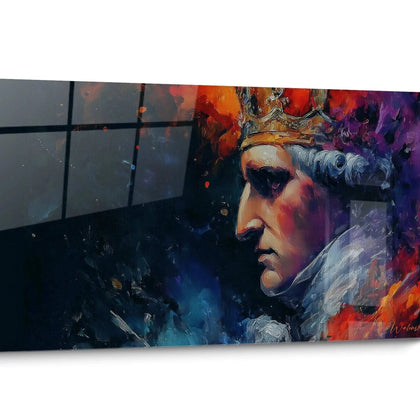
 Crowned King Regent of Colors Wall Art - Louis XVI Edition$499.90
 Man Wall Art Expressive Charm - Louis XVI$499.90
 Portrait Wall Art Swirling Soul - Louis XVI Edition$499.90
 Louis XVI Wall Art Eternal Dignity - Louis XVI Edition$499.90
 Portrait Wall Art Vivid Sketch - Louis XVI Edition$499.90
 Thoughtful Grace Portrait Wall Art Light - Louis XVI Edition$559.90
 Louis XVI Wall Art Sovereign Gaze - Louis XVI edition$559.90
All about Louis XVI Portrait Painting
- Painting Presentation Louis XVI Portrait
- Royal Portrait and Aristocracy
- Symbolism of the Monarchy
- Exceptional Decoration
The Louis XVI portrait painting embodies the artistic excellence of 18th-century France, capturing royal majesty in monumental compositions intended for prestigious spaces. These representations of the enlightened monarch, created by the greatest portraitists of the Versailles court, bear witness to an era when the art of portraiture reflected political power and dynastic grandeur. Each faithful reproduction preserves the iconographic attributes of French royalty: the scepter, the hand of justice, the ermine-lined mantle embroidered with fleur-de-lis, and that solemn posture that distinguishes Louis XVI from other European sovereigns. Acquiring such a royal portrait immediately transforms a heritage library, a specialized constitutional law firm, or a historic residence into a veritable aristocratic gallery.
The Art of Royal Portraiture under the Reign of Louis XVI
The Louis XVI portrait stands out for its neoclassical aesthetic, marking a break with the rococo exuberance of Louis XV. Official portraitists such as Antoine-François Callet, Joseph-Siffred Duplessis, or Alexandre Roslin immortalized the monarch in balanced compositions, prioritizing sober dignity over ostentatious display. These monumental representations, often executed in a large vertical format, capture the light with a particular intensity that enhances the golden embroidery of the coronation costume and royal orders.
Why does the portrait of Louis XVI differ from other French monarchs?
The Louis XV iconography reveals a young sovereign with a characteristic youthful face, wearing a powdered wig with less volume than his predecessors. The king reformer’s melancholic gaze contrasts with the martial assurance of Louis XIV or the sensuality of Louis XV. Intellectual attributes – globes, scientific instruments, reform plans – frequently appear in these compositions, reflecting the monarch’s passion for geography, horology, and science. This intellectual dimension naturally lends these portraits to ministerial offices, boardrooms, and strategic thinking spaces.
The Dress Codes of the Coronation Portrait
The grand coronation suit constitutes the central element of the most prestigious Louis XVI paintings. The sky-blue velvet mantle embroidered with golden lilies, lined with royal ermine, unfolds its sculptural folds with a controlled theatricality. The collar of the Order of the Holy Spirit and that of the Golden Fleece are superimposed on the symbolic breastplate, while the sword of Charlemagne recalls the Capetian dynastic continuity. These sumptuous details create areas of brilliance that capture attention in majestic entrance halls or reception galleries.
Visual Impact in Heritage Spaces
A large-format royal portrait radically transforms the atmosphere of a historic room. Collectors of monarchist art, owners of castles converted into prestigious bed and breakfasts, and refined gastronomic establishments seek out these effigies to anchor their identity in French aristocratic heritage. The imposing verticality of the full-length portrait creates an almost physical presence of the monarch, particularly valued in the stairwells of classical residences or the waiting rooms of notarial offices attached to tradition.
Political Symbolism and Monarchical Legitimacy
The Louis XVI portrait painting conveys a complex political discourse on constitutional monarchy and attempts at reform. Unlike the triumphant portraits of his ancestors, these representations reflect the tension between a weakened absolutism and nascent democratic aspirations. Portraitists captured this ambivalence in the sovereign's facial expression, oscillating between reformist determination and vulnerability to the impending revolutionary upheavals.
How does the royal portrait manifest preserved royal authority?
Traditional regalia maintain monarchical sanctity despite the context of institutional crisis. The closed crown placed on an adjacent cushion, the sceptre held firmly, and the architectural throne in the background perpetuate the imagery of divine power. This conservative iconography finds its audience among nostalgics of the Ancien Régime, historians specializing in French monarchy, and decorators seeking a pronounced royalist aesthetic for refined classical interiors.
The Diplomatic Gesture in State Portraits
Some versions of the portrait show Louis XVI in a posture of benefactor of the people, with an outstretched hand towards legislative documents or administrative maps symbolizing his reforms. This specific iconography, developed to humanize the monarch during the pre-revolutionary years, particularly appeals to lovers of constitutional history and collectors interested in the transition between absolutism and limited monarchy. Law firms specializing in public law and historical academic institutions value this reformist dimension.
Iconographic Variations for Different Spaces
Beyond the portrait in grand costume, there are versions in town clothes or as a colonel-general's uniform, offering alternatives for less formal spaces. The bust portrait, focused on facial expression and military decorations, is suitable for personal offices and private libraries. Oval or circular compositions, inspired by aristocratic medallions, blend harmoniously into dynastic portrait galleries or family genealogical collections claiming noble origins.
Decorative Integration in Prestigious Interiors
Acquiring a Louis XVI portrait painting responds to specific decorative objectives in environments aspiring to aristocratic elegance. These royal effigies immediately impose a visual hierarchy in the space, creating a dramatic focal point that structures the entire surrounding decorative composition. Antique dealers specializing in classical interior designers and owners of historic residences recognize the transformative power of these monumental portraits.
What furniture ideally complements a monumental royal portrait?
The Louis XVI style is characterized by clean architectural lines, neoclassical geometric motifs, and decorative sobriety that contrasts with the exuberance of the Rocaille style. Mahogany chests of drawers with fluted columns, bergère chairs upholstered in Lyon silks, white marble consoles supporting gilded bronze candelabras: this furniture environment amplifies the nobility of the portrait. Versailles parquet floors, grey Trianon painted woodwork, and neoclassical stucco constitute the ideal architectural setting to enhance these royal representations.
Lighting Strategies for Historical Portraits
Illuminating a royal portrait requires a sophisticated museum-like approach. Bronze sconces in the Louis XVI style, positioned laterally to avoid reflections, create sculpting shadows that reveal the depth of the clothing folds and the texture of the embroideries. Track lighting with adjustable spotlights allows for selective accentuation of the monarch's face or symbolic attributes. This theatrical lighting is particularly suitable for high-end gourmet restaurants, exclusive private clubs, and ambassadorial residences.
Association with Thematic Collections
Experienced collectors often complement their Louis XVI portrait with representations of Marie Antoinette in a symmetrical pendant, creating a royal marital dialogue. Others develop dynastic galleries including Louis XV and Louis XIV, illustrating the Capetian-Bourbon continuity. History enthusiasts sometimes juxtapose monarchical portraits and revolutionary engravings, creating a narrative tension on the fall of the Ancien Régime particularly captivating in cultural and educational spaces.
Frequently Asked Questions about Louis XVI portrait paintings
Where to place a Louis XVI portrait to maximize its visual impact?
Preferred locations include the central walls of reception rooms, perspective backgrounds in enfilades of rooms, and dominant positions in heritage libraries. The ideal height places the monarch's gaze at eye level of a standing person, creating a psychological connection with visitors and reinforcing the royal presence in the space.
What is the difference between official portraits and private portraits of Louis XVI?
Official portraits intended for royal institutions prioritize representation in grand ceremonial attire with complete regalia, while private versions sometimes show the monarch in hunting clothes, indoor attire, or less formal postures. These iconographic variations allow to adapt the choice of portrait to the desired degree of formality in the decoration.
How to authenticate the quality of a Louis XVI portrait painting reproduction?
Excellent reproductions preserve the fineness of clothing details, the subtlety of skin tones, and the depth of architectural backgrounds. The quality of the rendering of gold embroideries, the accuracy of royal orders, and the chromatic fidelity of royal blue velvet are reliable indicators. Generous formats respecting the original proportions guarantee the authentic visual impact of these grand portraits originally intended for palace halls.
Further reading
Our articles on this topic
- Louis XVI or Louis XV: the visual decoder in 5 points to recognize the style of a painting
- Large Louis XVI Painting: How to Choose the Right One for an Elegant Bedroom
- Which Wall Color Enhances a Louis XVI Painting
- Did Royal Anniversary Paintings Perpetuate the Cult of Monarchy?
- Baroque Portrait Painting of a Noble Man: The Centerpiece of a Classic Living Room
- Louis XIV style painting for executive office: asserting authority through imagery
L'art qui suscite l'envie
Maison belge d'art mural grand format
14 jourspour changer d'avis*
Protection Walenskyincluse
Fabriquéen Italie
FormatXXL
Kit de fixationtoujours fourni
* Hors tableaux personnalisés et tailles personnalisées


