


Modern African Landscape Wall Art
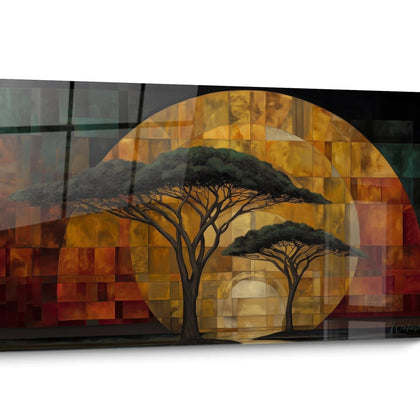
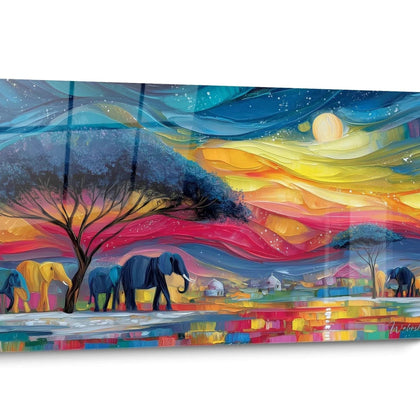
Our African Landscapes Paintings Modern collection celebrates the majesty of the African continent through exceptional contemporary creations. Each artwork captures the essence of endless savannas, vibrant sunsets, and iconic wildlife in a refined artistic style. These contemporary African paintings bring a touch of exoticism and authenticity to your interior decoration. Perfect for enhancing your living room, office, or living space, our modern African landscapes transform your walls into true art galleries.
 Radiant Golden Sun Wall Art - African Light - African Landscapes Edition$249.90
 African Sun Wall Art - Golden Radiance - African Landscapes Edition$249.90
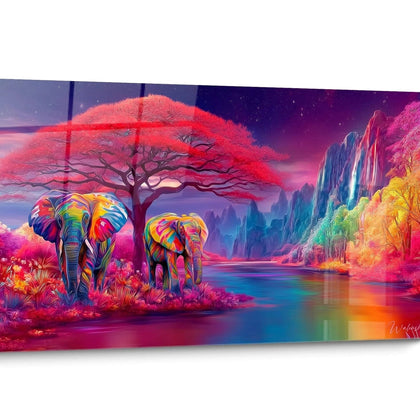
 Elephant Prism Wall Art African Colors - African Landscape Edition$199.90
 Dancing Village Under Fire Storm Wall Art - African Landscape Edition$199.90
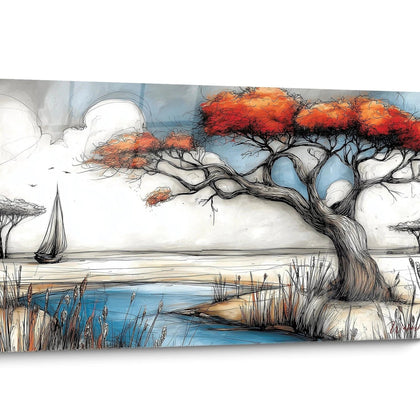
 Acacia Aureolate with Ardent Copper - African Landscape Edition$249.90
 Savanna Ancestral Soil with Thousand Nuances - African Landscape Edition$249.90
 Elephants Walking Toward the Burning Star - African Landscape Edition$249.90
 Acacia Roots of Time - African Landscape Edition$249.90
 Elephants Flames of Evening Wall Art - African Landscape Edition$249.90
 Acacia Master of Saffron Horizons Wall Art - African Landscape Edition$249.90
 Baobab Wall Art Portal to the Golden Star - African Landscape Edition$249.90
 Elephant Wall Art Legends of Forgotten Kingdoms - African Landscape Edition$249.90
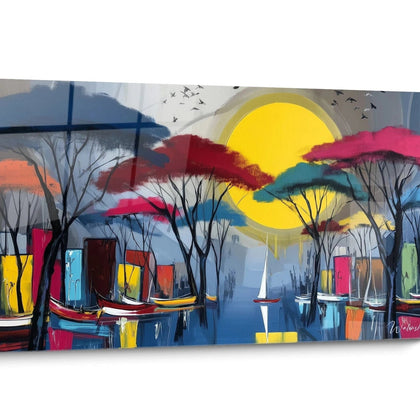
 Walensky Boats River Wall Art Contemporary African Landscape$249.90
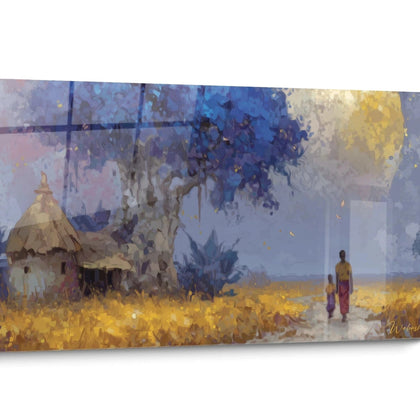
 Village Wall Art Savanna Reflections - African Landscape Edition$249.90
 Acacia Red Lands Guardian Wall Art - African Landscape Edition$249.90
 Village Clay Lands Under the Golden Star Wall Art - African Landscape Edition$249.90
 Trees Steppe Crowns Wall Art - African Landscape Edition$249.90
 Elephant Wall Art Prismatic Sky - African Landscape Edition$249.90
 Acacia Tree Roots of the Red Continent Wall Art - African Landscape Edition$249.90
Explore further
In Modern African Landscape Wall Art
All about Modern African Landscape Wall Art
- Presentation Painting Landscapes African Modern
- Refined Design & Contemporary Aesthetics
- Chromatic Balance & Ambiances
- Architectural Integration & Placement
Discover our exclusive collection of painting landscapes african modern, designed for demanding contemporary spaces. These large-format creations capture the essence of African horizons through a minimalist and refined prism, perfectly suited to current design interiors. Each composition reinterprets the majesty of the savannas, the Saharan dunes and the endless plains according to a resolutely current vision, where geometric simplification meets the authenticity of African panoramas. Our large-scale works instantly transform reception areas, urban lofts and executive offices into true contemporary art galleries.
The Visual Purging of Contemporary African Panoramas
The painting landscapes african modern is distinguished by its minimalist approach to the vast expanses of the continent. Unlike traditional representations saturated with ethnographic details, this contemporary vision favors colored planes, linear horizons and the simplified silhouettes of iconic acacias. Large panoramic formats amplify this feeling of immensity characteristic of the Serengeti plains or the Namib desert, creating a visual window onto these infinite landscapes.
How does geometric abstraction sublimate African landscapes?
Geometric aesthetics transforms African natural elements into architectural compositions. The Drakensberg mountains become superimposed triangles with subtle gradations, while the Sahara dunes translate into clean curves playing with shadow and light. This formal simplification is perfectly suited to Scandinavian, industrial or Bauhaus interiors, where every decorative element must justify its presence by its pure visual strength. Collectors of contemporary art particularly appreciate this conceptual reinterpretation that dialogues with abstract works without compromising African identity.
The reduced chromatic palette at the service of visual impact
The modern African painting exploits restricted color ranges to maximize its expressive power. Three to five carefully selected shades are enough to evoke the burning atmosphere of the Kalahari or the freshness of the Ethiopian highlands. Earth tones of sienna, red ochre and beige sand constitute the chromatic base, enhanced by touches of deep black for stylized animal silhouettes or graphic tree structures. This economy of chromatic means reinforces the visual readability even at a distance, an essential quality for painting landscapes african sunset and other panoramic compositions intended for large architectural volumes.
Monumental dimensions as a stylistic signature
Extra-large formats constitute the DNA of contemporary African painting. Dimensions easily exceeding 150 centimeters in width create the necessary immersion to feel the real scale of African landscapes. In an open living room or a corporate meeting room, these monumental works function as architectural statements rather than simple wall ornaments. Verticality can also be exploited to represent the centuries-old baobabs or the rock formations of Mali, transforming an entire wall into a contemplative visual experience.
Chromatic Harmonies and Modern African Decorative Ambiances
What color combinations define contemporary African aesthetics?
The painting of modern African landscapes relies on calculated contrasts between warmth and neutrality. The warm tones evoking the Saharan sun – burnt oranges, saffron yellows, red latites – contrast with cement grays, off-whites, and graphic blacks borrowed from contemporary urban vocabulary. This chromatic bipolarity creates a dynamic visual tension that maintains attention without causing eye fatigue, a quality essential for main living rooms. Monochrome variations in shades of sand are suitable for zen and minimalist spaces, while saturated contrasts stand out in industrial lofts requiring powerful focal points.
Integration into current neutral palettes
Contemporary interiors favor neutral color bases – anthracite gray, taupe beige, limestone white – on which the modern African painting brings that essential organic touch. Stylized depictions of savannas at dusk or rocky deserts introduce the necessary warmth without breaking the minimalist balance. For urban apartments with optimized areas, a single large African format is enough to personalize the space while maintaining visual coherence. High-end real estate professionals also use these works as enhancement arguments during visits, as they instantly humanize austere architectural volumes.
Lighting atmospheres according to the time of day
An often-neglected aspect concerns the interaction between the African painting and the evolving natural luminosity. Compositions depicting dawn over the Okavango Delta capture rosy and violet tones that resonate particularly well with the morning light of east-facing rooms. Conversely, scenes of midday with accentuated contrasts – intense cobalt sky against blinding white sand – are suitable for south-facing spaces requiring visuals capable of withstanding direct sunlight. This synchronization between pictorial subject and natural lighting conditions optimizes decorative impact throughout the day.
Complementary decorative associations
The African landscape painting modern is ideally accompanied by raw and natural materials. Burnt wood, patinated metal, vegetable-tanned leather, or limestone create textural dialogues enriching the overall sensory experience. Architectural plants such as sansevierias or columnar cacti extend the arid theme without falling into literal reconstitution. For discerning collectors, juxtaposition with authentic African tribal art – Dogon masks, Ashanti stools, Makonde sculptures – establishes a cultural conversation between modernity and tradition that values both aesthetic registers.
Architectural Integration Strategies for Contemporary African Paintings
Where to position a modern African painting to maximize its impact?
The strategic placement of a painting of modern African landscapes radically transforms the spatial perception. In circulation areas such as hallways or entrance halls, a horizontal panoramic format creates a visual escape that optically expands the passage. For the main walls of open-plan living rooms, positioning above a low sofa requires maintaining a minimum distance of 20 centimeters from the back, allowing the work to breathe while maintaining visual cohesion. Double ceiling heights offer the rare opportunity to install vertical monumental compositions evoking the cliffs of Bandiagara or the volcanic peaks of Ethiopia.
Adaptation to contemporary architectural constraints
Modern interiors often feature structural peculiarities – exposed beams, technical conduits, asymmetrical bay windows – which complicate placement. A modern African painting, with its often off-center and asymmetrical composition, naturally adapts to these irregularities. A savanna scene where the horizon is located in the lower third can perfectly fit under an exposed metal beam, echoing the horizontal branches of the acacia trees depicted. The sharp angles of converted attics find their complement in triangular compositions evoking the conical roofs of traditional houses reinterpreted in an abstract way.
Creating visual sequences in open spaces
The open plans characteristic of contemporary architecture benefit from a serial approach. Rather than a single large format, three modern African paintings of medium size – each capturing a different moment of the day on the same landscapes – create a temporal narrative that guides the eye through the space. This museum-like technique visually segments functional areas (living room, dining room, office space) while maintaining thematic continuity. Discerning collectors prefer contemporary triptychs where the same panorama unfolds across three separate panels, an installation that requires a substantial wall width of at least 350 centimeters.
Technical considerations for large formats
The imposing dimensions of modern African paintings require professional fixing systems. Standard drywall walls require structural reinforcements or the use of suspension rail systems that distribute the weight across the width. For works exceeding 120 centimeters, the use of steel cable systems with ceiling fixings offers an elegant solution while creating a slight detachment from the wall that accentuates the sculptural presence of the artwork. Institutional collectors prefer modular systems that allow for height adjustment according to the seasons or renovations, a flexibility particularly appreciated in commercial spaces or evolving offices.
What style of decoration best suits modern African landscape paintings?
Modern African landscape paintings ideally integrate into minimalist, industrial, Scandinavian, or mid-century modern interiors. Their clean aesthetic naturally dialogues with the straight lines of contemporary furniture, raw materials such as polished concrete or steel, and neutral palettes enriched with organic touches. Professional spaces – law firms, corporate headquarters, luxury boutiques – particularly appreciate their ability to evoke authenticity and escape while maintaining urban sophistication.
How to maintain a large-scale modern African painting?
Maintenance is limited to regular dusting with a dry or slightly damp microfiber cloth, avoiding harsh chemicals. For artworks exposed to full light, a semi-annual rotation of a few degrees prevents uneven discoloration. Large formats benefit from an annual inspection of the fixing systems to ensure safety, particularly in seismic zones or buildings subject to urban vibrations. Positioning away from direct heat sources – radiators, fireplaces, south-facing windows – preserves the chromatic integrity over the long term.
Are modern African paintings suitable for small spaces?
Paradoxically, a large African artwork can visually enlarge a restricted space by creating an illusionist opening towards infinite horizons. In a studio or a small living room, favor a horizontal composition with a low horizon line that accentuates the feeling of space. However, avoid scenes that are too busy or excessive contrasts that could optically reduce the volume. Monochrome versions in a sand hue or minimalist representations of flat deserts work particularly well, acting as contemplative windows rather than imposing decorative elements.
Further reading
Our articles on this topic
- African earth-tone painting for a professional office: the art of ochre hues serving your brand image
- Which landscape painting to choose for a modern living room? The complete guide
- African painting for a modern living room: how to choose the right size for your space
- Modern African Decor: Tips and Inspirations
- African elephant panoramic painting for living room: which size and where to hang it
- African wall decor for a professional office: creating a warm atmosphere without losing seriousness
L'art qui suscite l'envie
Maison belge d'art mural grand format
14 jourspour changer d'avis*
Protection Walenskyincluse
Fabriquéen Italie
FormatXXL
Kit de fixationtoujours fourni
* Hors tableaux personnalisés et tailles personnalisées


