

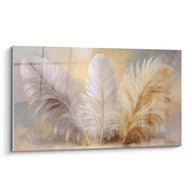


Spiritual Black and White Zen Wall Art
Our Painting Zen Black and White Spiritual collection embodies the essence of Eastern serenity through minimalist compositions. These works celebrate the perfect balance between light and darkness, inviting contemplation and inner peace. Each creation evokes Buddhist philosophy and the art of decoration minimalist zen, offering a meditative presence to your interior. Ideal for transforming your space into a sanctuary of peace, these pieces embody contemporary Eastern spirituality with elegance.
 The Buddha's Dream Wall Art - Zen Buddha Edition$499.90
 The Legacy of Souls Wall Art - Zen Tree of Life Edition$499.90
 Sakura Soul of Time Wall Art - zen edition$559.90
Explore further
In Spiritual Black and White Zen Wall Art
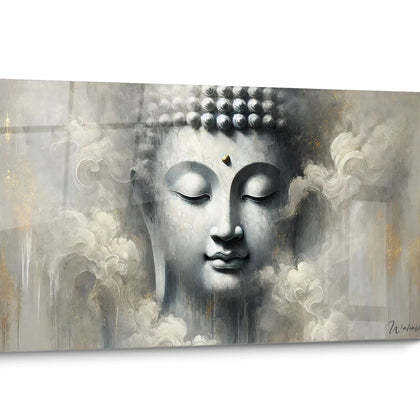
All about Spiritual Black and White Zen Wall Art
- Presentation Painting Zen Black and White Spiritual
- Symbolism and Energy
- Impact on Meditation
- Tips and Questions
A black and white spiritual zen painting is much more than a simple wall decoration: it embodies a millennial philosophy where the absence of color becomes the language of the absolute. These large-format creations capture the essence of meditative emptiness and spiritual fullness through purified compositions that dialogue with inner silence. Designed to transform contemplative spaces, these monumental works create visual portals to transcendence, particularly sought after by meditation practitioners, holistic therapists, and interior designers specializing in wellness spaces. Their generous dimension allows for complete immersion in sacred iconography, offering a powerful focal point for anchoring contemplation sessions and promoting consciousness elevation in yoga studios, energy healing rooms, or personal sanctuaries dedicated to spiritual awakening.
The Monochrome Language of Inner Awakening
The black and white spiritual zen painting draws its strength from the cosmic duality represented by the monochromatic hues. This binary palette naturally evokes the yin and yang, a fundamental principle of universal harmony where darkness and light intertwine in an eternal dance. The shades of gray that intersperse between these absolute poles symbolize the multiple states of consciousness traversed during the meditative journey, creating a visual map of the inner voyage.
What spiritual symbols should you prioritize in a monochrome zen painting?
The most powerful representations include sacred geometric mandalas, circles of contemplation whose mathematical structure reflects the cosmic order. Buddhas in deep meditation positions, rendered in contrasting silhouettes, exude a calming presence that instantly permeates the space. Japanese calligraphy featuring Buddhist sutras or zen koans offers a textual dimension to the spiritual quest, transforming each character into a portal of reflection. Our collection of black and white zen paintings brings together these different expressions of Eastern wisdom in imposing wall formats.
The energetic architecture of monochrome compositions
An authentic black and white spiritual zen painting respects the principles of ma, this Japanese negative space that gives life to the positive. White areas are not a void but a full potential, a visual breath allowing the eye and mind to rest. The black elements create anchors, focal points for the practice of tratak, this gaze fixation meditation used in yogic traditions. This rhythmic alternation generates an ascending energy flow, naturally guiding the gaze towards the higher planes of the composition.
How do these works influence the chi of a space?
In spiritual feng shui , deep black captures and transforms stagnant energies while pure white disperses and purifies them. A well-positioned monochrome painting becomes a permanent energy regulator, particularly effective in transition zones between active and contemplative spaces. Panoramic formats create meditative horizons that expand spatial perception and dissolve mental boundaries, facilitating the expansion of consciousness sought during advanced spiritual practices.
Catalyst for Presence and Deep Meditative States
Using a black and white spiritual zen painting as a meditation support (visual yantra) radically transforms the quality of contemplative practice. Contemplative neuroscience demonstrates that the absence of chromatic stimulation reduces the activation of the primary visual cortex, allowing for a redirection of attentional resources to the brain centers associated with introspection and metacognition. This perceptual simplicity facilitates entry into alpha and theta states, brain waves characteristic of deep meditations.
What size should you choose to optimize the meditative impact?
Monumental dimensions create a sensory enveloping effect that naturally isolates the practitioner from peripheral distractions. A format exceeding 120 centimeters activates peripheral vision, engaging the parasympathetic nervous system responsible for deep relaxation. This imposing presence generates what Zen masters call "benevolent visual pressure," a constant invitation to return to oneself that persists even when the gaze is averted. Spiritual retreat spaces and meditation centers systematically prioritize these immersive formats for their ability to energetically mark sacred space.
The mirror effect of pure consciousness
The spiritual monochrome functions as a projection surface for unconscious psychic contents. During silent contemplation, the ambiguous forms and soft contrasts of the black and white spiritual zen painting allow for the emergence of inner visions, in the manner of a meditative Rorschach test. This projective quality makes it a valuable tool for guided visualization practices, shamanic journeys, or exploration of altered states of consciousness. Transpersonal therapists frequently integrate these works into their consultation spaces.
How to position the painting to maximize its meditative potential?
The optimal orientation places the artwork facing magnetic north, a direction associated with mental stability in tantric traditions. The installation height should allow the artwork's visual center to align with the ajna point (third eye) of the practitioner sitting in a meditative posture, thus creating a direct vertical energy axis. Indirect lighting, never frontal, preserves the subtle contrasts and avoids reflections that would fragment the unitary presence of the composition, essential for maintaining a state of unified concentration (samadhi).
Integration into Personal Sanctuaries and Sacred Spaces
The creation of a meditative altar or a spiritual practice corner finds its visual completion in a black and white spiritual zen painting that becomes its silent guardian. This wall presence immediately establishes the energetic tone of the space, signaling a territory dedicated to interiority and transcendence. Practitioners of different contemplative paths – Zen Buddhism, Advaita Vedanta, Christian mysticism, Sufism – recognize in these purified compositions a universal language transcending particular religious forms.
Associations with ritual objects and sacred elements
The monochrome painting harmoniously dialogues with traditional practice supports: meditation cushions (zafu), Tibetan singing bowls, prayer malas, rock or amethyst crystals. Its chromatic neutrality highlights the texture of natural materials – raw wood, stone, artisan ceramics – without creating visual competition. Spiritual teachers recommend placing white or black candles nearby, whose living flame creates a dynamic contrast with the permanent stillness of the image, symbolizing the union of the transient and the eternal.
Evolution of the contemplative relationship with the artwork
An authentic black and white zen painting spiritually reveals its layers of meaning progressively. For the first few weeks, the eye discovers the overall composition and the balance of masses. After several months of regular contemplation, subtle details – variations in texture, micro-contrasts, internal rhythms – emerge into consciousness, reflecting the deepening of the practitioner's attentional capacity. This perceptual transformation objectifies meditative progress, the work becoming a faithful mirror of inner evolution, particularly valuable for solitary paths without external guidance.
Is it possible to combine several spiritual monochrome paintings?
Diptychs or triptychs create visual narratives of the spiritual journey – descent into darkness, crossing the void, emergence into light. This spatial sequence accompanies progressive practices such as nine-step meditations or Tibetan bardo visualizations. However, the radical simplicity of a single monumental work better preserves the zen principle of "not-two", this fundamental non-duality that dissolves all conceptual fragmentation into the unity of the present moment.
Frequently asked questions about spiritual monochrome zen paintings
Is a black and white spiritual zen painting suitable for all styles of meditation?
Absolutely. Its symbolic neutrality adapts to mindfulness (vipassana), contemplative (zazen), transcendental (with mantra) or guided meditations. Only practices requiring specific color visualizations (such as certain Tibetan tantras) might require particular chromatic supports. For all approaches centered on mental silence and pure presence, monochrome offers the ideal support.
How to maintain the energy of a black and white spiritual zen painting?
Beyond delicate physical cleaning, energetic traditions recommend regular purification by smudging with white sage, palo santo or natural incense. Some practitioners ritually consecrate their work during full moons, charging it with meditative intentions. This conscious relationship gradually transforms the painting into a personal power object, imbued with the hours of practice and elevated states of consciousness experienced in its presence.
What is the difference between a decorative zen painting and a true spiritual support?
The initial creative intention subtly permeates the work. A black and white spiritual zen painting designed by an artist practicing or inspired by contemplative teachings conveys a distinct vibrational quality, perceptible to sensitive individuals. Compositions respecting sacred proportions (golden ratio, Fibonacci sequence) or integrating traditional geometric symbols (sri yantra, flower of life) possess a deeper archetypal resonance than purely aesthetic creations, even if visually similar.
Further reading
Our articles on this topic
- How to Choose an Artwork That Encourages Introspection Without Melancholy?
- Feng shui fire painting and minimalist style: the balance between energy and simplicity
- Which artworks to choose for a chapel or contemplation room?
- Nature-inspired artworks: escape, calm and visual balance
- Best Ideas for Pairing an Expressionist Painting with a Contemporary Zen Bedroom
L'art qui suscite l'envie
Maison belge d'art mural grand format
14 jourspour changer d'avis*
Protection Walenskyincluse
Fabriquéen Italie
FormatXXL
Kit de fixationtoujours fourni
* Hors tableaux personnalisés et tailles personnalisées


