

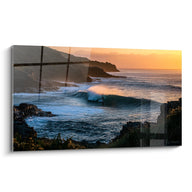


Black and White Realistic Animal Wall Art
Our Painting Black and White Animals Realistic celebrates the natural beauty of the animal kingdom in its purest form. Each Realistic monochrome animal painting accurately captures the details, textures, and expressions of wild and domestic creatures. This Black and white animal wall decoration brings sophistication and character to your space. Perfect for lovers of naturalist art, this collection transforms your walls into an elegant contemporary gallery.
 Meerkat Wall Art No. 1 - Animals Edition$249.90
 Chimpanzee Wall Art N°1 - Animals Edition$249.90
 Chimpanzee Wall Art No. 2 - Animals Edition$249.90
 Polar bear wall art - Wild gaze - Black and white animals edition$249.90
 Polar Bear Wall Art - Arctic Majesty - Black and White Animals Edition$249.90
 Majestic Deer Wall Art - Noble Portrait - Black and White Animals Edition$249.90
 Giraffe Wall Art - Majestic Portrait - Black and White Animals Edition$249.90
 Giraffe Portrait Wall Art - Captivating Gaze - Black and White Animals Edition$249.90
 Zebra Portrait Profile Artwork - Intense Gaze - Black and White Animals Edition$249.90
 Silent Strength Wall Art - Black & White Edition$249.90
 Wild Pride Artwork - Black & White Edition$249.90
Explore further
In Black and White Realistic Animal Wall Art
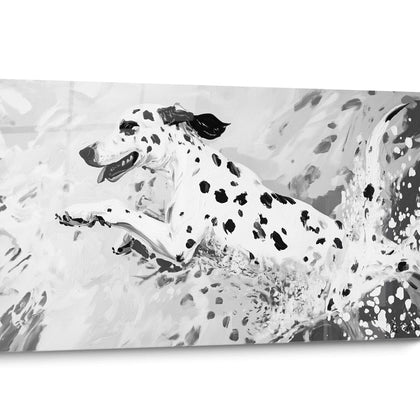
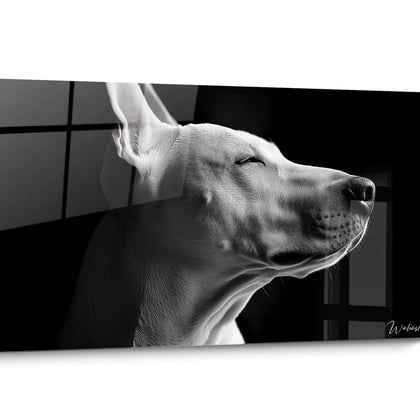
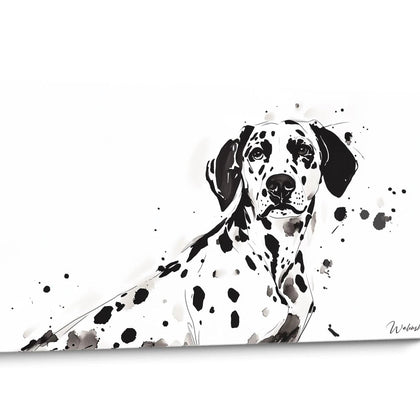
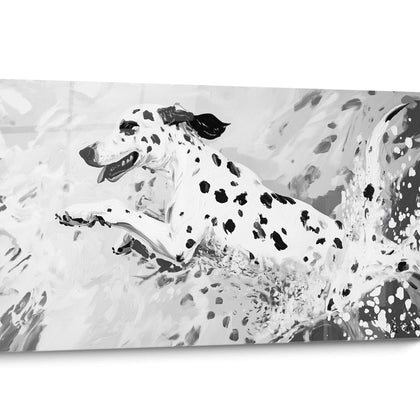
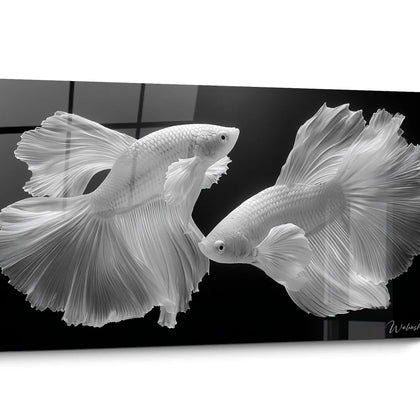
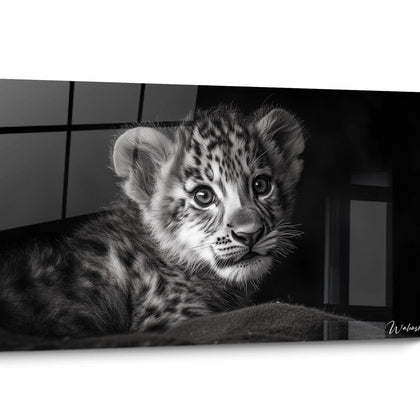
All about Black and White Realistic Animal Wall Art
- Painting Presentation Black and White Animals Realistic
- Photographic Rendering and Striking Details
- Visual Impact in Large Format
- Authentic Materials and Textures
The paintings of realistic black and white animals capture the raw essence of wildlife with exceptional photographic fidelity. Every anatomical detail, every coat or feather texture is reproduced with a precision that transforms your wall into a true animal gallery. These large-format works prioritize a documentary approach where authenticity takes precedence over stylization, offering total immersion in the monochrome wilderness.
Anatomical Precision in the Service of Emotion
A realistic black and white animal painting is distinguished by its ability to reproduce each morphological characteristic with scientific accuracy. Artists specializing in this genre meticulously study the skeletal structure, subcutaneous musculature, and exact proportions of each species represented. This anatomical rigor allows for renderings where the gaze of a feline reveals its natural depth, where the vibrissae of a lion appear in their true fineness.
Why choose a faithful representation rather than a stylized one?
Photographic realism creates an immediate emotional connection with the viewer. Unlike abstract or geometric approaches found in a minimalist black and white animal painting, faithful representation engages empathy by presenting the animal as it exists in its habitat. This authenticity resonates particularly with nature documentary enthusiasts, biologists, or collectors seeking pieces of educational value. Monumental formats amplify this connection by revealing details invisible to the naked eye: the crystalline structure of a raptor's eye, the microtonal variations of winter fur.
The species that enhance the hyperrealistic monochrome treatment
Certain creatures particularly benefit from hyperrealistic black and white treatment. Large terrestrial mammals such as the elephant reveal the topography of their thick skin, each wrinkle telling decades of existence. Primates offer a disturbing facial expressiveness when captured with precision, their anthropomorphic traits creating an introspective mirror. To explore other expressions, the black and white animal portrait painting offers close-ups on animal faces. Wild ungulates such as the majestic deer show their protruding musculature under sidelight, while arctic carnivores such as the wolf reveal the density of their winter coat in subtle shades of gray.
Rendering techniques for maximum veracity
Realistic reproduction requires specific capture and processing methods. Wildlife photographers use long focal length lenses to isolate the subject with a shallow depth of field, creating that background blur (bokeh) that focuses attention. The transition to monochrome is never a simple desaturation: each color channel is adjusted individually to optimize tonal contrast. Transition areas between light and shadow receive special treatment to avoid a "poster" effect and preserve three-dimensionality. On XXL formats exceeding two meters, this attention to detail becomes crucial as the eye scrutinizes each section of the image with acuity.
Monumental Scale for a Tangible Animal Presence
How do imposing dimensions transform perception?
A black and white realistic animal painting in a large format creates an experience of confrontation rather than simple observation. When a three-meter grizzly bear occupies your main wall, its physical presence literally changes the atmosphere of the room. Proportions at life-size or amplified generate a feeling of spatial coexistence with wildlife. This immersion is sought after in professional spaces such as specialized veterinary clinics, environmental NGO headquarters, or high-end lodges where the customer experience must evoke a naturalist adventure. Unlike the modern black and white animal painting , which plays on graphic simplicity, monumental realism focuses on visceral impact.
What placement optimizes the realism’s value?
Realistic works require unobstructed frontal visibility. A continuous wall without an adjacent window avoids distracting reflections that would break the photographic illusion. The recommended viewing distance is 1.5 times the diagonal of the work to embrace the overall composition while allowing for an approach to examine the details. Double-height spaces particularly enhance vertical framing of animals standing: a bear standing, a giraffe extending, a heron in a stalking posture. Lighting should reproduce natural conditions: a single directional source simulates the grazing sunlight that sculpts anatomical reliefs.
The visual dynamics specific to animal realism
Unlike the moving black and white animal painting , which captures kinetic action, static realism focuses on latent tension. A feline at rest contains all the explosive power of the impending hunt. Compositions gain intensity through the inclusion of hyperrealistic contextual elements: blades of grass in the foreground creating a natural depth of field, atmospheric particles (mist, snow) adding a temporal dimension, geological substrates (rocks, bark) anchoring the animal in its habitat. This visual stratification guides the gaze in depth rather than on the surface, a key characteristic for maintaining interest in imposing formats.
What interior environments suit hyperrealistic animal art?
Interiors with a neutral color scheme amplify the impact of realistic works. Anthracite gray walls create a museum-like effect where the artwork seems to float in the darkness. Spaces with raw materials (polished concrete, natural stone, aged wood) resonate with the authenticity of animal representation. The typical loft industrial arrangement offers the necessary volumes and the clean aesthetic that avoids visual competition. Executive offices favor this register to project an image of controlled power, while contemporary residential spaces adopt it to create a striking contrast with minimalist architecture.
Textures and Depth: The Materiality of Monochrome Realism
What reproduction techniques preserve the fineness of details?
The quality of a realistic black and white animal painting directly depends on its ability to reproduce microstructures. Giclée printing processes using mineral pigments offer an extended tonal range with up to twelve distinct shades of gray, where standard prints peak at four. This chromatic richness restores the subtleties of a wolf’s coat where downy undercoat and protective guard hairs coexist. Rigid supports such as brushed aluminum add a metallic dimension that enhances subjects with smooth textures (reptiles, amphibians), while matte surfaces absorb light for velvety renderings ideal for mammals. For aquatic effects, the aquatic black and white animal painting offers specific treatments for marine creatures.
Managing contrasts for striking realism
Realistic black and white is never binary but exploits the entire spectrum of intermediate values. Soft transition areas (subtle gradations in a stormy sky, progressive shadows) create volume. Brutal contrasts reserved for focal points (specular reflection in an eye, direct light area on a muzzle) attract the gaze according to a calculated visual path. This tonal hierarchy distinguishes professional work from flat reproductions. On large formats, the balancing of dark and light masses structures the composition: a predominantly dark subject (black panther) requires a bright background to avoid visual absorption, while a light subject (polar bear) asserts itself against a neutral to dark background.
How to evaluate the authenticity of a realistic representation?
Several criteria distinguish mastered realism from simple photographic copying. The accuracy of anatomical proportions is verified by comparing skull/body ratios, limb lengths, and joint positions to species standards. Authentic behavioral details authenticate naturalist observation: a raptor never presents its talons relaxed in flight, a deer does not show both velvet and hard antlers simultaneously according to the season. Lighting respects the laws of physics: wet surfaces (truffle, eye) present specular highlights, dry fur diffuse reflections. This documentary rigor separates a work of educational value from simple thematic decoration, justifying the investment in pieces that can adorn both a residence and a scientific institution.
Decorative associations that reinforce naturalistic immersion
The environment accompanying a realistic painting should extend its documentary intention. Furniture with organic lines (driftwood, ergonomic shapes) creates a conceptual continuity with the living being represented. Textiles with natural textures (raw linen, looped wool, vegetable-tanned leather) tactilely evoke what the work visually presents. Accent lighting should reproduce observation conditions in a natural environment: neutral color temperatures (4000-5000K) avoiding dominances that would alter the monochrome perception. For a consistent collection, exploring the black and white animal painting allows you to discover different approaches to the animal subject in grayscale.
Is a realistic black and white animal painting suitable for spaces with variable lighting?
Hyperrealistic monochrome remarkably adapts to changing lighting conditions. Unlike colored works whose perception varies according to the ambient light temperature, grayscale values remain stable from morning to evening. Fine details remain perceptible even in dim lighting thanks to the intrinsic contrast of the composition, while bright light reveals the textural subtleties without chromatic saturation.
What durability to expect from a large format realistic painting?
Prints using pigment inks offer a lightfastness resistance exceeding one hundred years indoors, certified by accelerated aging tests according to ISO 18909. Rigid supports eliminate the risk of deformation or warping that would affect the planarity critical for realism. Anti-UV and hydrophobic surface treatments preserve the visual integrity even in moderately humid environments, making these works suitable for everyday living spaces.
Can a realistic animal painting be installed in a healthcare professional space?
Realistic black and white animal depictions are particularly recommended for medical and therapeutic environments. Their calming and documentary nature reduces patient anxiety while positively stimulating attention. Veterinary clinics, psychology practices, and rehabilitation centers adopt these artworks for their ability to create an emotional connection without visual agitation, the monochrome bringing the necessary serenity to care spaces.
Further reading
Our articles on this topic
- Speckled black and white nature painting: how to pair it with your adult bedroom
- Black panther painting: realistic or graphic style? Which for which room?
- Realistic great white shark painting: the centerpiece of a modern living room
- Black and white animal painting for a child's room: composing a decor that lasts
- Realistic Black Panther Painting with Oil Paint Effect: The Guide to Perfect Texture
- Realistic Nebelung cat painting: criteria for a successful photographic rendering in a modern living room
L'art qui suscite l'envie
Maison belge d'art mural grand format
14 jourspour changer d'avis*
Protection Walenskyincluse
Fabriquéen Italie
FormatXXL
Kit de fixationtoujours fourni
* Hors tableaux personnalisés et tailles personnalisées


